Trump weighs joining Saudi strikes after Riyadh airport missile attack
A missile strike on Riyadh's King Khalid International Airport on 10 October killed at least 12 people and halted flights, and President Trump said the United States may join Saudi Arabia's fight against the Houthis.
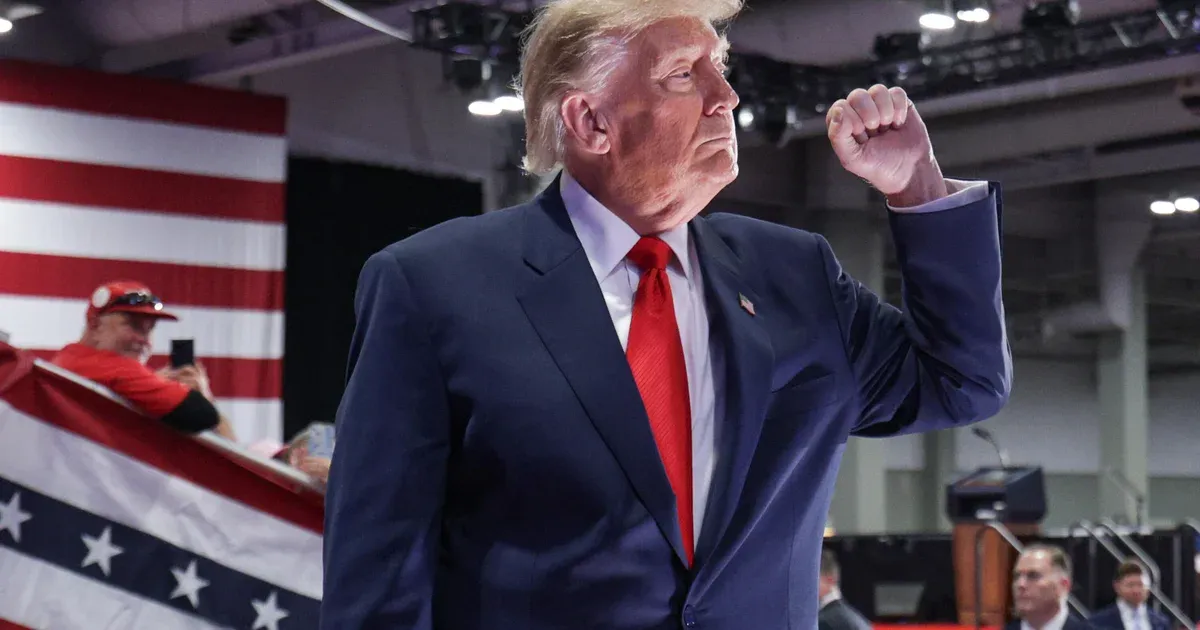 Photo: CBS News
Key points
President Trump said the United States may join Saudi Arabia's fight against the Houthis after a missile strike on Riyadh's King Khalid International Airport on 10 October killed at least 12 people and shut the airport.
President Trump said on Saturday the United States "may" join Saudi Arabia's fight against the Iran-backed Houthis, hours after a missile strike on Riyadh's King Khalid International Airport killed at least 12 people and wounded 50. The strike shut the airport, the second-busiest in Saudi Arabia, and forced the cancellation of hundreds of flights.
The decision matters because it would put American forces directly into a Yemen war that Washington said last month it did not plan to join. Trump's comment, made as he left the White House for a campaign rally in Tennessee, left the question open rather than resolved, and it came after Saudi Crown Prince Mohammed bin Salman urged Trump in September to act against the Houthis as they gained ground near Red Sea chokepoints.
What Trump said on Saturday
The strike hit the complex housing Terminals 3 and 4 of King Khalid International Airport on Saturday, and a diplomatic source said that the Houthis had hit the airport with a missile around 3 p.m. local time. The State Department said the attack caused multiple injuries and fatalities. The Houthis did not immediately claim this strike, though they had claimed attacks on the airport earlier in the week.
The death toll is disputed. Three officials briefed on the strike said that at least 12 people were killed and 50 wounded, which would make it the deadliest attack in a Gulf Arab country since the war with Iran began in February. A source at King Fahd hospital said five people remained in intensive care with dozens more wounded, while an Iraqi pro-militia outlet put injuries at 45. The State Department reported multiple injuries and fatalities without a number.
The toll and the flight chaos
The General Authority of Civil Aviation said airport operations were temporarily suspended to complete damage assessments and verify facility safety. FlightAware showed 400 cancellations into and out of the airport as of 11 p.m. local time, while Saudia airline cancelled 182 flights, the most of any carrier. All flights to Riyadh were diverted or cancelled, according to Flightradar, and Kuwait Airways, Etihad Airways and Qatar Airways suspended service into Monday.
The airport attacks have mounted over the week. Three Saudis including a pilot were killed on Thursday, and three more people died in Houthi attacks on two Saudi airports on 6 and 7 October, including two women at Abha International Airport — one Algerian, one Moroccan — and one Sudanese man at King Khalid. Victims also came from Bangladesh, Egypt, Pakistan and the Philippines. A projectile also fell near King Fahd International Airport in Dammam.
The mechanism behind the escalation runs through the Red Sea. The Houthis seized the port of Mokha and Perim Island in a bid to control the Bab el-Mandeb Strait, the narrowest point of the Red Sea and a chokepoint for global shipping. Yemeni pro-government forces said they had secured the strait, a claim the Houthis denied. With shipping through the Strait of Hormuz already disrupted by the war with Iran, a threat to Bab el-Mandeb traffic could deepen the global oil crisis.
Why the Red Sea matters
The State Department condemned what it called "Houthi terrorist attacks against civilian infrastructure and airports" and said the United States stands firmly with Saudi Arabia against Houthi terrorism. The U.S. Embassy warned American citizens to avoid the airport, and Canada, Germany, Spain, France and the United Kingdom issued similar warnings. Maj. Gen. Turki al-Malki, spokesperson for the Saudi-led coalition, said on Friday the attacks "will not go unpunished."
What follows next turns on Trump's decision, which he said would come quickly. The midterms on 3 November mark the date before which he pledged no strikes on Iran, while the question of strikes on the Houthis in Yemen remains open. Saudi Arabia's ambassador to Yemen, Mohammad Al-Jaber, wrote on X Friday that "The Bab al-Mandeb has been cleansed of the remnants of the terrorist Houthi militia," a claim the rebels denied.
Frequently asked questions
How many people were killed in the Riyadh airport strike?
Three officials briefed on the strike said at least 12 people were killed and 50 wounded. A source at King Fahd hospital said five people remained in intensive care with dozens more wounded.
Did President Trump commit the United States to striking the Houthis?
No. Trump said on Saturday "We may. We're gonna look at it" when asked whether the United States would join Saudi Arabia's fight against the Houthis, adding a decision would come quickly.
How this story was checked
- Fact-checked against 4 cited pages. 35 figures, dates and quotations in this story were found on the pages it cites; 2 passages that could not be checked were cut before publication.
- Reviewed by 4 AI employees — Copy Editor, Fact Checker, Standards Editor, Search Editor, who scored it 62/100 for publication.
Pages checked (4 of 4)
- cbsnews.comread and checked
- time.comread and checked
- bbc.co.ukread and checked
- nypost.comread and checked
Written by Kaer from public reporting. Checked 10 October 2026.


