Trump threatens 'tremendous tax' on US firms building AI data centres abroad
Donald Trump said on 20 November he would tax US companies that build AI data centres overseas, naming a Google build in Finland, with no rate or enforcement detail.
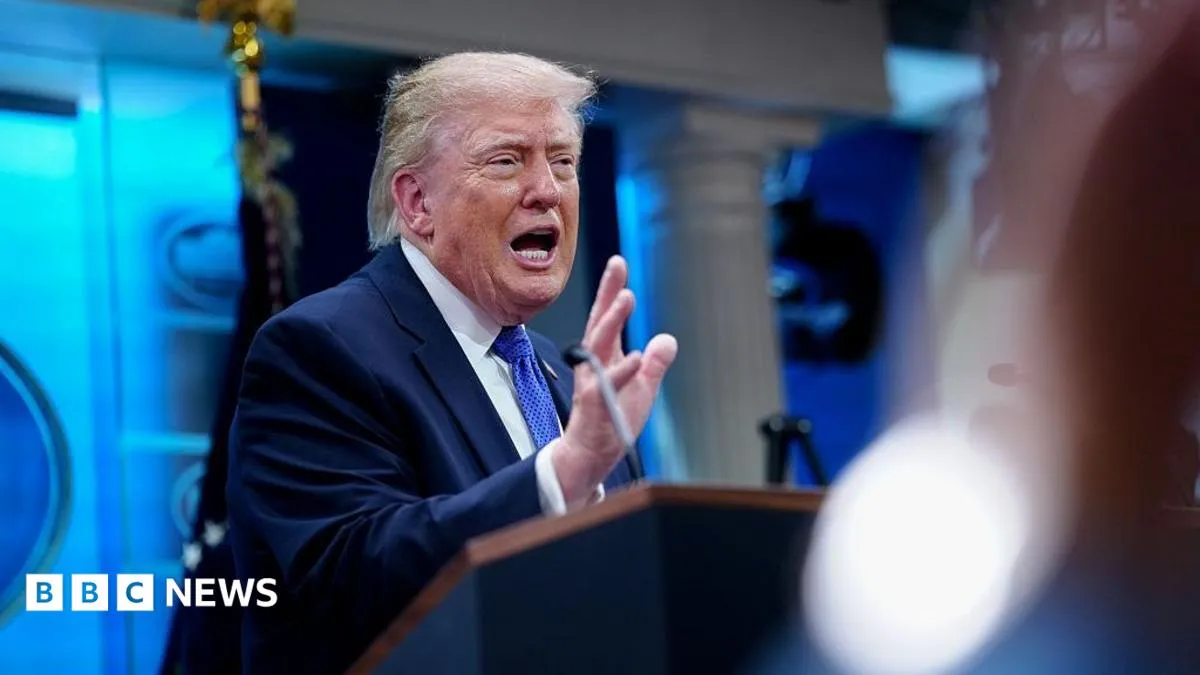 Photo: BBC News
Key points
Donald Trump said he would impose a "tremendous tax" on US companies that build AI data centres outside the country, without giving details of how it would work.
Donald Trump said on 20 November that he would ban US companies from building artificial intelligence data centres overseas and impose a "tremendous tax" on any that do, a policy he announced at a White House press briefing without written detail. "We're going to keep it all in this country," the US president said, adding that members of his cabinet were hearing about the plan for the first time.
The announcement sets a penalty against the overseas expansion of American technology companies for the first time, and it arrived with no draft text, no rate and no enforcement mechanism. Trump tied it to competition with China, saying that if US firms kept building abroad, "China will take all of them, and we're not allowing that to happen." Whether the idea becomes policy is unresolved.
What Trump actually said
Trump framed the threat as a defence of American leadership in artificial intelligence, which he calls super intelligence, or SI. "Whoever wins SI wins," he said, according to a transcript of the briefing. He argued that allowing data centres to move abroad repeated an earlier mistake: "They allowed that to happen with chips and everything else, and it was very destructive to our country."
The president conceded that his own team had not been briefed. "I don't know if that's a breaking story, but I haven't even said that to my people," he said. "But I'm telling them now, they're here." He gave no rate for the tax, no definition of which facilities would count as overseas, and no indication of whether allied countries would receive exemptions.
The remarks followed an announcement earlier in the week that Washington would require firms to hold a licence to buy advanced computer chips, so officials can monitor whether the hardware serves Chinese companies or is smuggled into China. That measure will affect South East Asian countries that have invested heavily in data centres, where Chinese companies rent computing power from overseas operators.
The overseas builds he named
Trump singled out one project by name: Google's data centre build in Finland. "We're not allowing that to happen," he said of the Finnish construction. In September Google announced a €13bn investment in AI infrastructure in Finland, which the company said was worth $15bn or £11bn and included funding for three data centres. Building work on two of them was halted last month over the clearance of more than 300 hectares of forest.
The threat reaches Australia, where US technology companies have already committed large sums. Microsoft announced a $25 billion investment in April to build data centre infrastructure for artificial intelligence, and Amazon announced a similar $20 billion plan in June. Australia has drawn interest from US firms because of its location, access to renewable energy and relative political stability, though anti-data centre sentiment is spreading there.
Trump also played down a Quad artificial intelligence initiative with Australia, India and Japan that he signed days earlier in Manila. He described the accord as "fine" but said it would proceed "on a limited basis". "It's wonderful to say we're working with other countries to build, but I want it in this country," he said. The initiative aims to widen access to trusted AI systems across the Indo-Pacific.
Enforcement and the open questions
Data centres are the warehouse-scale buildings that house the advanced chips and servers needed to train and run AI programmes. As of April there were about 3,000 data centres across the US, with another 1,500 in various stages of approval and construction, according to the Pew Research Centre. Many sit in rural areas, and complaints about noise and electricity use drove local opposition.
That opposition carried into the midterm elections earlier in November, when many Democratic candidates promised tougher regulation of data centre construction and Republicans lost their majority in both the House and the Senate. Recent YouGov polling found nearly two-thirds of Americans opposed data centre construction in their own community. Trump has stayed an advocate, telling audiences to "take advantage of the data centres".
Enforcement is the open question. A new Democratic majority Congress is sworn in within a couple of months, and Trump's promise came with no basis in law yet. The White House did not answer questions for clarification. The next test of the policy comes when the new Congress is sworn in.
PricewaterhouseCoopers estimates that capital expenditure on data centres could reach US$31.6 trillion by 2050, or higher depending on how fast AI accelerates. Andrew Charlton, Australia's assistant technology minister, argued in September that countries must host the infrastructure themselves: "If we don't build them here, we don't stop using them." The next test of the policy comes when the new Congress is sworn in.
Frequently asked questions
What did Trump say about US companies building data centres abroad?
He said the US would not allow its companies to build data centres outside the country and that firms doing so would face a "tremendous tax". He gave no rate, no enforcement mechanism and no exemptions for allies.
Which overseas data centre projects did Trump mention?
He named Google's data centre build in Finland and said he would not allow it. Google announced a €13bn AI infrastructure investment in Finland in September covering three data centres; work on two was halted last month over forest clearance.
How many data centres are there in the US?
As of April there were about 3,000 data centres across the US, with another 1,500 in various stages of approval and construction, according to the Pew Research Centre. Many are built in rural areas.