Trump, Xi, Putin issue peace declaration after first trilateral summit
The US, Chinese and Russian leaders adopted a joint peace declaration on 19 November in Shenzhen, pledging nuclear risk dialogue and UN reform.
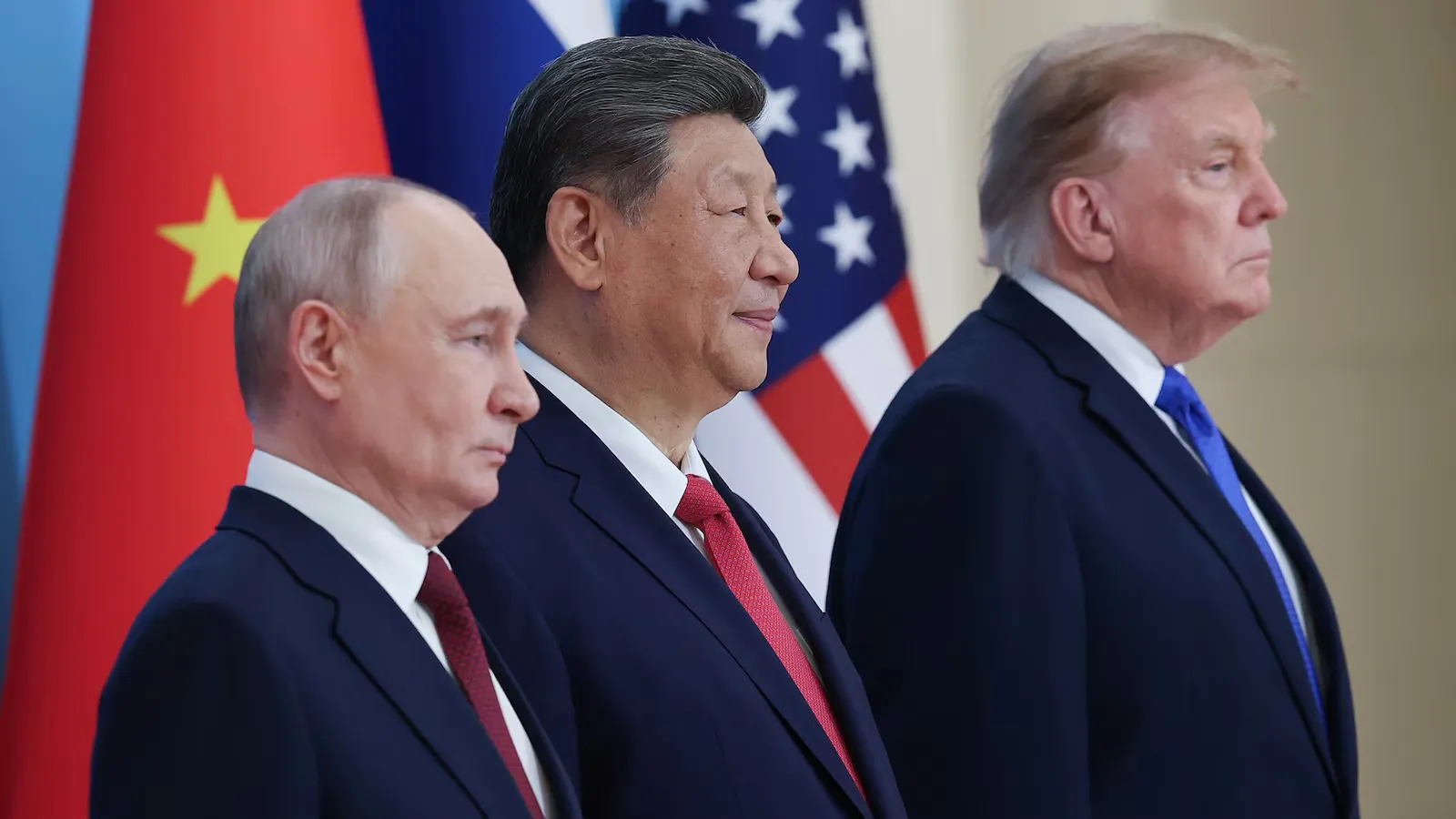 Photo: ABC News
Key points
Trump, Xi and Putin issued a peace declaration after their first trilateral summit, focusing on nuclear risks and energy, but omitting Ukraine and Iran.
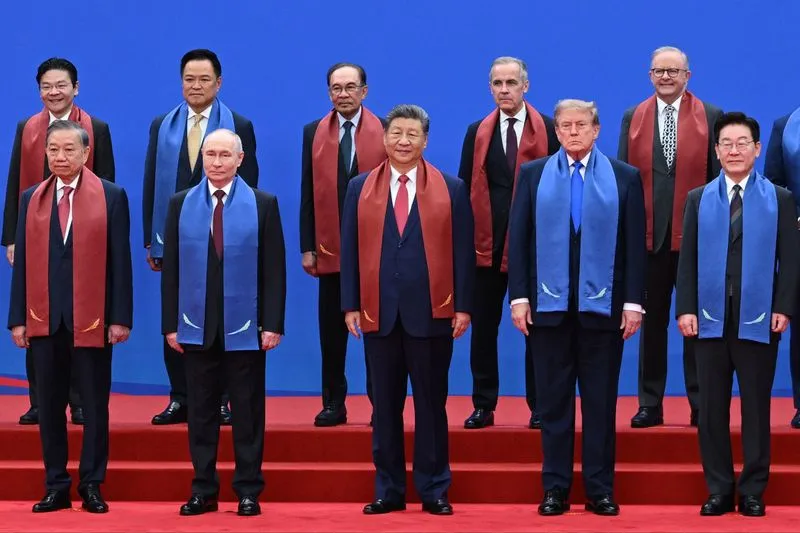
US President Donald Trump, Chinese President Xi Jinping and Russian President Vladimir Putin adopted a joint "peace declaration" on 19 November after their first-ever trilateral meeting, held on the sidelines of the Asia-Pacific Economic Cooperation summit in Shenzhen, China. The talks lasted about an hour and 20 minutes, according to Trump, who said they were "making history." The declaration, published by China's state broadcaster CCTV, contained four points covering nuclear risks, UN reform, energy and the International Criminal Court.
The declaration stated that the three heads of state "exchanged in-depth views on the current international situation and pledged to maintain strategic stability and international security." It also said the countries would "engage in dialogue on reducing nuclear risks and preventing nuclear proliferation." The leaders reiterated that "nuclear war is neither achievable nor desirable," echoing Xi's earlier remark that "a nuclear war cannot be won and must never be fought."
What the declaration says
On energy, the declaration said the countries "plan to increase the production and supply of refined petroleum products to the world market and ensure a stable energy flow." This was one of the few concrete commitments in the document. The leaders did not directly mention the war in Ukraine or the conflict with Iran, despite both being expected to feature in the discussions, according to Russian and Chinese accounts.
Before the trilateral, Trump held separate bilateral meetings with Putin and Xi. Trump described Putin as "my friend" and said they had a "long discussion today," including about Russia's war with Ukraine. "I think things are happening. I think that he -- and I hope the other side -- would like to see an end to that war," Trump said. Kremlin aide Yuri Ushakov said the Putin-Trump talks lasted around 40 minutes and directly addressed the settlement of the Ukrainian conflict.
Reactions and omissions
Xi, in his meeting with Trump, urged cooperation on AI safety and warned against "turbulence" over Taiwan. "On the Taiwan issue, the United States must keep doing the right thing to avoid the emergence of great turbulence in the China-U.S. relationship," Xi said, as quoted by the state-run Xinhua News Agency. Xi also called for a nuclear-free world, saying nuclear weapons should be "comprehensively banned and thoroughly destroyed,".
The declaration's omission of Ukraine and Iran drew criticism. Kemi Badenoch, leader of the UK's opposition Conservative Party, called the summit "disturbing" and said the three leaders looked like they were "trying to carve up the world between them." She said that Trump's administration was "on its way out" and that Britain should look to the future and strengthen partnerships with allies in the US, Canada and Europe.
The trilateral meeting was the first such sit-down between the leaders of the three nations. Trump received a send-off from China with a red carpet, honor guard and live band before boarding Air Force One at 5:35 a.m. ET. Xi did not personally go to the airport to say farewell, though he had greeted Trump on his arrival on Wednesday. The talks took place at Kylin Villa in Shenzhen.
The declaration was summarized by Chinese state media and Russian officials, with Xinhua reporting the leaders' commitments. Putin is subject to an ICC arrest warrant issued on 17 March 2023 for suspected war crimes in Ukraine, including the unlawful deportation of children. The summit's outcome, while historic in format, produced no public commitments on the two major conflicts that had been expected to dominate the agenda.
The next step is unclear, as no follow-up meeting was announced. The leaders' joint statement said they would hold a dialogue on nuclear risk reduction, but no date was set. The APEC summit continues in Shenzhen, with other leaders' meetings scheduled. The declaration's long-term impact on US-China-Russia relations remains to be seen, but the three leaders have set a precedent for direct trilateral engagement.
Frequently asked questions
What did the peace declaration say?
The declaration covered nuclear risk dialogue, UN reform, energy supply, and ICC jurisdiction. It said nuclear war 'cannot be won and must never be fought' and that the countries would increase refined petroleum production.
Why did the declaration not mention Ukraine or Iran?
The declaration made no mention of Russia's war in Ukraine or the conflict with Iran, despite expectations. Russian and Chinese accounts did not include these topics, though Trump and Putin discussed Ukraine in their bilateral meeting.
How long did the trilateral summit last?
The trilateral meeting lasted about an hour and 20 minutes, according to Trump. It was the first-ever such meeting between the leaders of the US, China and Russia.