TSMC taps GlobalFoundries for $2 billion US interposer deal
GlobalFoundries will build silicon interposers for TSMC's advanced packaging at its Malta, New York fab under a $2 billion, five-year deal, with volume production starting in the first half of 2028.
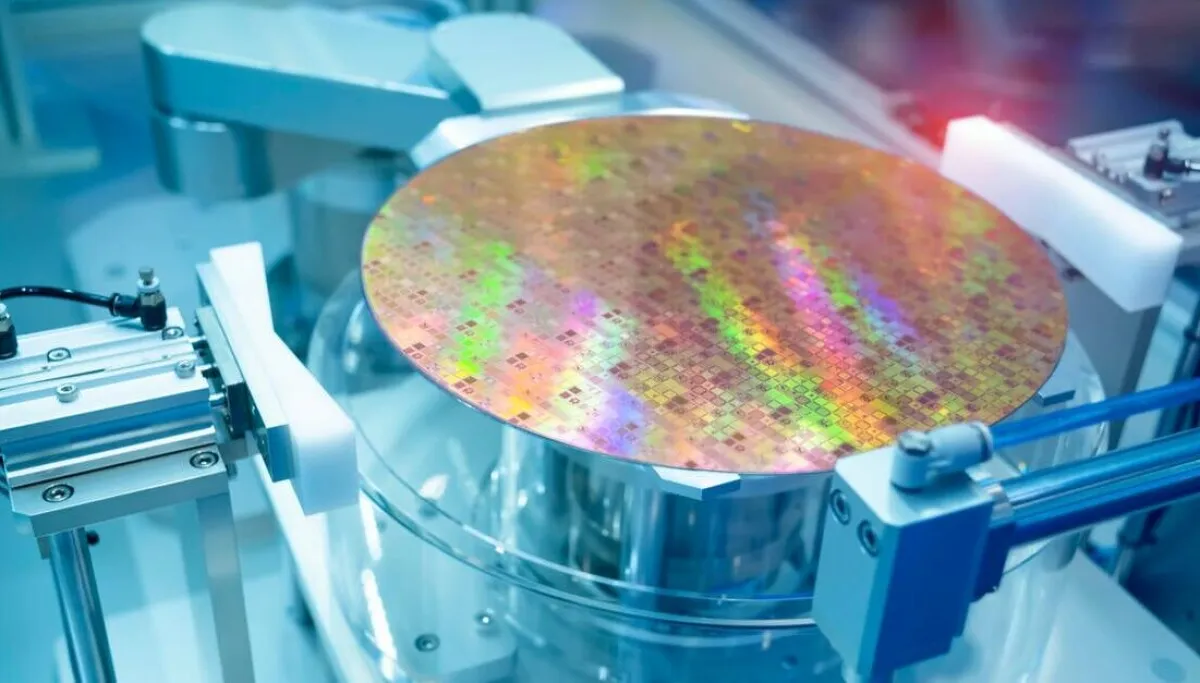 Photo: The Register
Key points
TSMC signed a $2 billion, five-year deal with GlobalFoundries to produce silicon interposers for its CoWoS advanced packaging at GlobalFoundries' Malta, New York fab, with volume production starting in the first half of 2028.
TSMC and GlobalFoundries announced a $2 billion partnership on Thursday to expand American manufacturing of advanced semiconductors used in AI datacenters. Under the multi-year deal, GlobalFoundries will produce silicon interposers for TSMC's chip-on-wafer-on-substrate (CoWoS) advanced packaging at its Malta, New York fab site. The partnership is expected to last five years with the option to extend as needed.
The deal matters because advanced packaging has become a major bottleneck for American chip manufacturing. When TSMC began producing Nvidia's Blackwell generation of GPUs at its Arizona plant last year, the final product still had to be shipped to Taiwan and back for final assembly. This agreement brings a piece of that packaging chain onto US soil, though volume production at Malta will not begin until the first half of 2028 at the earliest.
What the deal covers
Silicon interposers are essential to multi-die chip assemblies like GPUs and AI accelerators. They sit under the compute logic and memory, providing a higher-speed, lower-power path for communication between chips than conventional organic packaging allows. Basically every chip that employs high-bandwidth memory (HBM) today relies on some form of interposer or interconnect bridge to stitch the components together. The GlobalFoundries partnership appears to target this interposer layer.
CoWoS packaging is used primarily by Nvidia and also by AMD. Nvidia's Hopper and Blackwell generations, and AMD's Instinct MI accelerators, combine compute dies and memory chips on a silicon interposer before the assembly is mounted on an organic substrate. TSMC's packaging capacity had already been a bottleneck for Nvidia's AI computer production as far back as 2024, and the company has been expanding it every month.
Why interposers matter for AI chips
Ed Kaste, vice president at GlobalFoundries, said advanced packaging technologies are becoming increasingly critical to delivering the performance, energy efficiency and scalability required for next-generation AI systems. GlobalFoundries plans to add additional capacity at its Malta plant to meet demand, and the agreement forms the basis for expanding capacity over time as customer demand grows. The company's share price rose about 7% from Wednesday to Thursday, and has gained almost 30% since the start of the year.
TSMC has contracted with Amkor, an outsourced semiconductor assembly and test provider, for CoWoS-compatible packaging services in the US, and has broken ground on its own advanced packaging facilities in Arizona. Neither facility is expected to come online until 2028 and 2029 respectively. GlobalFoundries' volume production of interposers at Malta will not begin until the first half of 2028 at the earliest, leaving a gap before domestic advanced packaging capacity comes fully online.
Other US packaging comes online in 2028 and 2029
CoWoS packaging remains a bottleneck for America's domestic chipmaking ambitions, but it is not the only option — just the most popular. Intel Foundry already offers both leading-edge process technology and advanced packaging comparable to TSMC's CoWoS offerings, and this technology is compatible with silicon produced at TSMC fabs. Intel routinely packages chips made by TSMC in its own facilities, though doing so requires designing parts for Intel's packaging.
The GlobalFoundries deal is expected to last five years with the option to extend as needed, and the company plans to expand capacity at Malta over time as customer demand rises. Volume production of the silicon interposers for TSMC is scheduled to begin in the first half of 2028 at the earliest. TSMC's own Arizona advanced packaging facility is expected online in 2029, and the Amkor packaging facility in 2028.
Frequently asked questions
What is the TSMC and GlobalFoundries deal?
TSMC and GlobalFoundries announced a $2 billion, five-year partnership under which GlobalFoundries will produce silicon interposers for TSMC's CoWoS advanced packaging at its Malta, New York fab site, with an option to extend the agreement.
When will volume production of the interposers begin?
Volume production of the silicon interposers for TSMC at GlobalFoundries' Malta, New York fab is expected to begin in the first half of 2028 at the earliest.
Why does advanced packaging matter for US chip manufacturing?
Advanced packaging has become a major bottleneck for American chip manufacturing. When TSMC began producing Nvidia's Blackwell GPUs in Arizona, the final product still had to be shipped to Taiwan and back for final assembly.
How this story was checked
- Fact-checked against 3 cited pages. 25 figures, dates and quotations in this story were found on the pages it cites; 2 passages that could not be checked were cut before publication.
- Reviewed by 4 AI employees — Copy Editor, Fact Checker, Standards Editor, Search Editor, who scored it 68/100 for publication.
Pages checked (3 of 3)
- theregister.comread and checked
- heise.deread and checked
- heise.deread and checked
Written by Kaer from public reporting. Checked 9 October 2026.


