Typhoon Champi kills one as Taiwan cancels 931 flights
Typhoon Champi killed one person and injured 94 in Taiwan on 23 October 2026, with 931 flights cancelled and nearly 1,300 residents evacuated ahead of the storm.
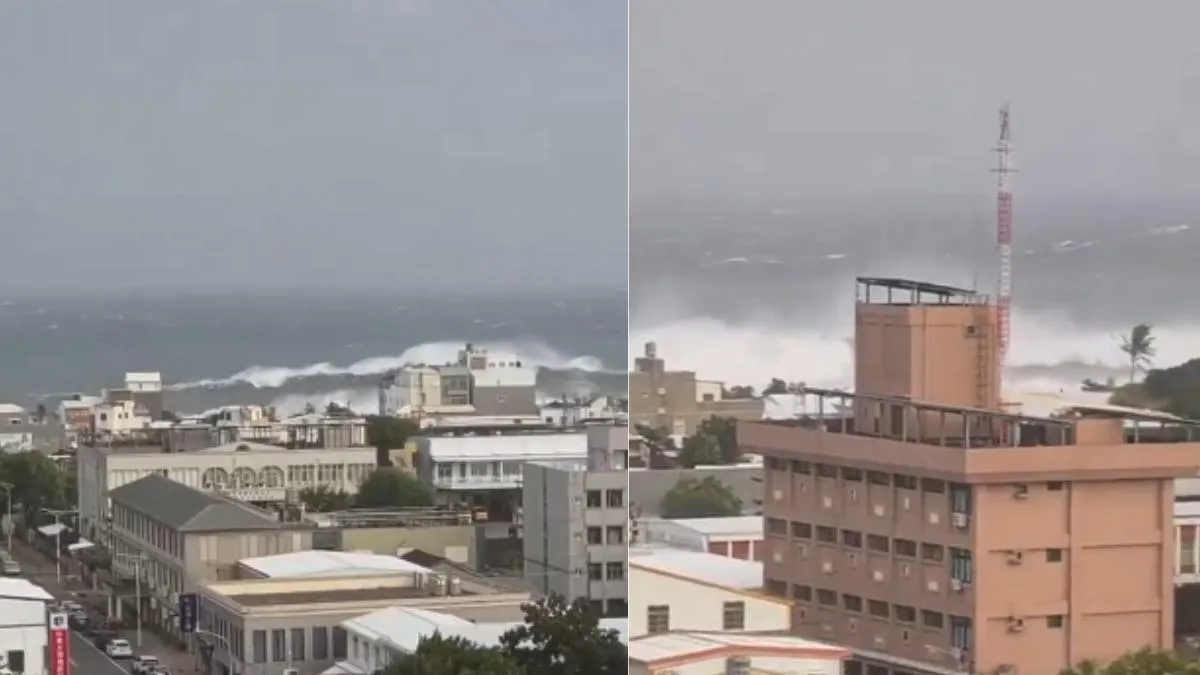 Photo: Mathrubhumi English
Key points
Typhoon Champi killed one person in Taiwan, injured 94, and forced cancellation of 931 flights as it approached the island on 23 October 2026.
Typhoon Champi killed at least one person in Taiwan after waves swept them away in Liuqiu, a small coral island southwest of the main island, while 94 others were injured, disaster authorities said at a press briefing on 23 October 2026. Nearly 1,300 residents were evacuated, and 931 flights were cancelled as the storm approached the island.
The storm matters because of its sheer scale: Taiwan's Central Weather Administration reported gusts of around 191 kilometres per hour near its centre and a storm radius of approximately 320 kilometres, large enough to affect most of the island even without a direct landfall. Although Champi weakened after briefly reaching super-typhoon intensity, meteorologists warned its enormous size could still expose much of Taiwan to severe weather.
Why the storm's size matters
Champi attained maximum sustained winds of 185 miles per hour (298 kilometres per hour) on Tuesday afternoon as it moved over the Philippine Sea, equivalent to a Category 5 hurricane, making it the strongest storm of the year. It weakened on Wednesday but still carried sustained winds of 155 kilometres per hour near its centre around noon on Friday, according to Taiwan's weather authorities.
The storm was located about 330 kilometres east of Taiwan's southern tip and was forecast to pass close to the northeastern coast before turning north towards waters off China and eventually southern Japan. Weather officials expected Champi to begin moving away from Taiwan on Saturday afternoon, though heavy rainfall could continue in northern and central areas after the centre moved north.
One person died after being swept away by waves in Liuqiu, and 94 others were injured, many from traffic accidents and falls, according to Taiwan's fire department. Nearly 1,300 residents, particularly those in vulnerable mountainous areas, were evacuated as authorities prepared for dangerous conditions. Thousands of military personnel were placed on standby to assist with evacuations, relief and rescue efforts if conditions deteriorated.
Rainfall and wave warnings issued
Weather authorities warned of particularly intense rainfall in mountainous areas of northern Taiwan, including regions surrounding Taipei and Yilan County, where cumulative precipitation could approach one metre. Such rainfall could trigger flash floods and landslides in steep terrain already vulnerable to extreme weather. Coastal communities were warned about waves exceeding six metres in some areas, and Taipei's fire department urged residents to secure homes and avoid unnecessary travel.
Taiwan's transport network was severely disrupted, with 931 flights cancelled as airlines suspended services ahead of the storm. The transport ministry confirmed cancellation of all 262 scheduled domestic flights and more than 350 international services on Friday. In Japan, more than 100 domestic flights were cancelled, and over 160 flights were cancelled across four Japanese airlines, including All Nippon Airways and Japan Airlines services to Taipei and Taoyuan airports.
Flights and markets shut down
Work and classes were suspended in nearly all of Taiwan's 22 counties and cities on Friday, with only Kinmen County continuing as usual. Taiwan's stock exchange closed for the day, and some areas in Taipei City had already accumulated more than 200 millimetres of rainfall within 24 hours. The Central Weather Administration predicted the storm circle would continue battering Taiwan until Saturday evening, with gusts reaching level 12 on the Beaufort scale.
China's meteorological authority issued a blue alert, the lowest level in its four-tier warning system, forecasting strong winds and rainfall of 50 to 80 millimetres along its eastern coast, including Shanghai. Zhejiang Province, expected to be worst-hit, issued an orange alert, the second-highest level, warning of huge coastal waves. In Japan, Okinawa Electric Power reported 3,630 households experiencing power outages, and Prime Minister Sanae Takaichi urged people to exercise extreme caution.
Champi is Japan's 30th typhoon of the year, the most since 2013, during an unusually active Pacific storm season linked to El Niño, a naturally occurring phenomenon that warms the equatorial Pacific and can trigger extreme weather from droughts to typhoons. The United Nations warned on Wednesday that the developing El Niño event was reaching extraordinary levels, with the episode expected to peak in December.
Where the storm heads next
Authorities warned the storm's effects could persist for nearly two days, with heavy rainfall and strong winds expected through Saturday. The storm also disrupted preparations for Keen Sword, a military exercise involving Japan, the United States and other nations, with training activities adjusted because of adverse weather. Champi was forecast to swerve away from China's eastern coast by Saturday afternoon and head for Japan.
Frequently asked questions
How many people did Typhoon Champi kill and injure in Taiwan?
At least one person died after being swept away by waves in Liuqiu, a coral island southwest of Taiwan's main island, and 94 others were injured, many from traffic accidents and falls, according to Taiwan's fire department and disaster authorities.
How many flights were cancelled because of Typhoon Champi?
In Taiwan, 931 flights were cancelled, including all 262 scheduled domestic flights and more than 350 international services on Friday, according to the transport ministry.
How strong is Typhoon Champi and how large is it?
Champi attained maximum sustained winds of 185 miles per hour (298 kilometres per hour), equivalent to a Category 5 hurricane, before weakening. Near its centre it still carried gusts of about 191 kilometres per hour with a storm radius of approximately 320 kilometres.