Nigeria tracks 53 Ebola contacts after Ugandan patient case
Nigeria's Centre for Disease Control placed 53 contacts under watch and approved N100,000 weekly support on 26 October 2026, as Africa CDC sent scientists to Abuja to trace how the Ugandan-born patient contracted Bundibugyo Ebola.
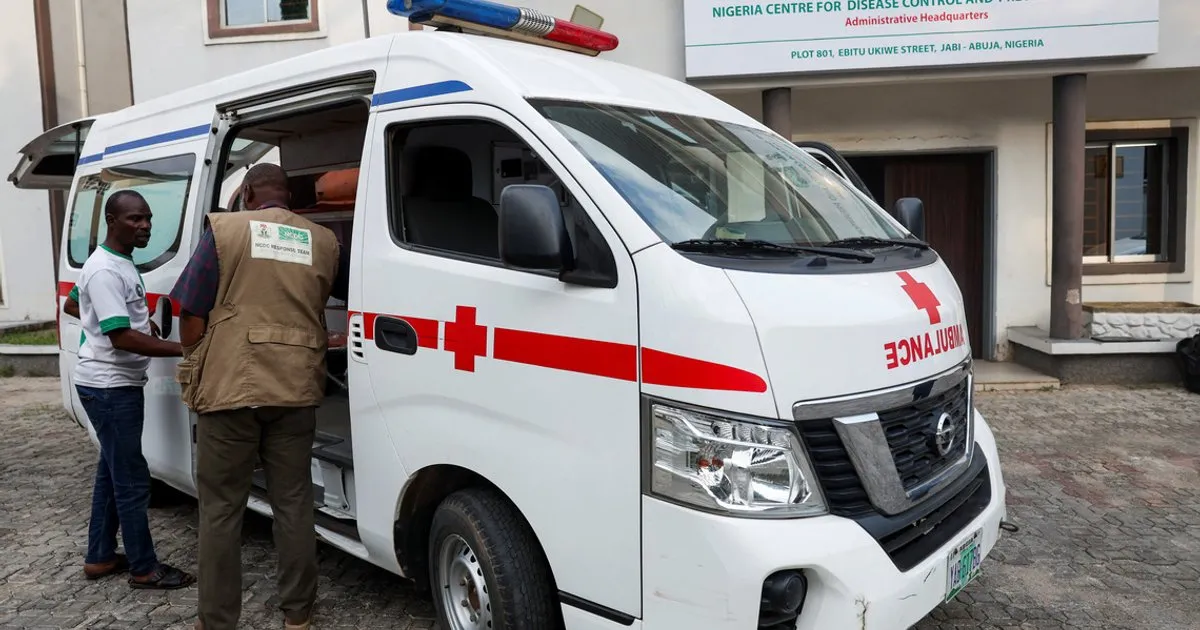 Photo: The Straits Times
Key points
Nigeria is monitoring 53 Ebola contacts and Africa CDC is sending scientists to Abuja to investigate how the Ugandan-born patient contracted Bundibugyo Ebola.
Nigeria's Centre for Disease Control and Prevention (NCDC) is monitoring 53 primary contacts linked to the country's confirmed Ebola case, Director-General Dr Jide Idris said on 26 October 2026, briefing journalists in Abuja. The agency also approved a weekly payment of N100,000 per person to support individuals placed under isolation or quarantine in the Federal Capital Territory. The patient is the Ugandan-born wife of a Swiss diplomat based in Abuja and Nigeria's first Ebola case in more than a decade.
The case matters because it is Nigeria's first Ebola infection in over a decade, and because the Bundibugyo outbreak has already spread from Democratic Republic of Congo to three other African countries. Africa CDC director-general Jean Kaseya said finding out how the patient became ill is necessary to ensure the outbreak is not spreading silently in undiscovered locations, and to help trace and isolate all contacts. The outbreak is already the second-largest Ebola epidemic on record, with no approved vaccine or treatment for the Bundibugyo species.
Why the investigation matters
Idris said 44 of the 53 primary contacts were associated with the health facility where the patient was treated, while nine others were identified outside the facility. The additional contacts include three members of the patient's household and individuals who attended to her at an emergency room she visited before arriving at the facility where her infection was confirmed. The figure is up from the 44 contacts the federal government initially announced after confirming the case on October 20.
Contact tracing and support payments
The NCDC is extending contact tracing beyond people who had direct contact with the patient. Idris said officials will interview each identified contact to determine whether they interacted with others who might also require monitoring. Contacts identified so far include healthcare workers, members of the patient's household, domestic staff and personnel who collected samples from her. Three healthcare providers from the emergency room are among the additional contacts. Officials are categorising contacts by exposure level and conducting follow-up assessments.
The NCDC approved N100,000 weekly support per person to ease the financial burden on identified contacts. Idris said some people under monitoring raised concerns about feeding, accommodation and providing for their families while complying with restrictions. "We are paying for their accommodation; we are paying for their feeding," Idris said. He called the payment unplanned: "This was not planned for, but it is an emergency." The arrangement will be reviewed as the response progresses.
Africa CDC is sending a team of leading Ebola scientists to Nigeria to investigate how the patient was infected, Kaseya said. The team will be led by Jean-Jacques Muyembe, the Congolese co-discoverer of Ebola. Kaseya said the scientists will check possible links with a Kenya case and use genomic sequencing. "We have so many unknowns," Kaseya said. "I'm bringing a group of scientists in Abuja because… we need to be led by science."
Genomic link to Kenya case
One theory the scientists will investigate is a potential link between the Nigeria patient and the first case in Kenya, reported earlier in October in a man who travelled from Congo. On Oct 23, genomic sequencing showed the viruses infecting the two patients were closely related. The Nigeria patient had been on holiday in Uganda and travelled through Entebbe Airport on Oct 3. The Kenya patient, who has since died, was likely in the airport at the same time, with flights around 40 minutes apart.
Kaseya said genomic sequencing showed the viruses were similar but did not mean one patient directly infected the other. The Abuja patient, whose condition is improving, said she does not remember meeting the Kenya patient. The flights did not depart from the same gate, and it is not clear whether they had any contact. Investigators are not excluding indirect contact through another person. Her travel documents show she had not visited the outbreak epicentre in Democratic Republic of Congo.
There was tension the previous week over where the infection occurred. Uganda's government insisted the Abuja patient had been to Congo, while Nigerian authorities suggested she had not and was infected in Uganda, which has been Ebola-free since August. Kaseya said all countries involved are now willing to collaborate. The World Health Organisation has said the patient developed symptoms on October 7 and sought medical attention on October 11 before her infection was confirmed.
Dispute over where infection occurred
The Ebola Bundibugyo outbreak in Congo has caused almost 10,000 cases and more than 4,600 deaths, and has spread to three other African countries: Kenya, Nigeria and Uganda. Ebola spreads through close contact with the infected bodily fluids of a person with symptoms, according to the World Health Organization. The disease can cause fever, vomiting, diarrhoea and, in severe cases, internal and external bleeding. There is currently no approved vaccine or treatment for Ebola Bundibugyo.
Nigeria's Ebola patient flew out of the country on a medical evacuation flight on Monday morning, local station Arise TV reported on 26 October 2026. The flight departed from Abuja's Nnamdi Azikwe International Airport. The patient is the Ugandan-born wife of a Swiss diplomat based in Abuja. Nigerian health authorities and the Swiss foreign ministry did not immediately respond to requests for comment.
Africa CDC's team will also examine more sequencing data to work out where the Kenyan patient was infected, Kaseya said. The investigation aims to establish the full chain of possible exposure and ensure everyone who might have come in contact with the patient is identified and placed under monitoring. Contacts who develop symptoms will be assessed promptly, with testing and other interventions provided where necessary, the NCDC said.
Frequently asked questions
How many Ebola contacts is Nigeria monitoring?
Nigeria's Centre for Disease Control and Prevention is monitoring 53 primary contacts linked to the confirmed Ebola case. Of these, 44 are associated with the health facility where the patient was treated, and nine were identified outside the facility, including three members of the patient's household.
Why are scientists being sent to Nigeria?
Africa CDC is sending a team led by Jean-Jacques Muyembe to investigate how the patient was infected. The team will check possible links with a Kenya case and use genomic sequencing. Director-General Jean Kaseya said the goal is to ensure the outbreak is not spreading silently in undiscovered locations.
Where was the Ebola patient infected?
The exact infection location is disputed. Uganda's government insisted the Abuja patient had been to Congo, while Nigerian authorities suggested she was infected in Uganda. Her travel documents show she had not visited the outbreak epicentre in Democratic Republic of Congo, and genomic sequencing links her virus closely to a Kenya case.