Bank of England raises UK rates to 4% in first hike in three years
The Bank of England raised its base rate to 4% on 5 November, the first increase in three years, as it forecast inflation peaking at 4.9% next year.
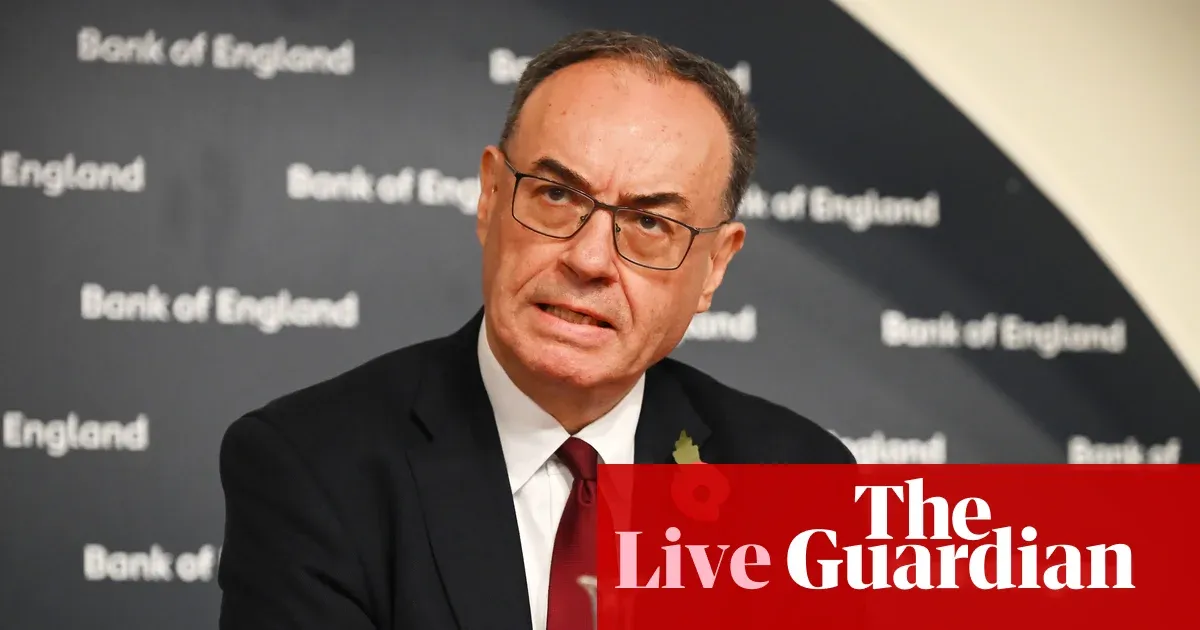 Photo: The Guardian
Key points
The Bank of England raised its base rate to 4% on 5 November, the first increase in three years, as it forecast inflation peaking at 4.9% next year.
The Bank of England raised its base rate to 4% on 5 November, the first increase in three years, as it moved to curb inflation driven by the US-Iran war's impact on oil prices. The monetary policy committee voted eight to one for the rise, with Catherine Mann preferring a half-point increase to 4.25%.
The rise, from 3.75%, returns rates to where they were last autumn and will increase borrowing costs for mortgages, loans and credit cards, while boosting savings returns. Governor Andrew Bailey said the decision "shouldn't be seen as the first in an inevitable long sequence of hikes", but warned "unless the conflict in the Middle East is resolved, neither does it seem likely to be the last increase".
What the rise means
The Bank now expects inflation to peak at 4.9% in the middle of next year, up from 3.2% in its July forecast. It does not expect inflation to return to its 2% target until 2028. In an "adverse scenario" where the war escalates and oil prices rise further, inflation could reach 6.2% next year, the Bank said.
The rise comes as consumer prices index inflation hit 3.5% in September, up from 3% in January, according to the Office for National Statistics. The Bank said higher energy prices were the main driver, with oil persistently above $100 a barrel in recent months as hopes faded of a deal to reopen the Strait of Hormuz.
Bailey said the hike was warranted due to higher energy prices, and pointed to the Middle East as the main factor in future decisions. "Put simply, it requires real progress towards settling the conflict in the Middle East," he said. He added that he could "see the argument" for a further rise, but would take a "more conditional approach" dependent on energy prices and inflation.
The inflation forecast
The Bank said there was "limited evidence" that higher energy prices were pushing up prices or wages across the economy, with companies absorbing cost increases and accepting lower margins. However, it said the persistence of high oil prices meant price pressures were building through supply chains used by UK firms.
The rise will add £31 a month to repayments for 510,000 tracker mortgage-holders, according to banking trade body UK Finance. Around 470,000 borrowers on standard variable rates are also likely to be affected, with the average standard variable rate at 7.13% as of 1 November. Most mortgage borrowers are shielded because they are on fixed-rate deals, with UK Finance saying 87% of the total 8.47 million mortgages are fixed. However, many fixed-rate deals will expire over the next few years, leaving those borrowers facing a bill shock when they remortgage.
Mortgage impact
Patrick Bryson, a guitar teacher from Brighton, is set to see his five-year mortgage term with a 3.51% interest rate end soon. The best deal the 51-year-old can find is a 5.17% loan with HSBC, which means his repayments will jump from £1,420 to £1,680 a month from February. The Bank's next meeting is 17 December, and economists are split on whether another rise will follow. Oxford Economics argues a December hike is "on the table", calling the meeting "a coin flip" dependent on oil and gas prices. Deutsche Bank's Sanjay Raja sees today's move as an "insurance policy", expecting one more hike to 4.25%.
Chancellor John Healey said the Iran conflict "is reaching deep into the pockets of families and businesses here at home". He pointed to measures in his budget, including a £100 energy payment for 20 million households, an extended tax cut on electricity bills and a frozen fuel duty. The Bank also predicts the UK economy will slow next year, with average growth of 1.6% this year dropping to 1.3% in 2027.
Frequently asked questions
Why did the Bank of England raise interest rates?
The Bank raised rates to 4% on 5 November to curb inflation driven by the US-Iran war's impact on oil prices. Governor Andrew Bailey said further increases are likely unless the conflict is resolved.
How will the rate rise affect mortgages?
The rise adds £31 a month to repayments for 510,000 tracker mortgage-holders, according to UK Finance. Around 470,000 borrowers on standard variable rates are also affected, with the average standard variable rate at 7.13%.
What is the Bank's inflation forecast?
The Bank expects inflation to peak at 4.9% in the middle of next year, up from 3.2% in its July forecast, and not return to its 2% target until 2028. In an adverse scenario, inflation could reach 6.2% next year.