UK sanctions five Myanmar officers after ICJ genocide ruling
Britain imposed asset freezes and travel bans on five senior Myanmar military officers on 23 November and pledged legislation to ban aviation fuel exports to the military.
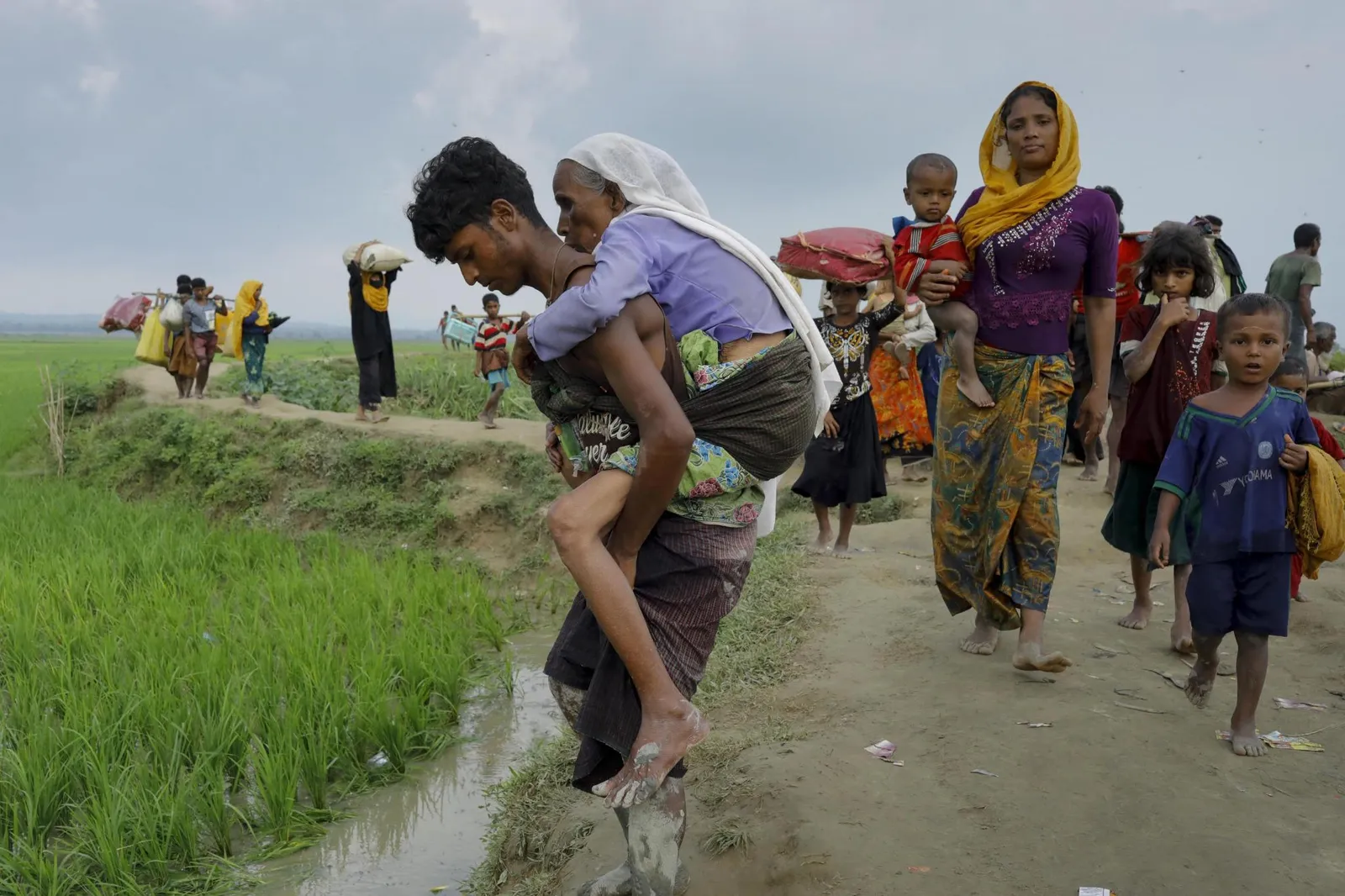 Photo: Myanmar Now
Key points
The UK sanctioned five senior Myanmar military officers and pledged to ban aviation fuel exports after the ICJ found Myanmar committed genocide against the Rohingya.
The United Kingdom imposed sanctions on five senior Myanmar military officers on 23 November, including two former commanders of operations in Rakhine State, and said it would legislate to stop supplying aviation fuel to the military. Foreign Secretary Ed Miliband announced the measures in the House of Commons. They followed the International Court of Justice's judgment of 19 November that Myanmar committed genocide against the Rohingya.
The court found that Myanmar violated the 1948 Genocide Convention during the military's 2017 clearance operation in western Rakhine State. The ICJ ruling found that around 10,000 Rohingya were killed, that entire villages were reportedly burnt down and that women and girls were raped. More than 1.2 million refugees fled across the border to Bangladesh.
What the ICJ found
The sanctions freeze the officers' assets and ban them from travelling. Britain acted under the Myanmar (Sanctions) Regulations 2021, the framework it uses to target individuals linked to the military's abuses. The government said it had reasonable grounds to suspect that one of the five, Lt.-Gen. Kyaw Swar Oo, was responsible for a 10 December 2025 airstrike on Mrauk-U General Hospital in Rakhine State that killed 34 civilians, including an infant.
Miliband named the military president, Min Aung Hlaing, who commanded the armed forces during the 2017 operations, among those Britain holds responsible. Britain has sanctioned Min Aung Hlaing since the coup of February 2021. The foreign secretary called on Myanmar to investigate, prosecute and punish those responsible and to prevent such atrocities from recurring.
On the day of the ruling, Britain ordered the expulsion of Myanmar's defence attaché in London and summoned the embassy's chargé d'affaires. Miliband said the UK would urgently raise the judgment at the UN Security Council and had requested a dedicated meeting on Myanmar in around two weeks. He also called for an immediate halt to hostilities and an end to airstrikes on civilians.
Who the five officers are
The five officers named are Maj.-Gen. Kyaw Soe, Lt.-Gen. Kyaw Swar Oo, Maj.-Gen. Myo Min Tun, former Maj.-Gen. Myat Thet Oo and Brig.-Gen. Myo Htut Hlaing. Kyaw Soe headed the Western Regional Military Command, which oversees operations in Rakhine State, from June to July this year, and previously commanded Military Operations Command No. 7 in Pekon, southern Shan State.
Kyaw Swar Oo previously commanded both the Coastal and Western regional military commands and now serves as deputy minister for border affairs. Myo Min Tun headed the Triangle Region Military Command and was commander of the Eastern Central Regional Military Command, based in Kho Lam in southern Shan State, as of September 2023. Myat Thet Oo commanded the Northern Regional Military Command after the coup and was later appointed ambassador to Laos.
Miliband also announced £5 million in humanitarian aid intended to reach around 350,000 Rohingya and other residents of Rakhine State facing malnutrition and limited access to clean water. A further £3 million will support the documentation of human rights violations across Myanmar, the collection and preservation of evidence, and survivors in their pursuit of justice.
The junta's rejection
The ruling drew criticism from the opposition. Shadow foreign secretary Wendy Morton warned against the weaponisation of international law and pointed out that the court decided the case nine to six. She said dissenting judges had raised questions about proof of intent, the standard of proof and the treatment of evidence. Miliband rejected her criticism, saying the majority decision represented the court's position.
Myanmar's military government has rejected the judgment. Speaking in Naypyitaw on 20 November, Min Aung Hlaing's spokesperson Khaing Khaing Soe pointed to the 9–6 vote and said Myanmar had been unjustly accused. The junta has labelled the ICJ ruling unfair. In a joint statement issued on 23 November, 14 foreign ministers, including from the UK, Australia, Canada and The Gambia, which brought the genocide case against Myanmar, called on the country to comply fully with the legally binding judgment. Belgium, Cyprus, Czechia, Estonia, Iceland, Latvia, Luxembourg, New Zealand, Portugal and Spain endorsed the statement, which stressed conditions for the safe, voluntary and dignified return of Rohingya refugees.
Miliband told parliament that legislation banning the supply and delivery of aviation fuel to Myanmar would be introduced in the coming months, citing the military's use of air power against civilians. MPs were also told that airstrikes and violence involving the Arakan Army were continuing. The dedicated Security Council meeting on Myanmar is expected in around two weeks.
Frequently asked questions
Why did the UK sanction Myanmar military officers?
Britain acted after the International Court of Justice found on 19 November that Myanmar violated the 1948 Genocide Convention and committed genocide against the Rohingya during the 2017 clearance operation in Rakhine State, in which around 10,000 Rohingya were killed.
Who are the five sanctioned Myanmar officers?
Maj.-Gen. Kyaw Soe, Lt.-Gen. Kyaw Swar Oo, Maj.-Gen. Myo Min Tun, former Maj.-Gen. Myat Thet Oo and Brig.-Gen. Myo Htut Hlaing. The measures freeze their assets and ban them from travelling.
What did the UK announce besides sanctions?
Foreign Secretary Ed Miliband said legislation would be introduced in the coming months to stop aviation fuel exports to Myanmar. Britain also pledged £5 million for about 350,000 Rohingya and Rakhine residents and £3 million to document human rights violations.