Hackers breach US Air Force Cloud One platform
Hackers reportedly breached the US Air Force's Cloud One enterprise cloud, disrupting migrations and updates across a 2017 platform used for military operations and logistics.
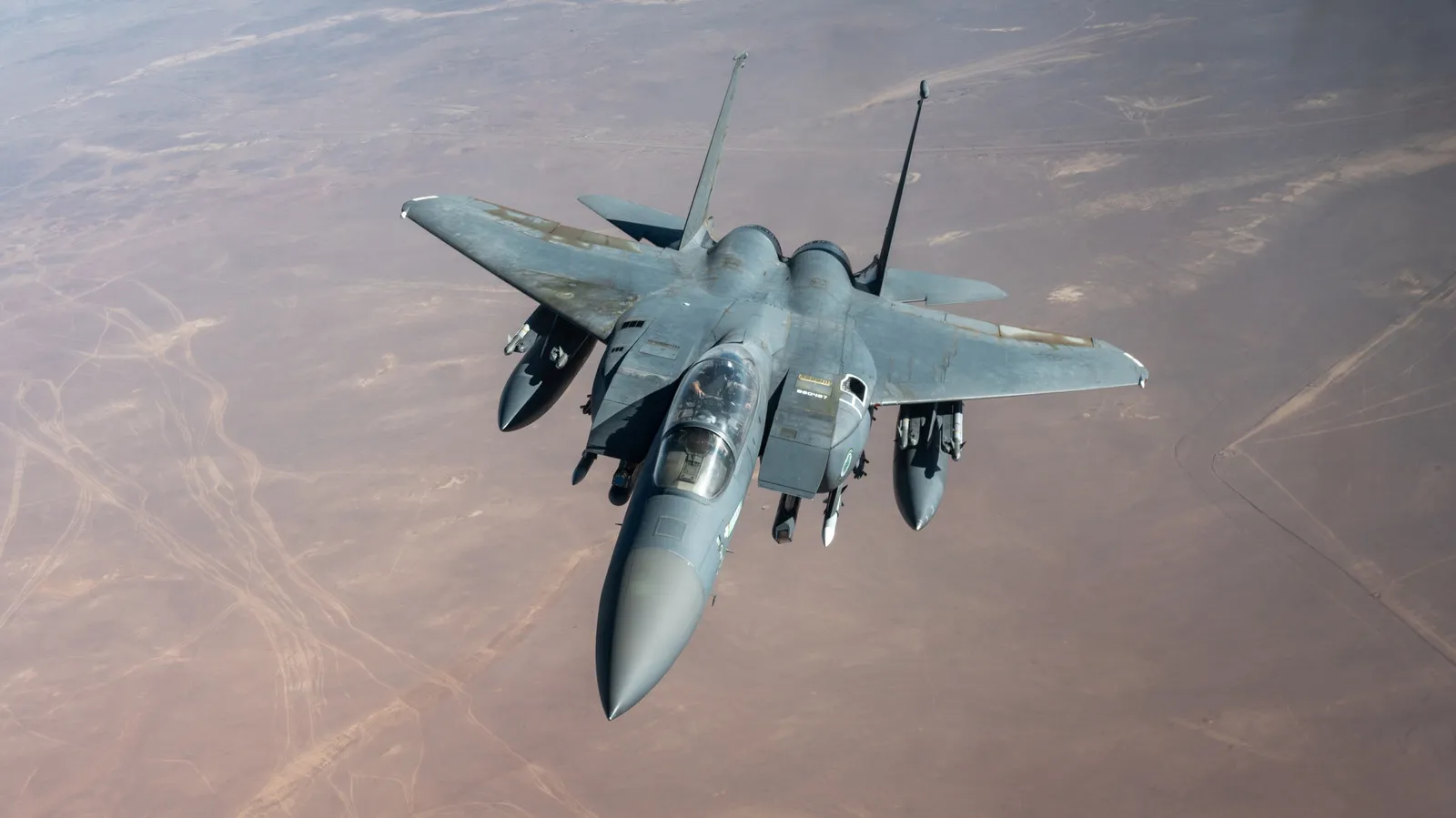 Photo: Engadget
Key points
Hackers reportedly breached the US Air Force's Cloud One platform, disrupting application migrations and software updates; attackers, scope and stolen data remain unknown.
Hackers reportedly gained access to Cloud One, the US Air Force's enterprise cloud computing platform, which first reported the news. The breach was discovered within the past month during system upgrade work. It is not clear who the hackers were, what data they may have obtained, or whether any data was stolen. The Air Force declined to comment on the security posture, vulnerabilities or operational status of specific networks and systems, saying it continuously takes prudent measures to protect Department of the Air Force information, systems and mission capabilities. Cyber Command, the military's cyberwarfare division, is said to have been brought in to review the situation.
Cloud One was established in 2017 and is powered by Amazon Web Services, Google Cloud, Oracle Cloud Infrastructure and Microsoft Azure. It was designed as a central hub for all of the Air Force's IT needs, including payroll and personnel data, and the Theater Integrated Combat Munitions System (TICMS), which tracks bombs and missiles across more than 200 Air Force locations worldwide. Cloud One is also home to the Cloud-Based Command and Control (CBC2) system, which aggregates air-defense radar data and other data streams from across North America. Leidos has been the prime contractor for Cloud One since 2025, replacing SAIC. One of Reuters' sources said Cloud One is one of the largest cloud platforms of the US military.
What the breach disrupted
The emergence of the breach has put certain projects on hold, including an effort to shift more mission apps to Cloud One. Some users' admin rights were reportedly revoked, and updates to applications already running on Cloud One were prohibited, stopping staff from applying various fixes. The migration of back-office applications into the cloud has been paused. The disruption is occurring while a new series of serious security flaws has become known.
One person familiar with the matter said the hackers exploited a vulnerability to access what is known as the control plane. They compared this to 'a universal remote' that could potentially allow someone 'to check the operational status of military aircraft or the movement of spare parts.' However, it is not clear if the hackers actually did this. A source said that the attackers used a software vulnerability to reach the control plane, which theoretically could allow querying the operational status of military aircraft or tracking spare parts.
How the intrusion worked
Reuters could not identify the identity of the hackers, the extent of the intrusion or the scope of what data they may have been able to collect, if any. Cloud One's leadership, in an article on FedScoop.com in 2023, touted the platform's 100% success rate in combatting adversarial intrusions, writing: 'There is no room for error when it comes to security.' The Air Force's Cloud-Based Command and Control, a system that coordinates air defense radars, and TICMS are part of the Cloud One platform.
The reported breach is the latest in a series of recently disclosed hacks on government and military systems. On November 21, it was revealed that hackers reportedly breached the FBI's National Crime Information Center (NCIC), a nationwide database used by local, state and federal law enforcement agencies. The database contains information on wanted and missing persons, outstanding arrest warrants, stolen vehicles and firearms, and other criminal justice records. The intrusion came two months after the ShinyHunters extortion group breached FBI systems by exploiting an unpatched Oracle PeopleSoft vulnerability in the agency's recruitment website, FBIJobs.gov.
A wider federal breach wave
Earlier this week, hackers reportedly breached an open-source intelligence (OSINT) analysis system at the Central Intelligence Agency (CIA). The incident also affected the Office of the Director of National Intelligence (ODNI) and the National Geospatial-Intelligence Agency (NGA). Hours after the CIA breach was reported, the US Treasury Department's Financial Crimes Enforcement Network (FinCEN) disclosed that it was investigating unauthorized access to its systems. It is unclear whether any of the recently disclosed federal government breaches are connected.
A late October hack on Department of Homeland Security (DHS) systems exposed the personal information of over 41,000 DHS employees, including undercover Immigration and Customs Enforcement (ICE) officers. A recent cyberattack on the Department of Treasury disabled portions of FinCEN. The National Security Agency (NSA) made headlines when sources reportedly said the agency's internal communication network was suffering from a service outage. A Pentagon data breach exposed records of over 3 million people, including 2.76 million military and civilian personnel.
The CIA breach was reportedly conducted using the ARTEX AI-powered penetration testing platform, which the FBI recently warned was being used to automate cyberattacks worldwide. In an advisory, the FBI said multiple threat actors had used ARTEX since at least August 2026 in attacks targeting government, defense, healthcare, financial and technology organizations. ARTEX is an open-source penetration testing framework that uses AI agents to automate various stages of a cyberattack, including discovering and exploiting vulnerabilities, escalating privileges and stealing data.
According to the FBI, some ARTEX-powered intrusions have progressed from initial targeting to privileged access in less than three hours. The platform was used by a Chinese state-aligned threat actor tracked by Microsoft as Storm-0940 in an October attack targeting ConnectWise's Cloud Backup service, and Huntress identified at least 162 compromised Microsoft 365 customer tenants during the campaign. Other attacks linked to ARTEX include attacks against South Korean financial institutions that exposed personal information of approximately 67,000 people, a South Korean hacking campaign targeting more than 90 organizations that resulted in the theft of approximately 8.2 million data records and the arrest of seven suspects, and a cyberespionage campaign attributed by CrowdStrike to a Chinese hacking group tracked as Vapor Panda, which targeted more than 200 organizations across 14 countries and compromised at least nine.
As of early November, researchers had identified more than 1,600 publicly exposed ARTEX management consoles, with the number believed to be much higher. It remains unknown whether ARTEX or other AI-powered hacking tools were used in the attacks against the Air Force, FBI or FinCEN. Cyber Command has reportedly been called in to assess the impact of the Cloud One breach, with the attackers, scope of the attack and whether any data was stolen currently unknown.
A U.S. Department of War official told Fox News Digital: 'As a matter of policy and operations security, the Department of War does not comment on the status of our networks. We refer you to the U.S. Air Force for more information.' The Air Force's statement to Fox News Digital added: 'The Department continues to assess and modernize its enterprise cloud capabilities to meet evolving mission, security, resilience, and user requirements. Decisions regarding technical architecture, workload placement, contracts, and future capabilities are made through established governance, acquisition, and risk-management processes.'
Frequently asked questions
What happened?
Hackers reportedly breached the US Air Force's Cloud One platform during system upgrade work, disrupting application migrations and software updates.
Who was behind the breach?
The identity of the hackers, the extent of the intrusion and the scope of any data collected remain unknown.
What is Cloud One?
Cloud One is a 2017 enterprise cloud platform powered by Microsoft, Amazon, Oracle and Alphabet, used for payroll, personnel data, logistics, maintenance and TICMS, which tracks bombs and missiles across more than 200 Air Force locations.