US may lose measles elimination status as cases double
US could lose measles elimination status this week as cases more than doubled to over 5,400, with a PAHO panel set to decide.
 Photo: STAT News
Key points
The US could lose its measles elimination status this week as cases more than doubled in a year, with over 5,400 infections nationally.
The United States could lose its measles elimination status this week. Cases more than doubled in the last year, with over 5,400 infections nationally. If the US loses its measles-free status, it would join Canada and several European and Asian nations that had eliminated the disease only for it to return.
The US is in the midst of its worst measles outbreak since 1991, according to the Johns Hopkins University International Vaccine Access Center tracker. Just this year, six people have died in Pennsylvania, a child died in New York on election day and an infant died in Wisconsin days later. Nearly every US state has an active outbreak.
Outbreak worst since 1991
A panel of eight independent experts will consider the epidemiological evidence in Washington DC, part of a group called the Pan American Health Organization (PAHO), a regional branch of the World Health Organization (WHO). The PAHO director will make the final call. "That is a tremendous step backwards," said Dr Paul Offit, director of the Vaccine Education Center, an attending physician in the division of infectious diseases at Children's Hospital of Philadelphia, and a prominent critic of Kennedy.
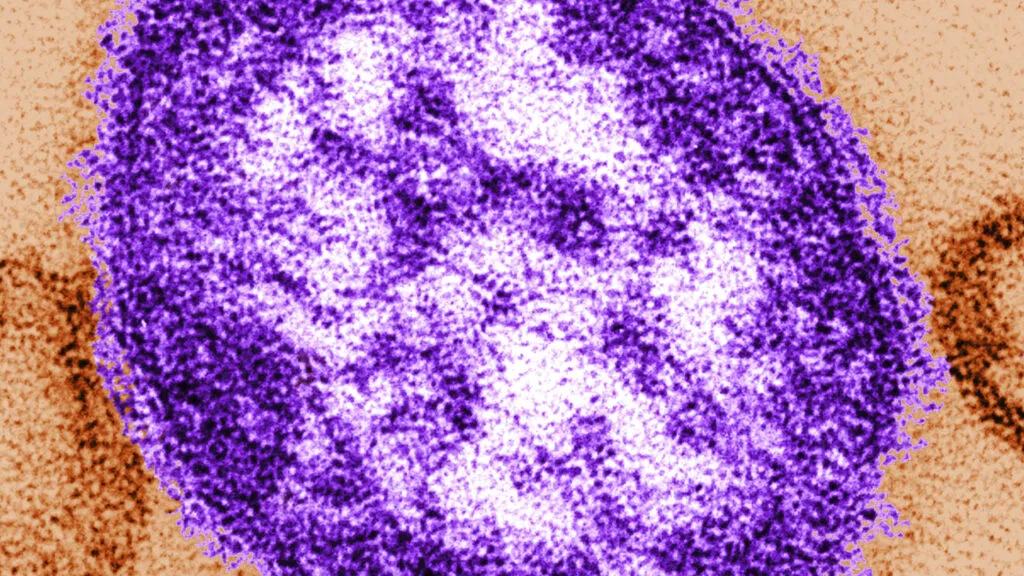
Measles is considered one of the most infectious diseases known to medicine. The overwhelming majority of Americans vaccinate themselves and their children, but the sheer contagiousness of measles means even small dips in immunity allow it to spread. It kills one to three people per 1,000 people and hospitalizes about one-in-five unvaccinated people who are infected. Two doses of the measles, mumps and rubella (MMR) vaccine is 97% effective against the disease.
Although elimination status is a formal public health designation, its loss has real effects on everyday Americans. In just one example, Dr David Margolius, the Cleveland, Ohio, director of public health, is warning people to find proof of their measles vaccination in the event they're exposed to a measles-positive patient. "Now is the time to go and find that evidence, because now this is a real day-to-day life thing that could happen to you," said Margolius, who is also a director-at-large of the Big Cities Health Coalition. Without proof, patients face either an immunology blood draw or a 21-day quarantine.
Real effects on Americans
Cleveland health authorities have already done a tremendous amount of detective work this year to track down people exposed to measles patients in hospital waiting rooms and elevators. "We reach out to people and for most people, including myself, we have no personal experience with measles," he said. "They've got everything else going on in their life, and now they're getting this call."
The types of people who contract measles has also changed. In 1963, when the vaccine was first licensed, measles was considered a childhood disease. Most children contracted the disease by the age of five. "Now you're seeing the epidemiology shift," said Offit. Two-thirds of people infected with measles in Pennsylvania are adults, a group on which researchers have little information. Mothers have even given birth to babies with measles. "Now, you're seeing something we just didn't see at all – congenital measles."
The potential loss of elimination status comes at a tenuous moment for the Trump administration. Republicans just endured losses in the midterm elections. Several new Democratic doctors and scientists are slated to come into Congress on promises to hold Kennedy accountable. At the same time, Trump has doubled down on his commitment to vaccine opposition with the appointment of Stephen Miller as chief of staff. "Next to me, Stephen Miller is the strongest Maha supporter in the administration," Kennedy said in a statement about Miller's appointment. "It's time to unleash the Kraken."
Vaccine hesitancy grows
Meanwhile, the capacity of the Centers for Disease Control and Prevention (CDC) to respond has been significantly hampered by the Trump administration. The agency has lost up to one-third of its staff, and Kennedy has been criticized for interfering in the agency's reporting of measles deaths and spreading misinformation about the measles vaccines. Even so, Margolius doesn't lay all the blame at Kennedy's feet. Vaccine hesitancy was increasing before Trump took office, and pandemic-era disruptions were real.
"Some of the narrative has been to pin this on our health secretary, which certainly I think he could do much more to help the situation rather than hurting the situation, but I do think the case count is climbing everywhere," he said. "This could happen even under a more pro-public health administration." The second Trump administration also made broad changes that challenge measles elimination globally. Some of Trump's first acts in 2024 included withdrawal from the World Health Organization (WHO) and the Global Vaccine Alliance (GAVI). GAVI provides measles vaccines to nations such as India and Malawi.
Frequently asked questions
What does losing measles elimination status mean?
It means the US would no longer be considered to have eliminated measles, joining countries like Canada where the disease has returned. It reflects sustained transmission and has practical effects, such as requiring proof of vaccination for exposed individuals.
How many measles cases are there in the US?
More than 5,400 cases nationally, according to the Johns Hopkins University International Vaccine Access Center tracker, making it the worst outbreak since 1991.
Who decides if the US loses elimination status?
A panel of eight independent experts from the Pan American Health Organization (PAHO) will consider evidence in Washington DC, and the PAHO director will make the final call.