Hegseth announces US-Venezuela military cooperation deal in Caracas
US Defense Secretary Pete Hegseth announced a military cooperation agreement with Venezuela on 18 November, covering joint training and intelligence sharing.
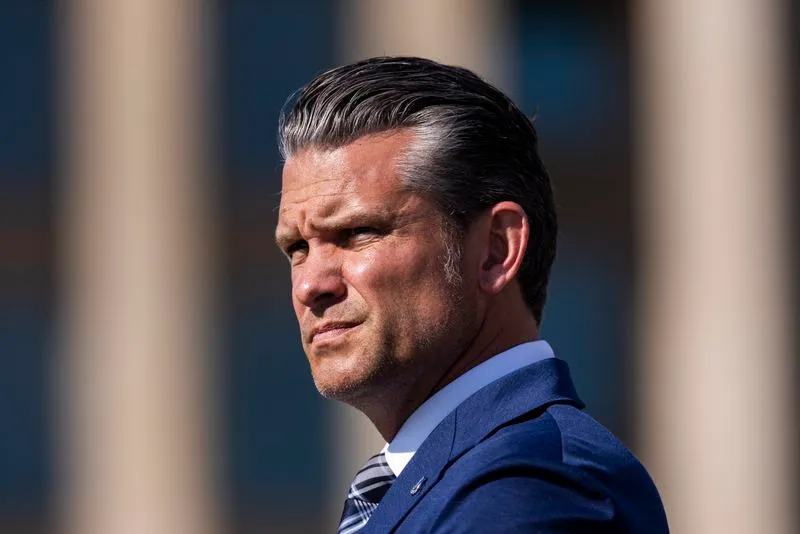 Photo: Daily Maverick
Key points
Hegseth and Venezuela's acting president announced a military cooperation deal covering joint training and intelligence sharing.
US Defense Secretary Pete Hegseth announced a military cooperation agreement with Venezuela on 18 November during an unannounced visit to Caracas, his first trip since US special forces deposed President Nicolas Maduro in a January raid. Hegseth met acting President Delcy Rodriguez at the Miraflores presidential palace in a televised meeting, then spoke at the US embassy.
The agreement covers joint training, intelligence sharing and other aspects of US-Venezuelan military cooperation, Hegseth said. It was signed by Hegseth and Venezuelan Defense Minister Gustavo Gonzalez Lopez. Rodriguez said the arrangement would help confront "common threats" and strengthen training for Venezuela's armed forces, according to reports of the meeting.
What the deal covers
Hegseth said the partnership would herald a significant ramp-up in joint action against drug trafficking groups. "To the narco terrorists who have used this as a safe haven, your time is up. We will hunt you down. We will find you. And we will kill you," he said, speaking from the US embassy.
Neither Hegseth nor Rodriguez offered further details on Wednesday, and the Pentagon had not published the full text of the agreement. It was not clear how long the agreement runs, what it would cost, or whether it commits US forces to operate inside Venezuela. The cooperation resumes a relationship suspended for years amid deteriorating diplomatic ties.
Oil and regional context
Hegseth praised what he called "close cooperation" with Rodriguez and said Venezuela had gone from the "most aggressive regional threat" to a "compliant security partner" that is rebuilding its military alongside the United States. He tied the agreement to a broader campaign against drug trafficking in the Western Hemisphere. The visit came two weeks after voter anger over the Iran war helped drive an election defeat for President Donald Trump's Republican Party in Congress. The nearly nine-month-old conflict has driven up gasoline prices in the US and around the world, as Iran fires on tankers passing through the Strait of Hormuz. Hegseth said the oil deal with Venezuela "makes the Strait of Hormuz a non-factor for the Western Hemisphere."
Washington already holds growing influence in Venezuela, particularly in the oil sector. In August, a deal granted producer North American Blue Energy Partners, or NABEP, long-term access to 17 oilfields containing about a fifth of the country's oil reserves. The United States secured a 35% stake in NABEP's parent, a guaranteed share of output and first refusal rights on the remainder.
Alejandro Betancourt, the Venezuelan businessman who controls NABEP, told reporters he discussed oil cooperation with Hegseth, adding that NABEP plans to produce over 250,000 barrels per day by year-end, up from 224,000 barrels per day in mid-October, according to company figures. Hegseth's Caracas stop came at the start of a trip to Latin America. Later on Wednesday, he flew to Colombia to deliver military equipment and discuss security cooperation. Colombia's defense minister said Hegseth was due to hand over a Lockheed Martin Hercules C-130 aircraft and discuss US support as Colombia battles drug trafficking groups.
In August, Hegseth floated the possibility of joint strikes on Colombian armed groups. Colombia's new right-wing President Abelardo De La Espriella rejected that plan because of a lack of votes in Congress. A US official, speaking on condition of anonymity, confirmed concerns in Bogota about support in Congress but did not say De La Espriella had rejected the plan outright.
Later on Wednesday, De La Espriella denied a report, saying he had not rejected any proposal from Trump's administration and that Colombia's cooperation with the United States focused on strengthening its security forces rather than seeking foreign troops. He added that any deployment of foreign forces would require congressional approval.
Hegseth invoked a revamped Monroe Doctrine, the 19th-century policy asserting US primacy across the Americas, calling it the "Donroe Doctrine" — a play on Trump's name. "That is the Donroe Doctrine. Venezuela has gone from our most aggressive regional threat to a compliant security partner on its way to rebuilding its military alongside the United States," he said.
Frequently asked questions
What does the US-Venezuela military cooperation deal cover?
The agreement covers joint training, intelligence sharing and other aspects of military cooperation between the two countries' armed forces, according to US Defense Secretary Pete Hegseth.
When was the US-Venezuela military deal announced?
Hegseth announced the agreement on 18 November 2026 during an unannounced visit to Caracas, his first trip since the January raid that removed President Nicolas Maduro.
Who signed the US-Venezuela military agreement?
The agreement was signed by Hegseth and Venezuelan Defense Minister Gustavo Gonzalez Lopez, with acting President Delcy Rodriguez receiving Hegseth at the presidential palace.