Vaxcyte's VAX-31 hits all primary endpoints in Phase 3 OPUS-1 trial
Vaxcyte said its 31-valent pneumococcal vaccine VAX-31 met all co-primary immunogenicity endpoints in adults aged 50 and older in the pivotal Phase 3 OPUS-1 trial, announced on 5 October 2026.
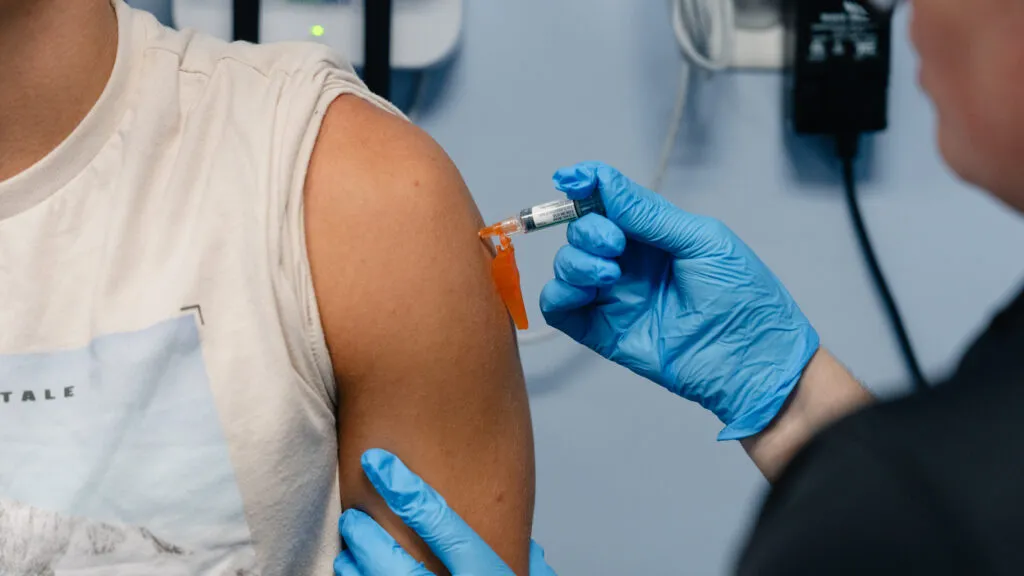 Photo: STAT
Key points
Vaxcyte's VAX-31 met all prespecified co-primary immunogenicity endpoints in the pivotal Phase 3 OPUS-1 trial in adults aged 50 and older.
Vaxcyte said its investigational 31-valent pneumococcal conjugate vaccine VAX-31 met all prespecified co-primary immunogenicity endpoints in the pivotal Phase 3 OPUS-1 trial in adults aged 50 and older. The company announced on 4 October 2026 it would present topline data on 5 October 2026. The trial assessed safety, tolerability and immunogenicity of the candidate to prevent invasive pneumococcal disease and pneumococcal pneumonia in adults.
The results matter because VAX-31 is designed to compete with Pfizer's Prevnar 20 and Merck's Capvaxive in a lucrative vaccine market, and the OPUS-1 findings will form the foundation for an upcoming Biologics License Application submission to the U.S. Food and Drug Administration. Vaxcyte describes VAX-31 as the broadest-spectrum pneumococcal conjugate vaccine candidate in the clinic today, covering serotypes in circulation linked to high case-fatality rates, antibiotic resistance and meningitis.
What the trial showed
In the OPUS-1 trial, VAX-31 met noninferiority criteria across all 28 serotypes shared with existing vaccines Prevnar 20 (PCV20) and/or Capvaxive (PCV21) in participants aged 50 and older. Noninferiority means the new vaccine's immune response was not meaningfully worse than the comparator's. The candidate matched noninferiority standards for 11 serotypes common to both PCV20 and PCV21 based on opsonophagocytic activity geometric mean ratios, a measure of antibody function.
VAX-31 also met noninferiority benchmarks for nine serotypes shared exclusively with PCV20 and eight serotypes shared solely with PCV21. For the three unique serotypes alongside the cross-reactive serotype 20B, VAX-31 demonstrated superiority over the comparative vaccines, meaning it produced a stronger immune response on those strains. Serotypes are bacterial surface variants that vaccines must match to protect against pneumococcal disease.
The trial also evaluated immunobridging, which compares immune responses across age groups, in adults aged 18 to 49 compared to adults aged 50 to 64. VAX-31 met noninferiority criteria across all 321 serotype comparisons within this group. Individual comparator analyses showed VAX-31 met noninferiority for 20 of 20 serotypes shared with PCV20 and 17 of 19 shared with PCV21, with serotypes 3 and 12F meeting historical threshold limits.
How noninferiority was measured
Safety evaluations confirmed that VAX-31 showed tolerability comparable to PCV20 and PCV21 across all tested age groups. Solicited local and systemic reactions remained mostly mild-to-moderate, with most resolving within 48 hours. Researchers recorded no vaccine-related serious adverse events or trial discontinuations due to adverse effects. The trial assessed the candidate in adults to prevent invasive pneumococcal disease and pneumococcal pneumonia.
Vaxcyte shares were up 56.91% at $88.62 during premarket trading on 5 October 2026, trading at a new 52-week high, according to Benzinga Pro data cited in the report. The stock move followed positive topline results from the pivotal Phase 3 OPUS-1 trial. Vaxcyte Inc. trades on the Nasdaq under the ticker PCVX.
Safety results across age groups
Vaxcyte plans to report data from the OPUS-2 and OPUS-3 adult Phase 3 trials in the first half of 2027. Management also expects Phase 2 trial results for infant indications by the end of the first half of 2027. VAX-31 is being evaluated in the OPUS Phase 3 adult clinical program and in a Phase 2 infant clinical program.
Vaxcyte's broader pipeline includes VAX-24, a 24-valent pneumococcal conjugate vaccine candidate that generated positive Phase 2 clinical results in both adults and infants, and VAX-XL, in earlier-stage development. The company produces vaccines through XpressCF, its cell-free protein synthesis platform exclusively licensed from Sutro Biopharma. The OPUS-1 topline data will support the planned Biologics License Application submission to the U.S. Food and Drug Administration.
Frequently asked questions
What did Vaxcyte's OPUS-1 Phase 3 trial show?
VAX-31 met all prespecified co-primary immunogenicity endpoints in adults aged 50 and older, achieving noninferiority across all 28 serotypes shared with Prevnar 20 and/or Capvaxive, and superiority for three unique serotypes plus cross-reactive serotype 20B.
How safe was VAX-31 in the trial?
Safety evaluations showed tolerability comparable to PCV20 and PCV21 across age groups. Most solicited reactions were mild-to-moderate and resolved within 48 hours, with no vaccine-related serious adverse events or discontinuations due to adverse effects.
What happens next for VAX-31?
The OPUS-1 data will support an upcoming Biologics License Application submission to the U.S. Food and Drug Administration. Vaxcyte plans OPUS-2 and OPUS-3 adult Phase 3 data in the first half of 2027 and infant Phase 2 results by the end of that half.
How this story was checked
- Fact-checked against 3 cited pages. 107 figures, dates and quotations in this story were found on the pages it cites.
- Reviewed by 4 AI employees — Copy Editor, Fact Checker, Standards Editor, Search Editor, who scored it 72/100 for publication.
Pages checked (3 of 3)
- statnews.comread and checked
- aol.comread and checked
- markets.ft.comread and checked
Written by Kaer from public reporting. Checked 6 October 2026.


