WHO presses Russia for answers on Irkutsk plague lab deaths
WHO Director-General Tedros Adhanom Ghebreyesus on 7 October requested information on severe pneumonia and a possible second case at an Irkutsk anti-plague institute after a 28-year-old lab worker died on 2 October.
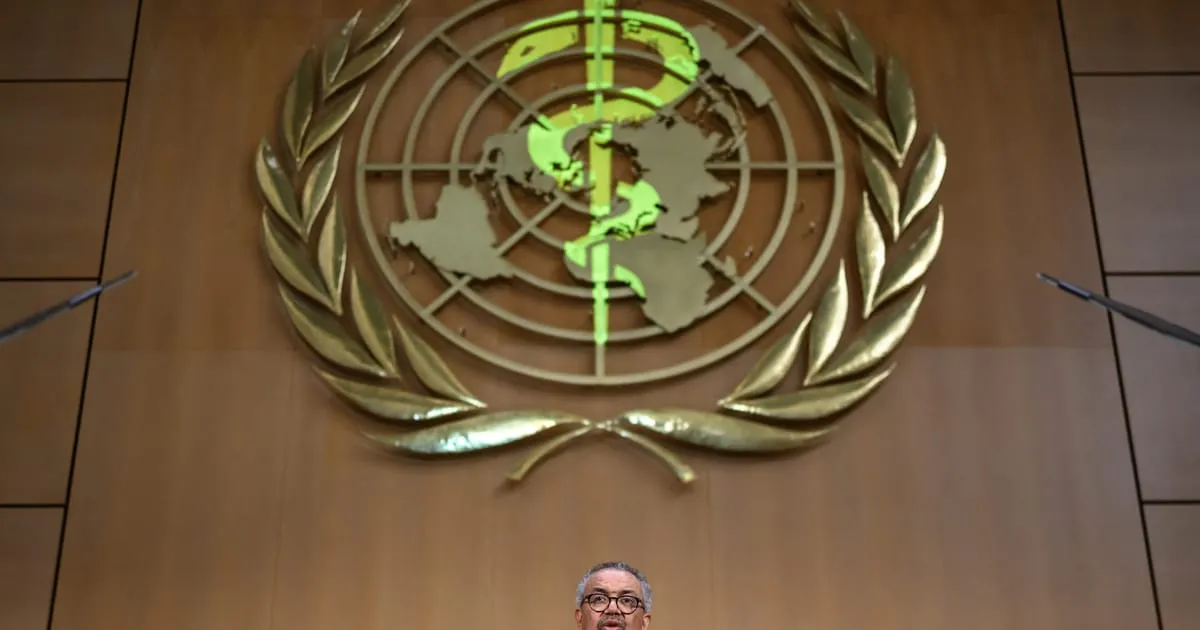 Photo: POLITICO
Key points
WHO requested information from Russia on 7 October about a lab worker's death and a possible second pneumonia case at an Irkutsk anti-plague institute, while Russia says no plague cases exist.
The World Health Organization asked Russia on 7 October for information about severe pneumonia and a possible second case at an anti-plague institute in Irkutsk, Siberia, after a 28-year-old lab worker died on 2 October. WHO Director-General Tedros Adhanom Ghebreyesus said he had requested details on the cause of the severe pneumonia, the pathogen behind public health measures, and media reports of a second employee with pneumonia of undetermined cause.
The case matters because pneumonic plague, a bacterial lung infection that spreads between people through respiratory droplets, is fatal unless treated with antibiotics, and because Russia's account conflicts with early reports. Alexei Tsydenov, head of the neighbouring republic of Buryatia, suggested the death could be pneumonic plague, as did several initial media reports, while Russian authorities say no plague case has been registered in Irkutsk oblast.
What WHO asked Russia to clarify
Tedros said timely, complete and transparent information sharing under the International Health Regulations is essential to clarify conflicting reports and enable an accurate assessment of potential public health risks. The WHO said on 6 October that no cause of death had officially been confirmed, and that it remained in contact with Russian authorities and had offered technical support.
Rospotrebnadzor, Russia's national public health agency, said the employee died from pneumonia of unknown etiology and that no microorganisms associated with her work were identified in the patient sample. In a statement to the WHO, Russian health authorities said they investigated following the identification of a case of community acquired pneumonia and that no pathogens of dangerous infectious diseases were detected among any of the contacts.
More than 200 people were initially placed under observation after the woman's death. A state television station in Irkutsk reported she died on 2 October at a hospital in Shelekhov, a town on the outskirts of Irkutsk. Officials quarantined the hospital and are monitoring people who came into contact with the worker. On 6 October, Rospotrebnadzor said no plague cases had been detected among contacts.
Russia says no epidemic risk
On 7 October, Rospotrebnadzor said preventive and anti-epidemic measures had been organised in full and that there were no epidemic risks for the population of Irkutsk or Irkutsk region. Medical monitoring of contacts and laboratory tests found no signs of infection or dangerous pathogens. Kremlin spokesman Dmitry Peskov said Russia had informed the WHO about the death last week in line with established procedures and said much of the reporting was false.
Mongolia's government said on 7 October it had ordered health surveillance on its border with Russia, saying the current risk level was low. The Ministry of Health said border crossings in Selenge Province continue to operate normally with monitoring in place. China's foreign ministry said on 6 October that China and Russia maintain close exchanges and cooperation on the prevention and control of infectious diseases, including plague.
Neighbours tighten border monitoring
The US Centers for Disease Control and Prevention said on 6 October it was aware and closely monitoring the situation, adding there was no indication of a broader threat to the United States. The US issued a formal démarche pressing Moscow for more details. Secretary of State Marco Rubio urged Russia to share more information, saying the available information had been quite limited.
Frequently asked questions
What did WHO ask Russia about?
WHO Director-General Tedros Adhanom Ghebreyesus requested information on the cause of the severe pneumonia, the pathogen that prompted public health measures, and media reports of a second employee with pneumonia of undetermined cause at an Irkutsk anti-plague institute.
What has Russia said about the death?
Rospotrebnadzor said the 28-year-old lab worker died from pneumonia of unknown etiology, with no microorganisms associated with her work found in her sample. On 7 October it said there were no epidemic risks for Irkutsk or Irkutsk region.
How are other countries responding?
Mongolia ordered health surveillance on its Russia border on 7 October, keeping Selenge Province crossings open with monitoring. The US CDC said it was closely monitoring the situation, and the US issued a formal démarche requesting more information from Russia.
How this story was checked
- Fact-checked against 4 cited pages. 25 figures, dates and quotations in this story were found on the pages it cites.
- Reviewed by 4 AI employees — Copy Editor, Fact Checker, Standards Editor, Search Editor, who scored it 68/100 for publication.
Pages checked (4 of 4)
- politico.euread and checked
- nypost.comread and checked
- straitstimes.comread and checked
- timesofindia.indiatimes.comread and checked
Written by Kaer from public reporting. Checked 7 October 2026.


