Xreal Aura Android XR glasses go on sale at $1,099
Xreal's Aura wired glasses, the first running Google's Android XR, went on sale in the United States on 28 October 2026 at a launch price of $1,099, shipping from mid-November.
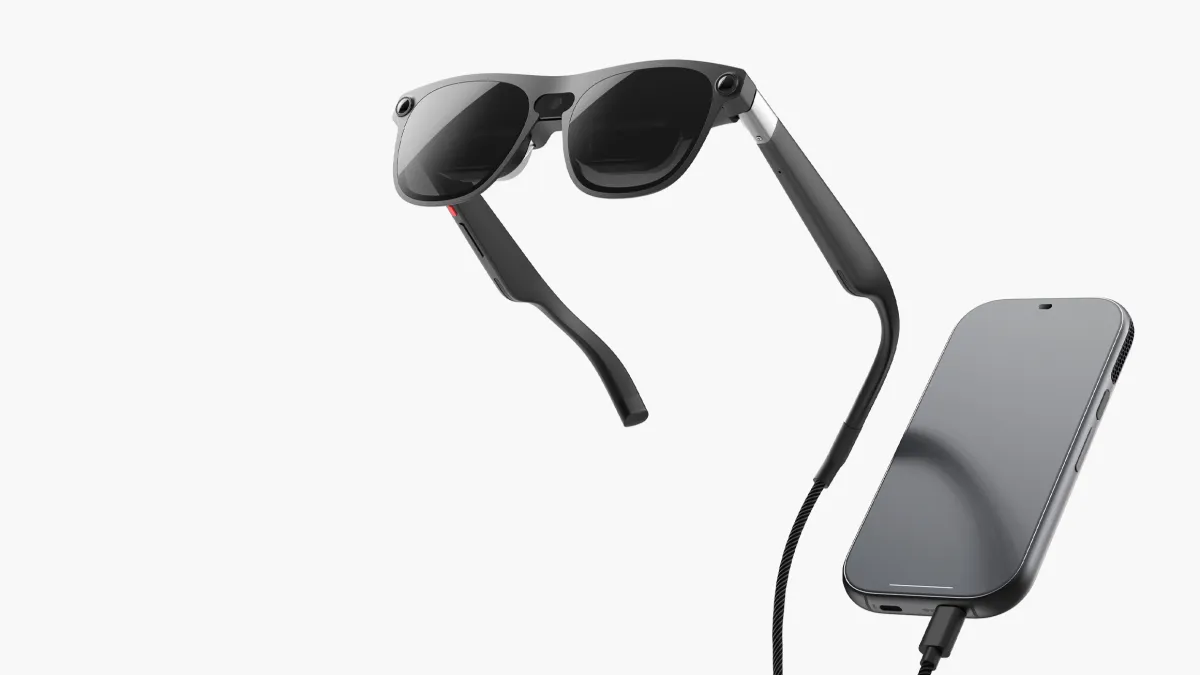 Photo: TechCrunch
Key points
Xreal's Aura, the first wired glasses powered by Android XR, went on sale in the US on 28 October 2026 at a launch price of $1,099.
Xreal's Aura smart glasses went on sale in the United States on 28 October 2026, becoming the first wired glasses powered by Google's Android XR operating system. Orders opened the same day in Canada and Korea, and open in Japan on 2 November. The 12GB + 256GB model carries a launch price of $1,099 through December, against a regular price of $1,279.
The launch marks Google's bet on hardware partners rather than building its own device, following the pattern it used for Android smartphones. Google works with an assortment of partners, including Samsung and Xreal, to bring Android XR devices to consumers. Xreal's glasses are the second device running Android XR, after Samsung's Galaxy XR virtual reality headset, but the first in a lightweight glasses form factor rather than a larger headset.
What the launch changes
The Aura's split architecture is what allows the glasses themselves to stay light. The heavy processing and the battery sit in a separate puck connected by a cable, rather than inside the frame. The puck holds Qualcomm's Snapdragon Reality Elite platform, which debuts on the Aura, and features a built-in trackpad and fingerprint sensor. The glasses weigh under 95 grams, compared with Meta's Ray-Ban Meta Display at 69 grams.
The display uses Sony's Micro-OLED technology, which lights each pixel individually, delivering 1200p resolution at 120Hz with a 70-degree field of view. The lenses are transparent, so the wearer sees the real world directly rather than through cameras, unlike Apple's Vision Pro or Samsung's Galaxy XR, which pass the outside world through video. Audio comes from Bose-tuned open-ear speakers. Gemini, Google's assistant, is built into the operating system.
Because the compute sits in the puck, the glasses can connect to other devices over USB-C. A laptop or handheld gaming console can plug in directly, and its screen appears as a resizable window alongside Android XR apps, with no software to install. Users can arrange multiple windows at any size and pair a Bluetooth keyboard and mouse, using the puck as a trackpad for a portable multi-monitor setup.
How the split design works
At launch, Android XR brings Google Play apps and more than 150 apps made for XR. Named titles include the NBA App for Android XR, Nevatars, Fallout: Factions, Project Hail Mary: Journey Among the Stars, the NASCAR XR App, and the San Francisco Ballet Company's The Nutcracker. Xreal also announced a GameSir gamepad with a dedicated Gemini key to summon the assistant mid-game, plus a wireless portable keyboard.
Two configurations are on sale. The 12GB + 256GB version costs $1,279, with a limited launch price of $1,099 through December. The 16GB + 512GB version is priced at $1,499, with a launch price of $1,299 through December. Shipping is expected to begin in mid-November. Google's blog lists orders opening in the US, Canada and Korea on 28 October, and in Japan on 2 November.
Xreal CEO Chi Xu said in May that building a smart glass business is hard and everyone is losing money, and said the industry had reached an inflection point of having the right hardware, software and design to reach scale. He said: "You need all the key pieces ready — you need the hardware ready, the operating system needs to be ready, and then you need a great user interface."
Where the numbers came from
Heise's writer Josef Erl tested the glasses at an Xreal event in London, reporting that the clear image and stable hand tracking impressed him, while he found the field of view restricting at times. He also judged the Aura more comfortable to wear than earlier Xreal models, with less weight at the front. Heise notes the Aura lacks eye tracking, and its 70-degree field of view is narrower than bulkier headsets.
The closest competitor is Meta's upcoming VR Glasses, which are similarly compact and light and also use a split architecture with Qualcomm's premium chip. Meta prices them at $1,299, and they are due in spring 2027. Unlike the Aura, Meta's glasses show the surroundings through video passthrough rather than transparent lenses. Xreal says further markets will follow in 2027, but has not confirmed whether the European Union is included.
Frequently asked questions
When do the Xreal Aura glasses ship?
Shipping is expected to begin in mid-November. Orders opened in the United States, Canada and Korea on 28 October 2026, and open in Japan on 2 November.
What is different about the Xreal Aura compared with other headsets?
The Aura uses transparent lenses so wearers see the real world directly, weighs 95 grams, and offloads processing and battery to a separate puck running Qualcomm's Snapdragon Reality Elite chip.