Bangladesh wage protests shut 690 garment factories, hit 17 lakh workers
On 2 November, wage protests forced 690 Bangladesh garment factories to suspend production, affecting more than 17 lakh workers demanding a 30,000 taka minimum wage.
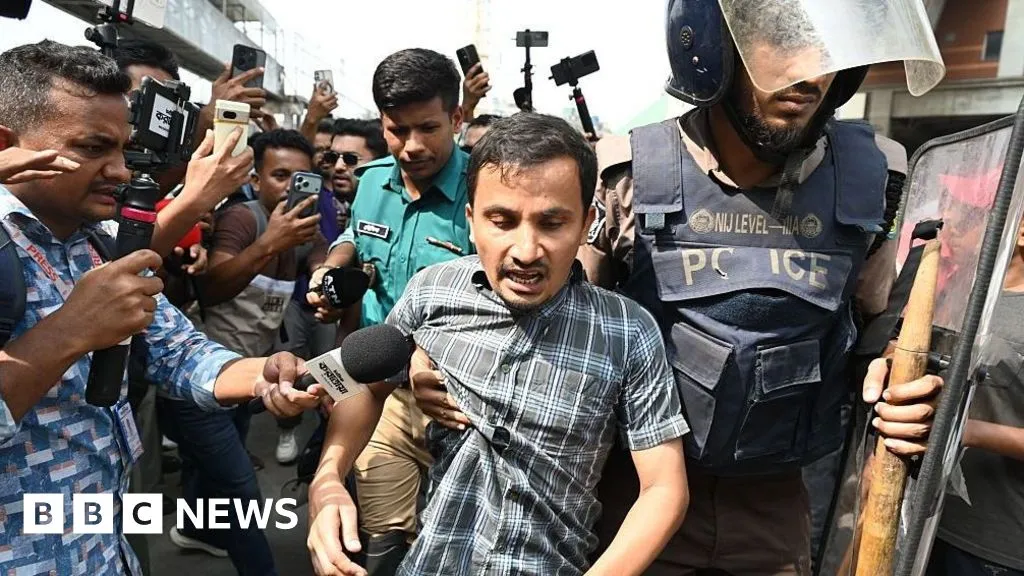 Photo: BBC News
Key points
Wage protests in Bangladesh forced 690 garment factories to suspend production on 2 November, affecting more than 17 lakh workers.
Hundreds of garment factories in Bangladesh were forced to close after days-long protests by workers demanding higher wages. Production was suspended at at least 690 factories on 2 November, according to the country's two garment manufacturers' associations. The closures affected more than 17 lakh workers, the associations said. The protests, which began over the weekend, turned violent in Dhaka on Sunday, with protesters blocking roads, vandalising factories and setting vehicles on fire.
Workers are demanding a minimum monthly wage of 30,000 taka ($242; £180), more than double the current standard of around 13,000 taka ($105; £78) a month, citing rising costs of living. The official minimum monthly wage for garment workers stands at 12,500 taka, according to the Free Press Journal. The demand has gained momentum following the government's recent announcement of a revised pay scale for government employees, which roughly doubles their salaries and benefits.
What workers demand
Bangladesh's textile industry employs around four million workers and manufactures garments for major global brands including H&M, Primark and Uniqlo. The garment industry generates nearly $40bn every year for Bangladesh, accounting for around 10% of its GDP. The South Asian nation is the world's second-largest garment exporter after China, but its workers are among the lowest-paid in the world.
On Sunday, the government announced it had established a board to review workers' wages, and Prime Minister Tarique Rahman held an emergency meeting with ministers to address the unrest. The wage board could hold its first meeting on Monday to discuss a revised wage structure, according to Home Minister Salahuddin Ahmed. The existing three-year wage review period ends in December, he said.
Demonstrations continued on Monday in Dhaka and nearby manufacturing hubs including Ashulia, Gazipur and Narayanganj. Around 670 factories suspended operations on Monday, according to reports by Reuters and AFP, and hundreds in these areas will remain shut on Tuesday. At least 29 protesters were arrested as of Monday, according to Dhaka police Deputy Commissioner Mohidul Islam, who said that those who created an "unstable environment in the garment factories" would come under the law.
Government response
According to BGMEA data, Gazipur and Mymensingh accounted for the highest number of affected factories, with 382 units employing around 9 lakh workers remaining closed on Monday. Production was also suspended at 223 factories in Savar's Ashulia and Zirabo areas and 65 factories in Dhaka's Mirpur area. Around 20 factories in Narayanganj also suspended production, according to the Bangladesh Knitwear Manufacturers and Exporters Association (BKMEA).
Mijanur Rahman, vice-president of the Bangladesh Garment Manufacturers and Exporters Association (BGMEA), said that production at 670 member factories had been suspended as workers had not returned to work by 11:30am. These factories employ around 16.80 lakh workers, he said. Fazlee Shamim Ehsan, executive president of BKMEA, told TBS, "Factory owners were forced to suspend production at relatively large factories in the Narayanganj area."
Home Minister Salahuddin Ahmed on Monday alleged that industrialists and factory owners with links to the former Awami League government were instigating unrest in the garment sector. "Some of them were MPs, ministers or state ministers at different times. We have information that these industrialists are behind the unrest, and it has been established," he said, as quoted by The Daily Star. The minister claimed that groups supporting the ousted regime were exploiting workers to create instability through highway blockades, arson and violence.
Minister alleges Awami League link
Salahuddin said the government had collected video footage, audio recordings and other evidence relating to violent incidents, adding that some individuals had already been brought to justice. "We want to make it clear that those involved in activities against workers' interests, violating law and order and conspiring to create instability will be dealt with sternly," he said. The minister also alleged that some factory owners had deliberately shut their establishments to aggravate the situation, and BGMEA and BKMEA leaders had agreed to provide the government with a list of factories allegedly closed with ulterior motives.
Authorities have accused the Awami League, the banned political party of former leader Sheikh Hasina, of taking advantage of the protest movement to instigate violence, though they did not provide any evidence of this. Home minister Salahuddin Ahmed threatened punitive action against protesters who were trying to "destabilise the country" "under the guise of labour protests". Babul Akhter, a workers' representative on the wage board, urged protesters to go back to work on Monday, promising to "fight for [their] fair wages". "I tell my fellow workers, return to work. Don't give in to anyone's incitement."
Some factories in Gazipur and Kaliakair, which had remained closed for a day amid the unrest, reopened on Monday, according to Salahuddin. However, several other units continued to remain shut due to reasons unrelated to the protests, including financial difficulties and declining export orders. The government was also scheduled to meet representatives of labour organisations at 3 pm on Monday to discuss the situation. The government's next step is the wage board's first meeting, which could take place on Monday, and the revised wage structure is to be determined through discussions.
Frequently asked questions
Why did Bangladesh garment factories close?
On 2 November, at least 690 factories suspended production as workers protested for a higher minimum wage of 30,000 taka, more than double the current standard, citing rising living costs. The closures affected over 17 lakh workers.
What is the current minimum wage for garment workers in Bangladesh?
The current minimum monthly wage for garment workers is 12,500 taka, though workers take home around 13,000 taka a month. They demand an increase to 30,000 taka.
What has the government done in response to the protests?
The government formed a wage board on Sunday to review wages, and Prime Minister Tarique Rahman held an emergency meeting. Home Minister Salahuddin Ahmed accused Awami League-linked factory owners of instigating unrest.