Bessent says no new Nvidia China chip curbs needed
Treasury Secretary Scott Bessent said on 20 November that existing US chip restrictions on China are sufficient, a day after Congress disclosed approvals of 879,868 Nvidia and AMD chips.
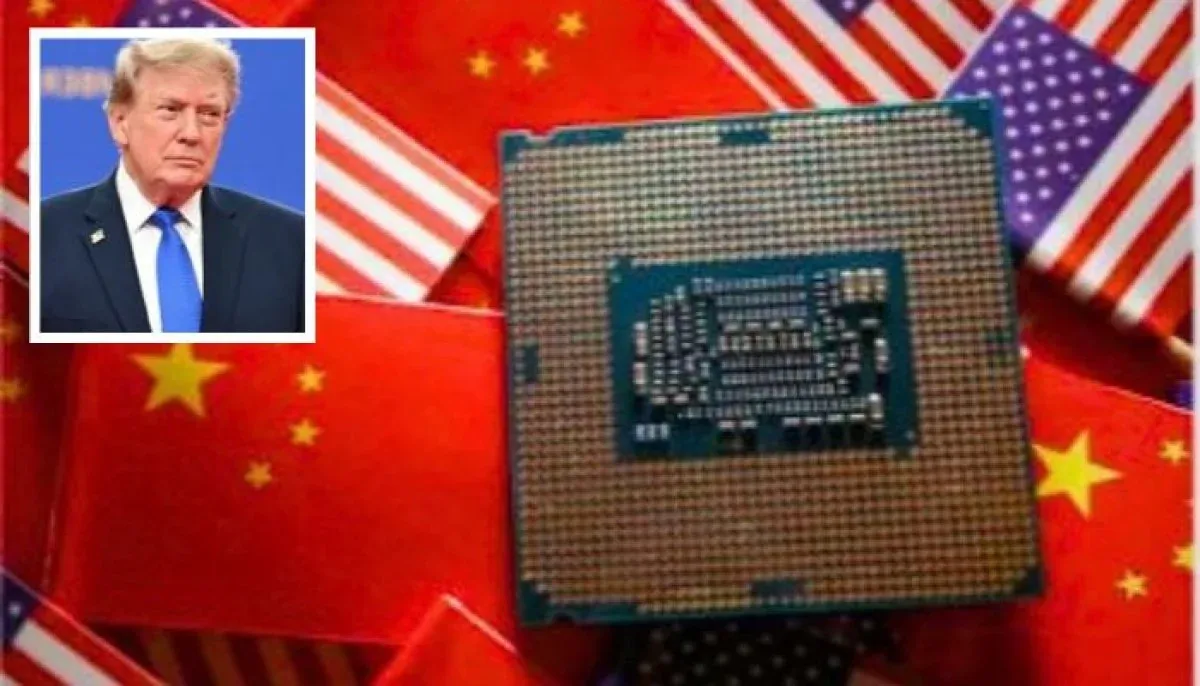 Photo: The News
Key points
Treasury Secretary Scott Bessent said existing US chip restrictions on China are sufficient and no further limits on older Nvidia chip sales are needed.
Treasury Secretary Scott Bessent said on 20 November that no further restrictions on the sale of older Nvidia chips to China are needed. His remarks followed the Trump administration's move earlier in the week to block China's remote access to the latest semiconductors. "The proper chip restrictions are in place," Bessent said after returning from a trip to Asia with President Donald Trump. He added: "And the remote access has been curtailed."
Bessent's remarks came a day after the House Foreign Affairs Committee released details of the Commerce Department's approval of sales of 879,868 chips from Nvidia and its competitor AMD to Chinese companies. The Pentagon has identified some of those companies as having ties to the Chinese military. The committee's disclosure set out the licensing record of the Commerce Department's Bureau of Industry and Security.
What Congress disclosed
The report tracked applications from Nvidia to sell its H200 chips, one of its more powerful products though not the most advanced, and AMD's applications to sell its roughly comparable MI325X chip to companies located or headquartered in China, or entities with parent companies based in China. The Bureau of Industry and Security approved the export, re-export or transfer of 879,868 of these chips to companies with Chinese ties across 21 license applications as of 11 May 2026.
Nvidia and AMD had requested to sell a cumulative total of more than 3.4 million of the chips to Chinese-tied companies across those applications, so the approvals covered roughly a quarter of the volume sought. The approvals do not necessarily indicate completed sales. They included 75,000 chips for Alibaba, 150,000 for Tencent and its subsidiaries, 43,000 for Baidu and 4,000 for BYD, each of which the Defense Department has identified as having ties to the Chinese military.
A spokesperson for the Bureau of Industry and Security said the Commerce Department has a "long track record of transparency with Congress about licensing activity for the H200 and equivalent chips, including both approvals and rejections." The spokesperson said the approach is based on a rule published in the Federal Register in January that imposes "significant additional national security-related requirements on license applicants in order to qualify for case-by-case consideration rather than a presumption of denial."
Why the ban matters
An Nvidia spokesperson said the "limited shipments we made under the H200 program were legal and authorized" by the bureau. "The review and licensing process spanned more than half a year, with approvals subject to strict conditions and limited volumes," the spokesperson said. Nvidia said earlier in the week that it was no longer shipping H200 chips to China, and the spokesperson confirmed on 20 November that shipments had stopped despite prior approvals.
AMD said it complies with US export control laws and maintains "rigorous processes to ensure compliance across our global operations" in a statement from a spokesperson. "We remain focused on serving our customers and upholding the highest standards of integrity," the spokesperson said. Chinese technology firms have been bracing for impacts on their artificial intelligence development plans as US export controls tighten.
The new policy that Bessent cited outlaws allowing remote access to advanced AI chips, a route by which chips bought abroad could be rented exclusively to Chinese firms rather than imported as hardware. Tencent said on the Wednesday before the disclosure that the ban will reduce the quantity of advanced compute capacity available to the company and slow its efforts to train models. Alibaba's chief executive, Eddie Wu, said on an earnings call that the policy "will definitely have some impact on the long-term construction of Alibaba Cloud's data centers both domestically and globally."
What Beijing and buyers say
Wu said that "based on our initial assessment, the long-term target of 20 gigawatts may be lowered, which will also lead to a reduction in our overall capital expenditure plan." Both Tencent and Alibaba expect Chinese chipmakers to make advanced AI hardware at scale in 2027 or 2028, which they said would limit the long-term damage. Wu predicted Alibaba "will go through a phase of the largest investment in AI infrastructure" once domestic suppliers catch up.
Trump told reporters at a press conference on 20 November, after his trip to Asia and a meeting with Chinese President Xi Jinping, that the US wants only older-generation chips sold to China. "We want only older chips, and we don't mind if none go. But only older," he said. He added that blocking all sales could push Beijing to accelerate domestic production: "You have to understand, China makes chips too, and if we're not going to sell them, they'll make them themselves."
Trump said the US is discussing "a very comprehensive deal with China" but declined to give terms or a timeline. Officials have not specified the technical threshold for what qualifies as an "older" chip or whether formal export quotas will be introduced. Earlier in the week, ahead of the trip, the administration announced measures aimed at closing loopholes and further restricting China's access to advanced AI chips, including shipments routed through third countries and foreign data centres.
China's Ministry of Foreign Affairs has criticised the tightening US restrictions, saying they disrupt global supply chains and warning of potential countermeasures. In Washington, Bessent said last week he was frustrated with the Commerce Department's delay in placing restrictions on Nvidia chip exports to Megaspeed International, which is under investigation by the US for potentially diverting restricted Nvidia AI chips to China. Trump said on 20 November he has "not lost confidence" in Commerce Secretary Howard Lutnick.
Frequently asked questions
What did Scott Bessent say about Nvidia chip exports to China?
Bessent said on 20 November that no further restrictions on the sale of older Nvidia chips to China are needed, saying "the proper chip restrictions are in place" and that remote access to the latest semiconductors had been curtailed.
How many Nvidia and AMD chips did the US approve for Chinese-tied companies?
The Bureau of Industry and Security approved the export, re-export or transfer of 879,868 chips across 21 license applications as of 11 May 2026, against requests for more than 3.4 million, according to a House Foreign Affairs Committee disclosure.
Why did the US block remote access to advanced chips?
Washington adopted a policy outlawing remote access to advanced AI chips to stop diversion, in which chips bought abroad are rented exclusively to Chinese companies. Tencent said the ban will reduce its available advanced compute capacity.