Iotova and Gyurov advance to Bulgarian runoff with 34.8% and 31.9%
Acting President Iliana Iotova led with 34.8% against Andrey Gyurov's 31.9% in Bulgaria's first round on 25 October 2026, sending the race to a 1 November runoff after turnout of 22.5%.
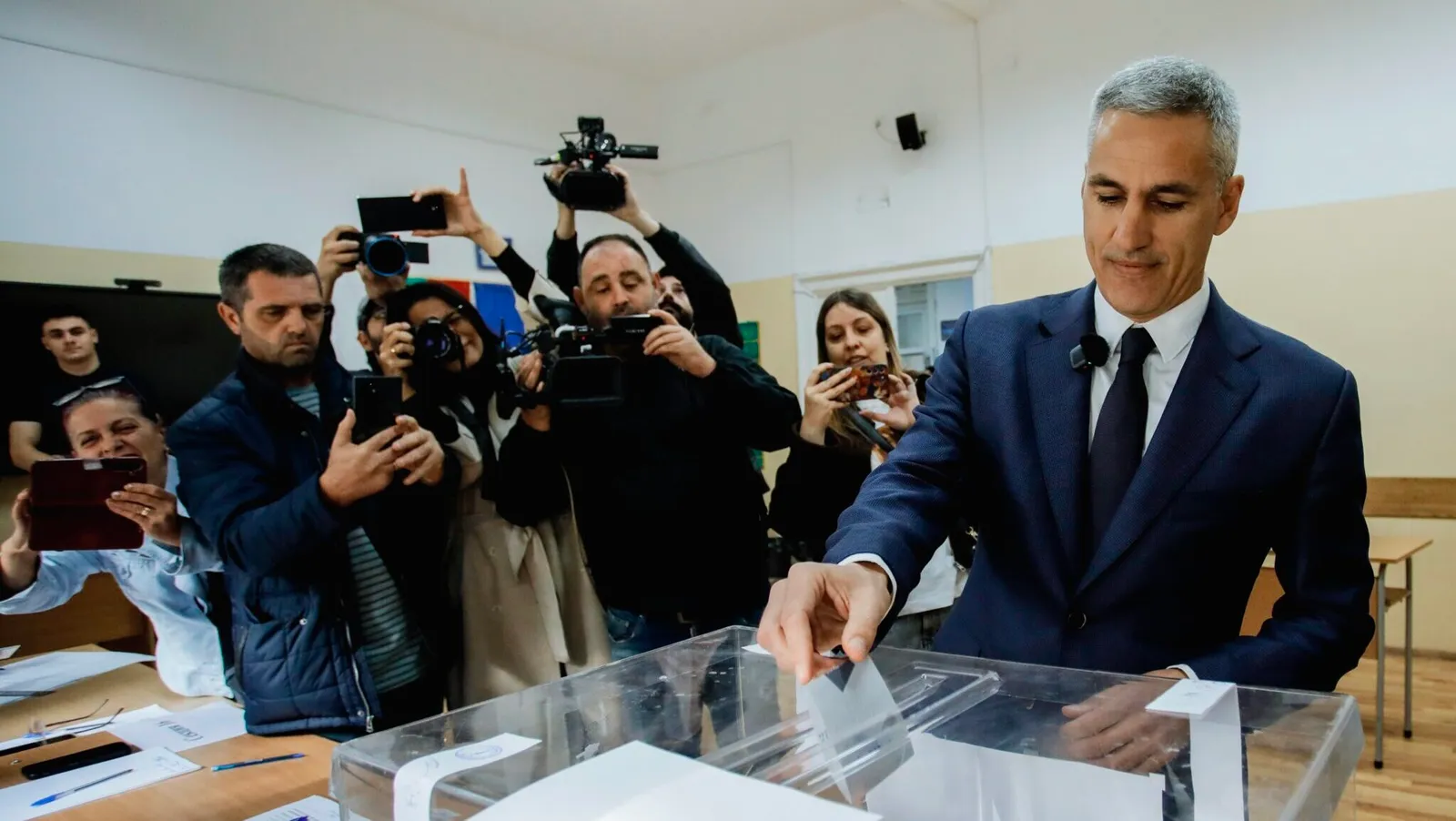 Photo: Balkan Insight
Key points
Acting President Iliana Iotova and opposition candidate Andrey Gyurov will face each other in a 1 November runoff after neither won a majority in Bulgaria's first round on 25 October 2026.
Acting President Iliana Iotova won 34.8% of the vote and reformist candidate Andrey Gyurov took 31.9% in Bulgaria's first-round presidential election on 25 October 2026, according to the Central Election Committee after 99.94% of ballots were processed. Neither candidate secured the majority needed to win outright, sending the race to a runoff on 1 November. The result was closer than pre-election surveys had predicted, which had given Iotova a comfortable lead.
The runoff matters because it is the first nationwide test of Prime Minister Rumen Radev's influence since his Progressive Bulgaria party won April's parliamentary election. A victory for Iotova, who is backed by Radev, would leave the presidency and government in the hands of political allies. A win for Gyurov, a former caretaker prime minister supported by pro-European and reformist forces, would instead hand the opposition a change at the top of the state. The presidency is largely ceremonial but includes command of the armed forces, veto power over legislation, and the signing of international treaties.
What the first-round result changes
Twenty-seven candidates contested the first round, nearly half of them openly pro-Kremlin. Exit polls placed Iotova between 35% and 36.5% and Gyurov between 31% and 33.5%. An Alpha Research exit poll put Iotova and her running mate Kiril Valchev on 35.3% and Gyurov and his running mate Georgi Kandev on 32.4%. Revival party leader Kostadin Kostadinov placed third with 12.6% in the Alpha Research exit poll, though other estimates were higher.
The constitution requires more than half of eligible voters to participate and a candidate to receive more than half of valid votes for a first-round victory. Neither threshold was met. The Central Election Committee's figures after 99.94% of ballots were processed give Iotova 34.8% and Gyurov 31.9%, a narrower gap than the exit polls suggested and far narrower than pre-election surveys that had forecast a landslide for the acting president.
Turnout collapsed to 22.5% of eligible voters, according to Alpha Research, compared with 40.5% in elections in 2021 and 56.28% in 2016. Low turnout appears linked to the fact that some major parties did not field candidates and so did not activate their core electorates. Only around 30% of the people regularly voting for GERB, the dominant party for much of the period from 2008 to 2025, voted on Sunday, according to Alpha Research. Movement for Rights and Freedom – New Beginning, tied to the sanctioned tycoon Delyan Peevski, also did not participate.
Why turnout collapsed to 22.5%
The candidates differ sharply on Russia and Ukraine. Iotova, 62, favours dialogue with Russia and opposes military aid to Ukraine, while Gyurov, 50, supports Ukraine and signed a security cooperation agreement with the country during his tenure as caretaker prime minister. Drone attacks on commercial vessels near Bulgaria's coast gave the debate a direct security dimension. Four vessels were struck off Bulgaria's coast in October 2026, leaving 21 people missing. Bulgaria has not directly accused Russia, though Radev said the Russian Federation was benefiting from the incidents.
Where the candidates differ on Russia
Iotova said her campaign was focused on "promoting peace" and added that she would "not let foreign flags be waved on our streets, I want to see only Bulgarian flags." Gyurov said "We owe it to all the citizens who voted for us but most importantly, those who decided to stay at home, still unconvinced." At his final campaign rally in Plovdiv, Gyurov said he wanted Bulgaria to be "a reliable ally within NATO, defending its interests through solid preparedness, strong diplomacy and clear positions."
What the candidates said on election night
Kostadinov's supporters could influence the runoff, but their votes should not be treated as a single bloc: some may back Iotova, others Gyurov, and some may stay at home. The low participation makes the first-round estimates an uncertain guide to the runoff. A higher turnout could change the balance, particularly if one candidate mobilises voters who stayed away or attracts supporters of eliminated candidates. The second round requires both candidates to appeal beyond their first-round supporters.
The runoff on 1 November will decide whether Iotova secures a five-year mandate of her own and consolidates the governing camp's position, or whether Gyurov can turn his stronger-than-expected first-round showing into a change at the top of the state. If successful, Iotova would become the first woman ever elected president in Bulgaria, a country of 6.4 million people and a member of both the European Union and NATO.
Frequently asked questions
Who won Bulgaria's first-round presidential vote?
Acting President Iliana Iotova won 34.8% and Andrey Gyurov took 31.9% after 99.94% of ballots were processed, according to the Central Election Committee. Neither secured a majority, so the race goes to a runoff on 1 November.
Why was turnout so low in Bulgaria's election?
Turnout was 22.5% of eligible voters, according to Alpha Research. Some major parties did not field candidates and so did not activate their core electorates. Only around 30% of regular GERB voters turned out.
When is Bulgaria's presidential runoff and what is at stake?
The runoff is on 1 November. Iotova is backed by Prime Minister Radev; Gyurov is supported by pro-European reformist parties. An Iotova win would keep the presidency and government in allied hands; a Gyurov win would change the top of state.