House Democrats reject shutdown threat over Iran war funding
House Democrats reject using a December 11 funding deadline to force an end to the Iran war, while Senate Democrats remain divided on the strategy.
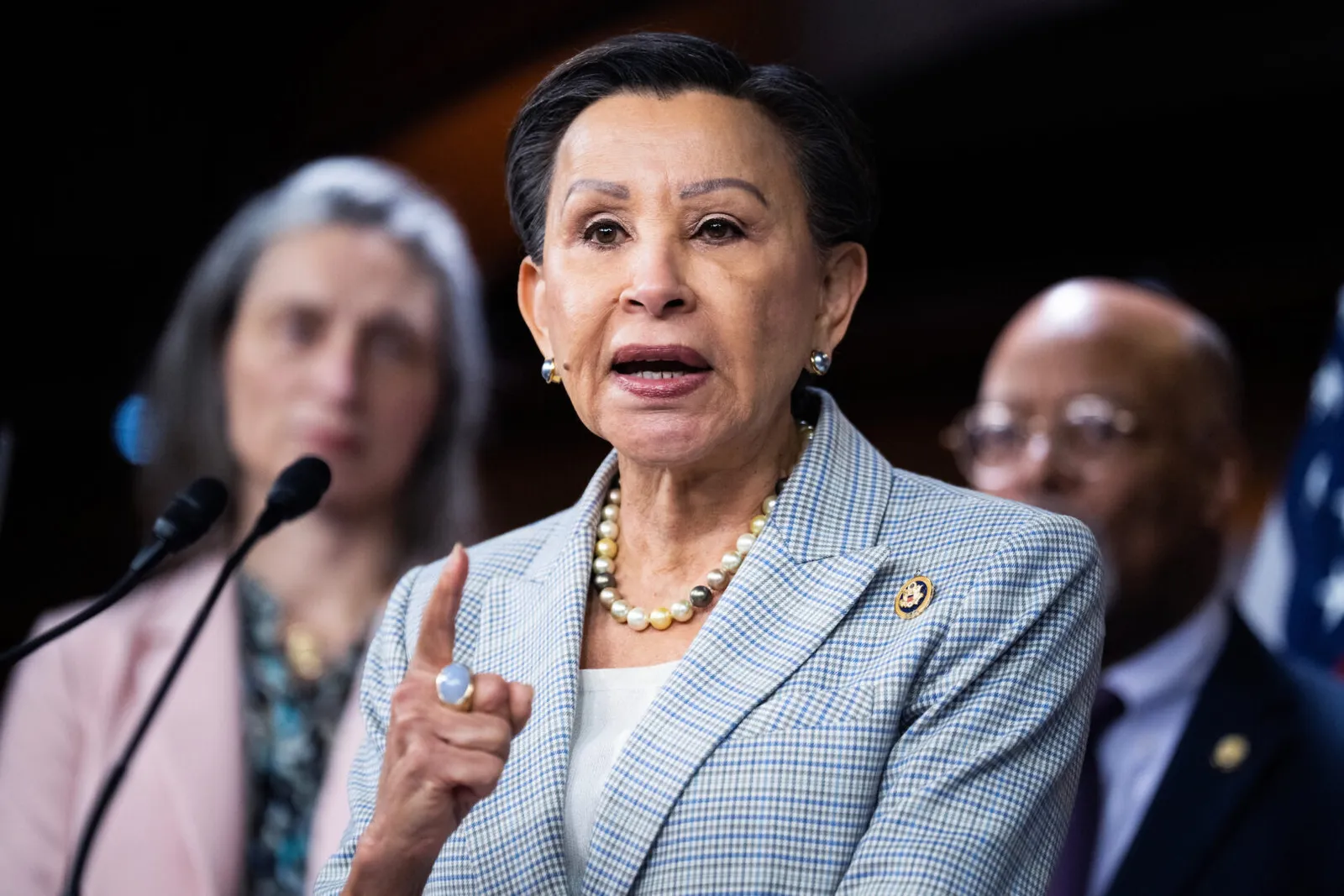 Photo: Roll Call
Key points
House Democrats reject using a government shutdown to force an end to the Iran war, while Senate Democrats remain divided on the strategy.
House Democrats have rejected the idea of using a government shutdown to force an end to the Iran war, even as some Senate Democrats push for that tactic at the December 11 funding deadline. Representative Jared Moskowitz, a Florida Democrat, said on CNN Wednesday, "I am not for shutting down the government in December on stuff that we can accomplish, quite frankly, when we take the majority." His comments came as Democrats prepare to take control of both chambers in January.
The strategy has divided Senate Democrats. Maryland Senator Chris Van Hollen is leading a push to use the funding deadline to force the Trump administration to end the war with Iran. Senators Bernie Sanders of Vermont, Michael Bennet of Colorado and Tammy Duckworth of Illinois have joined him. But Senators Jeanne Shaheen of New Hampshire, John Hickenlooper of Colorado and Cory Booker of New Jersey have warned of the political risks of another shutdown, especially during the holiday season.
Senate split over strategy
Van Hollen and the other three senators laid out their demand in a joint statement on November 12. "As we approach the December 11 funding deadline, we should not accept a short-term spending deal that continues to provide billions of additional dollars for President Trump's war of choice," they wrote. "Any short-term package must include language that restricts the Trump Administration from using appropriated funds to continue his war against Iran."
Republicans hold 53 Senate seats until the new Congress is sworn in on January 3, so they need at least seven Democrats to get a funding bill past a filibuster. Senate Majority Leader John Thune, a Republican from South Dakota, called Van Hollen's demand "short-sighted." "That's not a realistic ask," he said. No Democrat has said outright that they want a shutdown, but several have said they will not vote for a funding bill that keeps paying for the war.
Van Hollen, who is challenging current Senate Minority Leader Chuck Schumer for majority leader in the new Congress, has leaned hard on the war in that campaign. "The American people have spoken loudly and clearly: We need to end the war in Iran now," he said in a video posted to social media. "We're now 255 days into that war, a war that Donald Trump said would be over in a matter of weeks."
War continues in region
The war has continued to escalate in the region. Iran said it targeted a U.S.-used Kuwaiti air base after U.S. jets struck Qeshm Island on Tuesday. The U.S. jets hit a Revolutionary Guard missile launch site, a U.S. military official said, describing the strike as self-defense. Iran's army said it also targeted Patriot air defense systems at Ali Al Salem Air Base in Kuwait overnight Wednesday, according to Iranian state television, and Kuwait said its air defenses were responding to hostile drone threats.
The diplomatic track has shifted sharply. Trump said on Nov. 12 that the United States no longer needs an agreement with Iran and directed Vice President JD Vance to turn his full attention to alleged corruption in Democratic-run states and cities. Trump wrote that "We don't need a deal with Iran," and that the United States has Iran's money and its strait. An administration official declined to say whether talks have stopped, saying the blockade and Operation Iron Gate would continue with full effect.
Progressive advocates are separately urging House Democrats to force a vote on a resolution aimed at preventing war against Cuba. Fifty advocacy groups wrote to Democratic House leaders in a letter dated Wednesday, arguing the issue is too urgent to wait. "The Cuban people are suffering and dying, and cannot afford further months of inaction," the letter said. The resolution, introduced in May by Rep. Nydia M. Velázquez, D-N.Y., and Rep. Gregory W. Meeks, D-N.Y., would call on the president to remove U.S. forces from hostilities within or against Cuba.
The Cuba resolution faces similar obstacles. Senate Democrats sought to force a vote earlier this year, but Republicans raised a point of order that the resolution was not entitled to privileged status since U.S. troops aren't actively engaged in combat against Cuba. The point of order was sustained in a mostly party-line vote of 51-47. President Donald Trump has made veiled threats of military action against Cuba, telling conservative radio host Hugh Hewitt last week, "I want to get Cuba done before I leave."
The next dated event is the December 11 government funding deadline, when Democrats must decide whether to force a shutdown over the Iran war. Van Hollen and his allies have said they will not accept a short-term spending deal that continues war funding. But with House Democrats rejecting the shutdown strategy and Senate Democrats divided, the outcome remains uncertain. The new Congress is sworn in on January 3, when Democrats will take control of both chambers.
Frequently asked questions
Why are some Democrats considering a government shutdown?
Some Senate Democrats, led by Chris Van Hollen, want to use the December 11 funding deadline to force the Trump administration to end the Iran war by refusing to pass a spending bill that includes war funding.
What is the December 11 funding deadline?
It is the date by which Congress must pass a spending bill to avoid a government shutdown. Democrats are debating whether to use this deadline to force action on Iran war funding.
How many Senate seats do Republicans hold?
Republicans hold 53 Senate seats until the new Congress is sworn in on January 3, so they need at least seven Democrats to get a funding bill past a filibuster.