Democrats split over filibuster and agenda after midterm sweep
At their first post-election conference in Denver, Democrats disagreed over filibuster elimination and whether to pursue a progressive or centrist agenda.
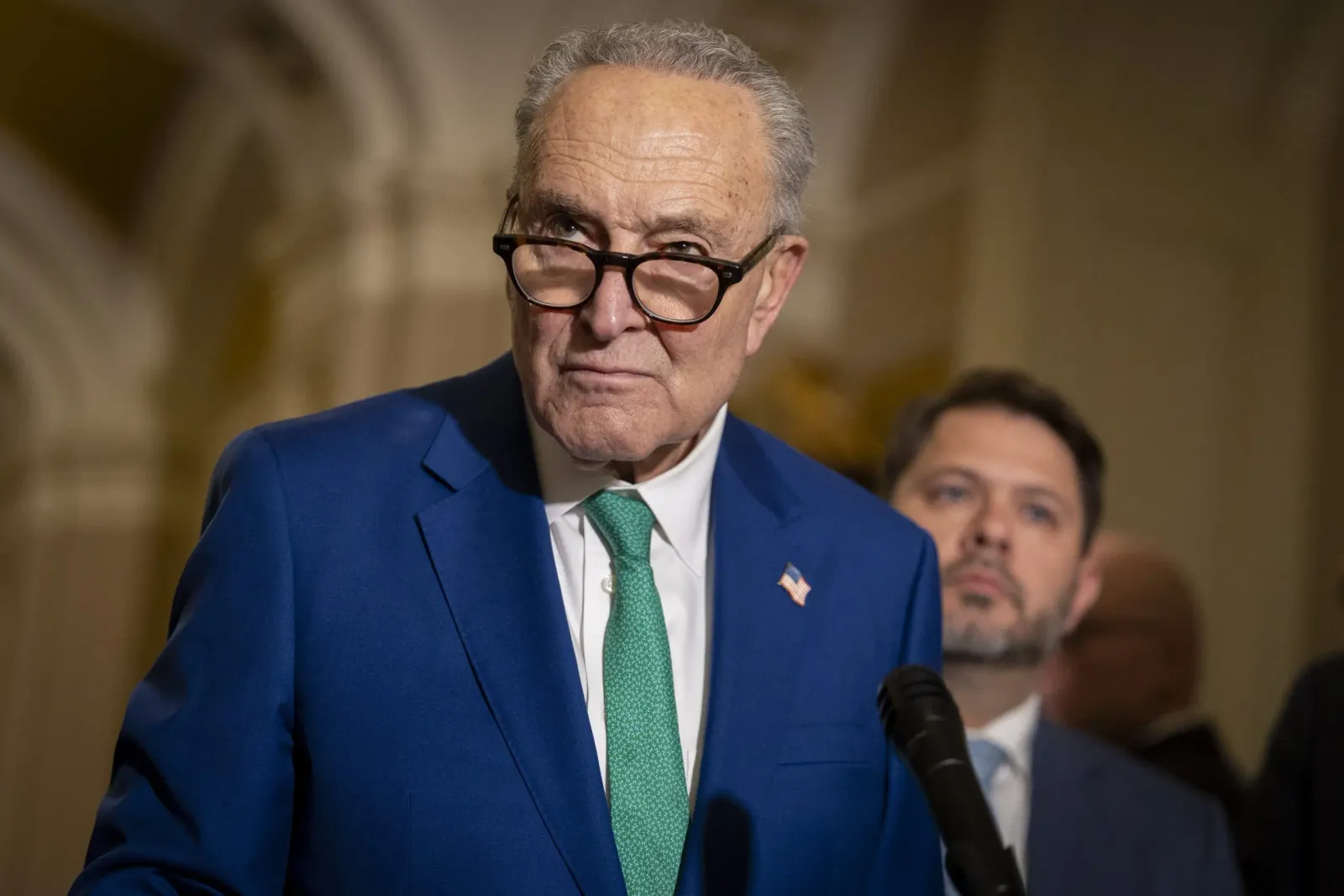 Photo: Fox News
Key points
Democrats are split over eliminating the Senate filibuster and whether to pursue a progressive or centrist agenda after their midterm sweep.
Democratic senators are leaving the door open to eliminating the Senate filibuster as their party prepares to take control of the chamber, with one lawmaker saying the move must be on the table while another warned it could be a 'double-edged sword.' 'Obviously, the filibuster is something that has to be on the table,' Sen. Ed Markey, D-Mass., told Fox News Digital. But Sen. Andy Kim, D-N.J., cautioned that changing the rules could carry consequences long after Democrats leave power.
Scrapping the Senate's 60-vote hurdle would allow Democrats to advance most legislation with a simple majority, weakening Republicans' ability to block their agenda — but also giving the GOP the same advantage if it regains control. Kim warned that changing Senate rules could set a precedent Democrats might later regret. 'When you open the door…you gotta be ready,' Kim said. 'You don't wanna shoot from the hip when it comes to really big issues that are affecting our country in this way.'
Filibuster fight
Sen. Chris Van Hollen, D-Md., announced Thursday that he will be running against Senate Minority Leader Chuck Schumer for Senate Majority Leader and is in favor of terminating the filibuster, even going as far as characterizing it as 'anti-democratic.' 'My personal view has been all along that the filibuster is an anti-democratic … provision. It's not in our Constitution,' Van Hollen said. 'It was put in there by senators to enhance their power over the power of the people.'
Schumer stayed silent when asked if he would support Democrats getting rid of the filibuster if they win the White House in 2028. He is currently under scrutiny from progressives as the party considers who will lead the Senate after winning back the majority. Trump had pressed Senate Republicans to abolish the filibuster when trying to pass the SAVE America Act, warning that Democrats would eliminate it if the party took back the majority — and now they have.
Fresh from a midterm election landslide, Democrats met in Denver this week united in wanting to deliver voters relief from high costs, but split over how to achieve that, what lessons to draw from their victory and how combative they should be toward President Donald Trump. Despite the celebratory mood after the Nov 3 rout of Republicans, tensions between moderates and a restive progressive wing surfaced at the party's first major gathering since its victory.
Denver divisions
Speakers disagreed over whether to embrace a bolder progressive agenda or tack toward the centre, exposing competing approaches to lowering food, healthcare and housing costs, while working alongside Trump, who retains veto power for two more years. California Representative Ro Khanna, a progressive and potential presidential candidate, urged Democrats to stop chasing the political centre and embrace a bolder agenda, including universal healthcare, a wealth tax, a US$25 (S$32) federal minimum wage, deep Pentagon cuts and abolishing US Immigration and Customs Enforcement.
By contrast, Pennsylvania Governor Josh Shapiro, a moderate and another potential 2028 contender, argued the party should move beyond ideological litmus tests, saying voters 'don't give a damn' about such debates and care instead about whether Democrats can deliver results. The breadth of the Democratic victories has allowed moderates and progressives to argue that voters have endorsed their vision for the party's future. 'It's to be expected that there will be a big debate because the Democratic victory was so broad it swept in centrists, southern Democrats and more progressive and left-wing Democrats,' Democratic strategist Elaine Kamarck said.
Democrats are projected to hold at least 255 seats to Republicans' 169 in the US House, with 12 contests still undecided. In the Senate, the breakdown will be at least 55-44, with Democrats possibly gaining one more seat in Alaska when vote-counting is completed. Trump retains significant executive authority to block much of the Democrats' agenda, complicating the party's efforts to lower costs, the central issue voters gave Democrats control of Congress to fix.
One of the most striking debates in Denver centred on how to govern with Trump still in the White House. James Talarico, the first Democrat elected to the US Senate from Texas since 1988, urged Democrats to work with Trump. 'We should make the final two years of his presidency the most productive of any presidency in American history,' Talarico said, drawing tepid applause. 'We're tired of being pitted against each other.' He found an ally in Iowa Governor-elect Rob Sand, who said partisan warfare will not deliver results.
Minutes later, US Representative Jamie Raskin of Maryland and Eric Holder, who was attorney-general in the Obama administration, largely rejected accommodation with Trump. Raskin, expected to become chairman of the House Judiciary Committee in January and oversee investigations of Trump next year, said the Republican Party had become an authoritarian cult of personality. 'We're going to reassert all of the powers of Congress that have been surrendered and abdicated by the MAGA Congress to King Trump,' Raskin said. 'We're going to enforce the Constitution against him.'
Comedian Bill Maher issued a preemptive warning to Democrats following their sweeping midterm election wins, urging the party not to mistake its victories for a mandate to revive 'bad ideas' that could drive voters back to the GOP. 'Now that Democrats won the election, let's not get high on our own supply like the last crowd did and interpret the W as a sign to go back to bad ideas,' he said during Friday's episode of 'Real Time.' As examples, the liberal comedian pointed to 'defund the police' and a refusal to enforce shoplifting laws.
Maher also criticized what he characterized as White liberals' approach to racial issues, joking: 'I talked to every Black person in America and it turns out they kind of don't give a s---.' He argued that Democrats won across several states because voters have a history of shifting from one political extreme to another. 'Republicans lost this election because no one wanted the pendulum to swing all the way to full a--hole, to cruelty,' he said. 'Yes, liberal virtue signaling had become tiresome, but did we have to go to vice signaling?'
Frequently asked questions
What is the filibuster and why do Democrats want to eliminate it?
The filibuster is a Senate rule requiring 60 votes to advance most legislation. Democrats want to eliminate it to pass their agenda with a simple majority, but some warn it could backfire when Republicans regain control.
Who are the key Democrats split over the filibuster?
Sen. Ed Markey supports keeping it on the table, Sen. Andy Kim warns it's a 'double-edged sword,' and Sen. Chris Van Hollen, who is challenging Chuck Schumer for leader, calls it 'anti-democratic.'
What were the main disagreements at the Denver conference?
Democrats disagreed over whether to pursue a bold progressive agenda or a centrist one, and whether to work with President Trump or fight him. Rep. Ro Khanna pushed for progressive policies, while Gov. Josh Shapiro argued voters care about results.