FAA lifts nationwide ground stop after five-hour outage
The FAA lifted its nationwide ground stop on 13 November after a five-hour telecommunications outage, with 6,300 flights canceled and 9,500 delayed.
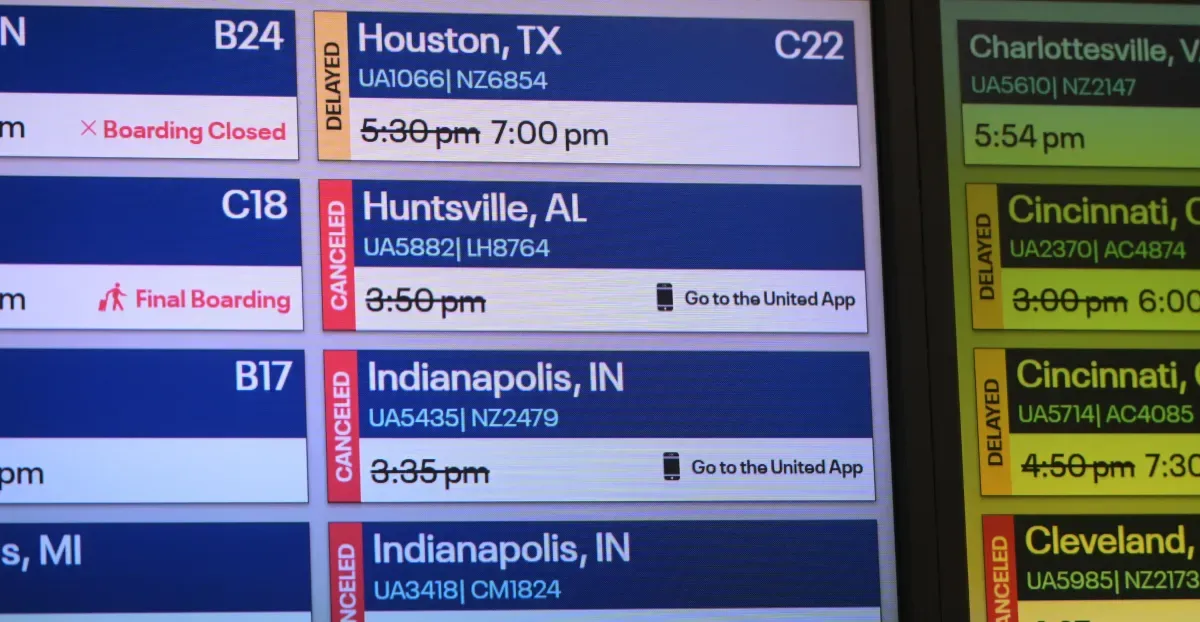 Photo: The Verge
Key points
The FAA lifted its nationwide ground stop on 13 November after a five-hour telecommunications outage that canceled 6,300 flights and delayed 9,500.
The US Federal Aviation Administration lifted a nationwide ground stop on 13 November at 8:15PM ET, after a telecommunications outage halted takeoffs for more than four hours. The stop, issued at 3:44PM ET, affected all domestic flights, with over 6,300 flights canceled and 9,500 delayed, according to FlightAware. Transportation Secretary Sean Duffy announced the lifting at a White House press conference.
Duffy blamed the outage on an aging air traffic control system, saying that Terminal Radar Approach Control (TRACON) facilities "started to have inconsistency in the data from the radars and the communications from airplanes." He said the devices that had the issue were analog telecom devices, where the switches and routers "got overloaded with data" and started to show inconsistency.
Cause of the outage
The FAA's ground stop was the second longest this century, after the 9/11 attacks. The last nationwide ground stop in 2023 lasted about 90 minutes after the Notice to Air Missions (NOTAM) system went down. Duffy said the US still uses TDM telecom, a legacy analog technology, to transmit information between facilities.
The outage began with the Chicago air traffic control center, followed by centers in Boston, Washington, New York, and Minneapolis, according to Jon Ostrower of The Air Current. The problems disrupted both radar and radio frequencies used by air traffic controllers and pilots. The FAA's Telecommunications Infrastructure (FTI) network, managed by L3Harris, provides secure communication between more than 4,400 facilities.
Impact on travelers
Air Space Intelligence (ASI), awarded the FAA's $875 million, 12-year contract for its new Strategic Management of Airspace, Routes and Trajectories (SMART) system, denied any connection, tweeting: "The current ground stop is not based on or a result of the SMART system, any product of ASI or our integration with FAA and ATC."
The ground stop stranded millions of passengers, with airports overloaded and flight crews running out of time to operate planes. San Francisco International Airport's public information officer Doug Yakel said, "Aircraft already enroute to SFO still landing here but departing aircraft not taking off right now." It will likely take days or weeks for airlines to reposition aircraft and crew.
What happens next
A September report from the Government Accountability Office raised concerns that the FAA's modernization plans "could be prioritizing speed over costs and air traffic disruption." The FAA does not have a "well-documented" life-cycle cost estimate for its programs, and has 11,389 schedules that are not integrated. The Trump administration aims to overhaul the air traffic control system by the end of 2028.
Frequently asked questions
What caused the FAA ground stop?
The FAA issued a nationwide ground stop on 13 November due to a telecommunications outage. Transportation Secretary Sean Duffy blamed old analog telecom equipment that got overloaded with data, and Homeland Security Secretary Markwayne Mullin said patches to the system sparked the issue.
How many flights were affected by the ground stop?
Over 6,300 flights were canceled and 9,500 delayed, according to FlightAware. The ground stop lasted about five hours, from 3:44PM ET to 8:15PM ET on 13 November.
Was the ground stop caused by a cyberattack?
Homeland Security Secretary Markwayne Mullin said there was no indication of a cyberattack, but "there's not complete certainty right now." He also said the incident was not related to the Microsoft Outlook outage.