EU leaders pick six-member team for Ukraine peace talks
EU leaders agreed in Dublin on Friday to send national security advisers from five powers plus EU institutions to represent Europe in Russia-Ukraine peace negotiations.
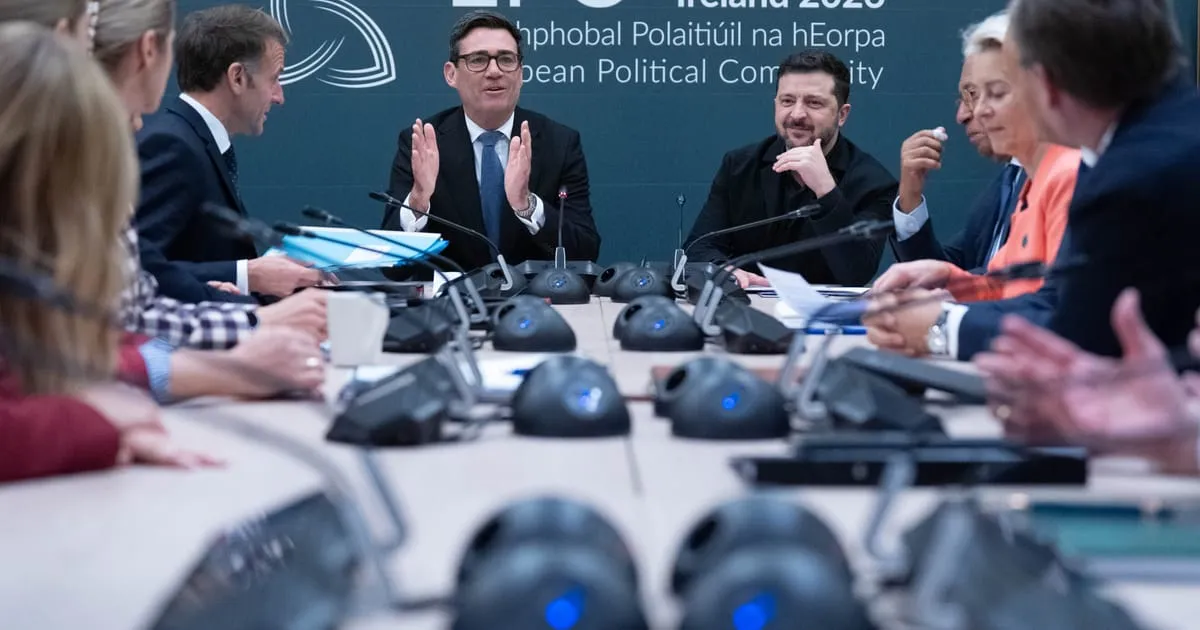 Photo: POLITICO
Key points
EU leaders agreed in Dublin on Friday to send national security advisers from five powers plus EU institutions to represent Europe in Russia-Ukraine peace negotiations.
EU leaders agreed in Dublin on Friday to send national security advisers from Germany, France, the UK, Italy, and Poland, plus representatives from the European Commission and Council, to represent Europe in Russia-Ukraine peace negotiations. The decision came after a request from Italian Prime Minister Giorgia Meloni and amid fears of a Yalta-type agreement.
The format, known as the E5, had already emerged in recent months, but the need to formalise it gained momentum after Ukraine's president, Volodymyr Zelenskyy, this week urged his European allies to decide who will represent Europe. The agreement was announced by European Council President António Costa after the summit.
The six-member team
Costa said leaders had agreed on a negotiating team: the EU institutions and E5 countries, namely Britain, France, Germany, Italy and Poland. "Europe must speak with one clear and united voice in all discussions that shape the future of Ukraine and the security of our continent," he said. "This is ultimately a team effort."
The decision came after a meeting next week between the US and Russian leaders set Europe on edge, prompting warnings about a possible Yalta-type agreement in which superpowers would decide on European security questions over the heads of countries directly concerned. German Chancellor Friedrich Merz said: "That is why I want to make our message to the U.S. very clear: Please, no surprises!"
Russia said it would decide on expanded talks only after understanding Europe's 'real intentions'. Kremlin spokesperson Dmitry Peskov stated that Europeans must first demonstrate "genuine intention and readiness to contribute to the peace process" before being admitted. Russia's lead negotiator in Abu Dhabi, Vladimir Medinsky, said it was "unclear what there is to discuss" with Europe.
Russia's conditions
Kaja Kallas, the EU's chief diplomat, dismissed the condition as a "trap". "If we start to talk about what Russia is asking regarding the security architecture, we actually walk into the traps that Russia is setting us, which is that we divert attention away from that there is no ceasefire," she told reporters in Dublin.
The EU's foreign policy chief also warned against "walking into the traps that Russia is setting" as she said Moscow was trying to start a debate about European security in order to divert attention from its aggression. "We have one aggressor and one victim, and the aggressor does not have security concerns," Kallas said on arrival at the summit.
The US call to involve Europe in talks has turned the spotlight on who would represent it. Jared Kushner, President Trump's son-in-law and a U.S. envoy, mocked the absence of a single person to speak for the entire continent. "If Europe could identify one person to speak on their behalf, that would be a bigger achievement than getting the Russians to include them in the negotiations," he said earlier this week.
Frequently asked questions
Who will represent Europe in Russia-Ukraine peace talks?
EU leaders agreed in Dublin on Friday to send national security advisers from Germany, France, the UK, Italy, and Poland, plus representatives from the European Commission and Council, to represent Europe in the talks.
Why did EU leaders decide on a six-member team?
The decision came after a request from Italian Prime Minister Giorgia Meloni and amid fears of a Yalta-type agreement. The format had already emerged in recent months, but the need to formalise it gained momentum after Ukraine's president urged European allies to decide who will represent Europe.
What conditions did Russia set for Europe to join the talks?
Kremlin spokesperson Dmitry Peskov stated that Europeans must first demonstrate "genuine intention and readiness to contribute to the peace process" before being admitted. Russia's lead negotiator in Abu Dhabi, Vladimir Medinsky, said it was "unclear what there is to discuss" with Europe.