Supreme Court agrees to hear Trump asylum ban case
The Supreme Court on Friday agreed to decide whether the Trump administration can suspend asylum access for immigrants at the U.S.-Mexico border.
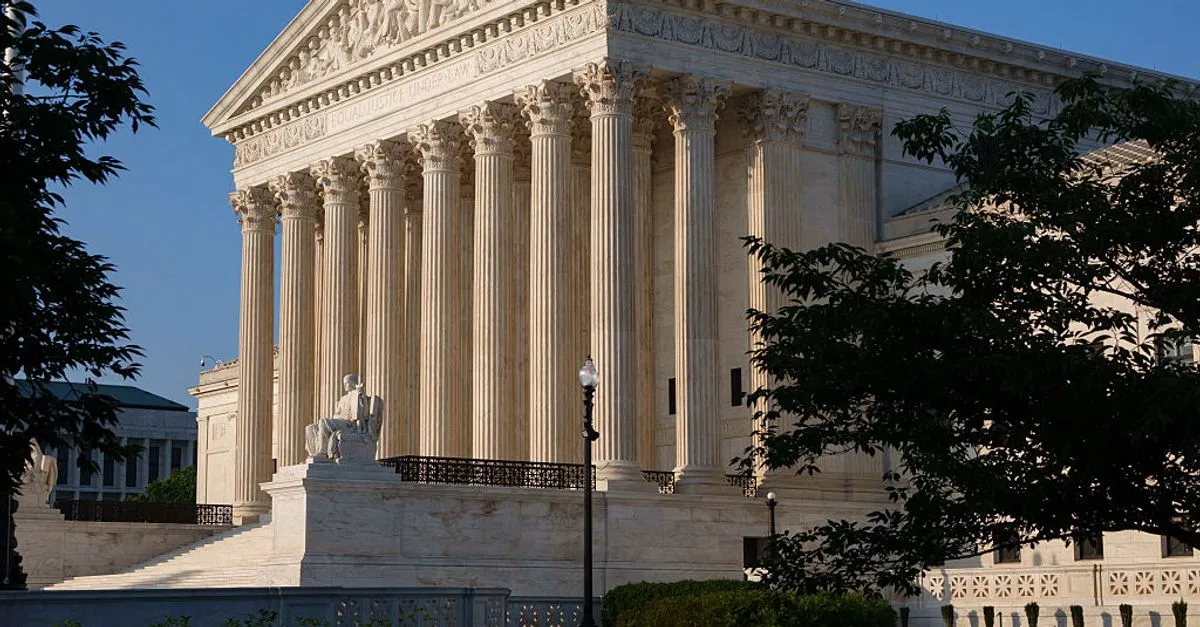 Photo: SCOTUSblog
Key points
The Supreme Court agreed to hear a challenge to the Trump administration's suspension of asylum at the U.S.-Mexico border.
The Supreme Court on Friday agreed to decide whether the Trump administration can suspend access to asylum for immigrants at the U.S.-Mexico border. In a brief list of orders from their private conference, the justices announced they will review a ruling by a federal appeals court in Washington, D.C., that struck down the policy as an overreach.
The legal challenge
The challengers are a group of 13 individuals who say they have been persecuted or tortured in their home countries, as well as three immigration-related nonprofits. They sought to file a class-action lawsuit in federal court in Washington, arguing that both the proclamation and the guidance violate federal immigration law.
U.S. District Judge Randolph Moss recognized a class of challengers and concluded that the DHS guidance was unlawful. He barred DHS officials from implementing those actions under the proclamation. A three-judge panel of the U.S. Court of Appeals for the District of Columbia Circuit initially paused part of Moss's order, but a different panel later largely upheld it on the merits.
Judge J. Michelle Childs, joined by Judge Cornelia Pillard, wrote that the "text, structure, and history" of federal immigration law "make clear that in supplying power to suspend entry by Presidential proclamation, Congress did not intend to grant the Executive the expansive removal authority it asserts." Judge Justin Walker dissented in part, agreeing that the government "cannot remove aliens to countries where they will be persecuted."
The administration's argument
The D.C. Circuit agreed to keep its ruling on hold while the government appeals, allowing the administration to maintain the asylum restrictions. The Trump administration came to the Supreme Court in August, with Solicitor General D. John Sauer telling the justices that "suspending the illegal entry of aliens and precluding their access to asylum" is "[t]he most important and effective pieces of the President's response."
Sauer argued that the proclamation "rests on a commonsense understanding of the President's inherent and delegated powers to exclude aliens." He also contended that lower courts did not have the power to apply their order to a whole class of challengers, and that the class "sweeps in aliens who are currently overseas and have no imminent plans to enter the United States."
The challengers urged the justices to deny review, telling them that the D.C. Circuit's ruling was correct. The ACLU and immigrant rights groups argued in their filing that Congress mandated the creation of the asylum system and the president "may not invent by fiat a new removal system that eviscerates the protections Congress mandated by statute."
What happens next
The case is the latest addition to the court's immigration docket, which already includes a challenge to the administration's practice of deporting immigrants to countries not identified in their removal orders and its policy of detaining immigrants without a hearing. In December, the court will review the administration's efforts to deport immigrants to so-called third countries.
The justices will likely hear oral arguments and decide the case before the end of the court's term next June. A ruling in favor of the refugees could allow the administration to restart a policy from the first Trump administration that prevented asylum claims by stopping refugees from reaching the border.
The administration argues in its petition that the president has broad authority over asylum claims, including shutting down the system entirely because he has decided he will not grant any. "The proclamation thus lawfully suspends access to asylum, which is a purely discretionary benefit," the petition says. Immigration attorneys at the American Civil Liberties Union and National Immigrant Justice Center counter that border crossings were already falling before Trump took office. They say his executive order is an attempt to unilaterally "eviscerate" legal protections aimed at protecting people fleeing danger in their home countries.
Frequently asked questions
What did the lower courts decide?
A federal judge in Washington ruled the policy unlawful, and the D.C. Circuit largely upheld that ruling, finding that the president cannot categorically deny asylum claims under federal law.
When will the Supreme Court hear the case?
The justices will likely hear oral arguments and decide the case before the end of the court's term next June.