Trump ends Iran deal talks, directs Vance to corruption fight
President Donald Trump on 12 November said the US no longer needs a deal with Iran and ordered Vice President JD Vance to focus on domestic corruption.
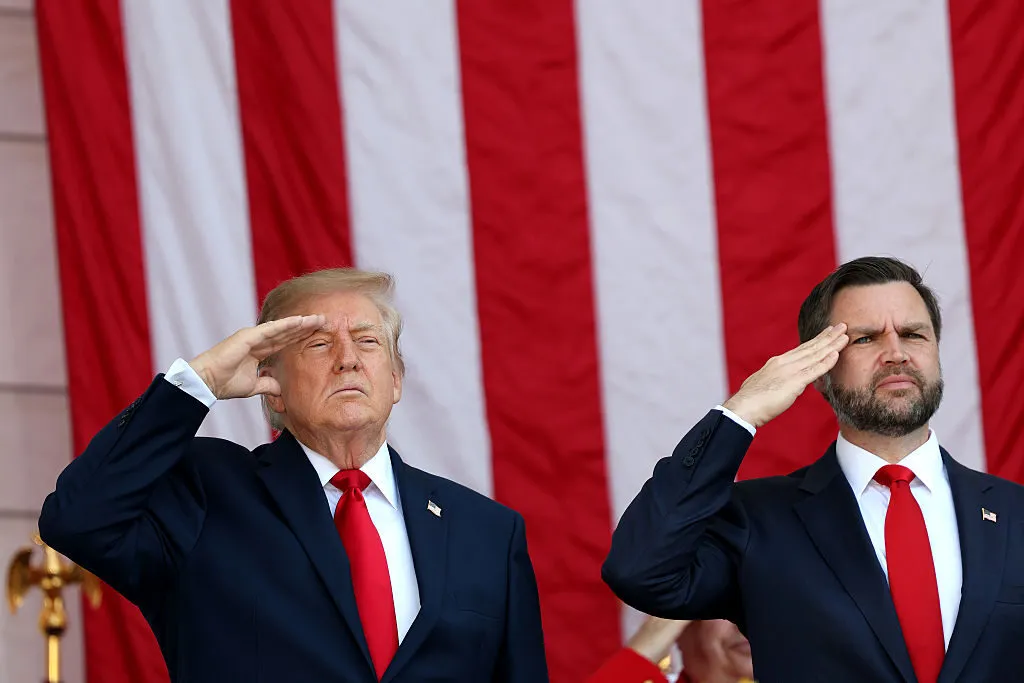 Photo: Roll Call
Key points
Trump ended US talks with Iran and redirected Vance to domestic corruption, citing no need for a deal.
President Donald Trump on Thursday shut down his administration's on-again-off-again talks with Iran, saying he would not seek a deal to formally end the nine-month-old conflict with Tehran. In a social media post, Trump said he had ordered Vice President JD Vance to focus his "complete and total attention on the Massive Corruption and Crime taking place in Democrat run Cities and States throughout the U.S."
The decision came nine days after Trump and congressional Republicans suffered massive losses in the midterm elections. House Democrats will have more than 250 seats come January, and Senate Democrats will have at least 55 seats, with Alaska's competitive race still uncalled. Vance had been Trump's designated top negotiator in talks with Iran's remaining leaders.
Vance's role changes
Vance penned a lengthy social media post the day after the election, blaming the Iran war for the Democratic victories. "The reason we lost is the war," Vance wrote. "The president himself said so last night." Trump has said he agrees with Vance's assessment but would make the same decision to strike Iranian targets again.
Trump's announcement could represent his latest way to try assuaging GOP voters, including members of his "Make America Great Again" base. A Reuters/Ipsos poll conducted after the midterms and released Tuesday showed that a majority of Republicans (51 percent) want Congress to pass legislation that would end the Iran conflict. Overall, 71 percent of Americans would support such a bill.
The situation along the Strait of Hormuz remains contested and dangerous for commercial vessels, including ones that deliver a large amount of the world's oil products. Iranian officials contend that they control most of the key waterway. The US has maintained a blockade on Iranian ports and mostly reopened the strait to marine traffic, including crude oil shipments.
Midterm election fallout
Trump, Vance and other administration officials had said in recent weeks they were open to continuing talks with Iran, while criticizing Tehran's negotiating tactics. Last week, Secretary of State Marco Rubio told reporters that Iran's latest demands were unreasonable. Trump's statement is a flip-flop of his comments earlier this week saying there was "momentum" for a political settlement.
Vance had put himself at the centre of efforts to revive a political settlement with Iran. Vance had initiated outreach with Mohsen Rezaei, the head of Iran's Supreme National Security Council, requesting a meeting. Trump had approved the outreach, but the president's decision to abruptly sideline Vance may suggest a difference of opinion among advisors.
Trump's decision to call off negotiations is likely to unnerve regional allies and partners whose economies are suffering from the lack of clarity on US policy. "We should... prepare for a long period of uncertainty in which neither a decisive resolution nor stable regional order can be taken for granted," Anwar Gargash, diplomatic advisor to UAE President Mohamed bin Zayed, said.
Regional reactions
Other US partners have called for engagement. At a conference in Sulaymaniyah, Iraq, Bafel Talabani, the head of the Patriotic Union of Kurdistan party, said Washington must "talk" with Tehran. "We don't find it difficult talking to the Iranians… As an ally of Mr Trump and, strangely, an ally of the Iranians, [I say] the mighty US can do it," Talabani said.
Trump said he had been lobbied by the leaders of Gulf states not to resume the war. During a White House press conference, Trump said that Israel and Gulf allies were well protected from Iran, and that an escalation was not needed. "At this point, taking the military action doesn't seem to be a very necessary thing — but we're locked and loaded, ready to go for any reason," he told reporters.
The conflict was front-and-center during the midterms campaign. Republican former Rep. Mike Rogers, who lost the Senate race in Michigan to Democrat Abdul El-Sayed, called for the Iran conflict to end "quickly." "Michigan families are struggling with the price of everyday life. Groceries cost too much. We have to bring prices down," Rogers said in one campaign ad.
On Capitol Hill, GOP lawmakers have tried giving Trump cover, while raising some concerns about high gas prices. As the midterms campaign hit the homestretch in late September, two Iowa Republicans in tight races, Reps. Zach Nunn and Mariannette Miller-Meeks, voted with Democrats on a measure to end the conflict. Nunn and Miller-Meeks both lost their seats last week.
Frequently asked questions
Why did Trump end talks with Iran?
Trump said on 12 November that the US no longer needs a deal with Iran, citing that 'We've got their money, Hundreds of Billions of Dollars, and we've got their Strait!' The decision followed Republican losses in the midterm elections.
What is JD Vance's new role?
Trump ordered Vance to focus his 'complete and total attention on the Massive Corruption and Crime taking place in Democrat run Cities and States throughout the U.S.' This sidelines Vance from the main foreign policy challenge of his vice-presidency.
How did the midterm elections affect the Iran war policy?
Vance blamed the war for the Republican losses, saying 'The reason we lost is the war.' A Reuters/Ipsos poll found 71 percent of Americans support a bill to end the conflict, and 51 percent of Republicans want Congress to pass such legislation.