Herzog tasks Eisenkot with forming Israeli government after 67 lawmakers back him
President Isaac Herzog tasked opposition leader Gadi Eisenkot with forming Israel's next government on 7 November after 67 lawmakers recommended him, surpassing the 61-seat majority threshold.
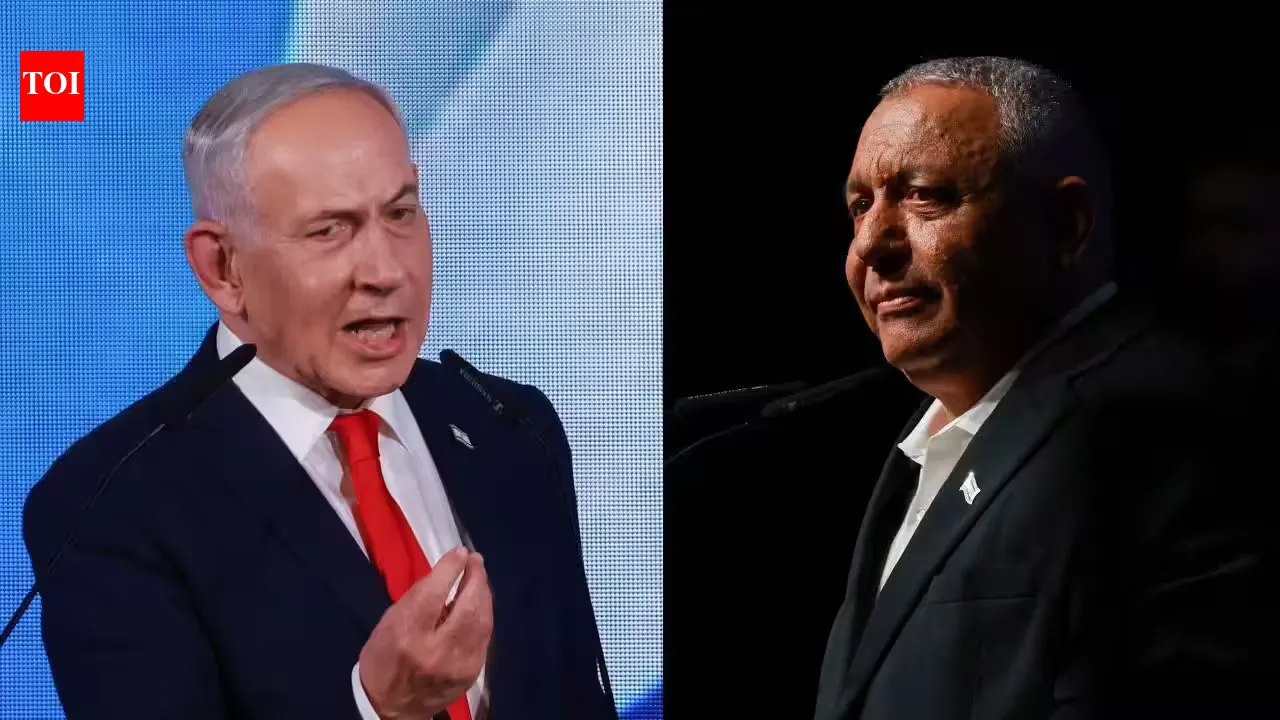 Photo: The Times of India
Key points
Gadi Eisenkot was tasked with forming Israel's next government after securing 67 Knesset recommendations, surpassing the 61-seat majority threshold.
Israeli President Isaac Herzog tasked opposition leader Gadi Eisenkot with forming the country's next government on Saturday, 7 November. The task came after the October 27 election failed to produce a clear parliamentary majority. Eisenkot, a former chief of staff of the Israel Defence Forces, secured recommendations from lawmakers representing 67 of the Knesset's 120 members. That surpasses the 61-seat threshold needed for a majority. Netanyahu received 46 recommendations, while seven lawmakers declined to endorse either candidate.
The decision marks a significant setback for Prime Minister Benjamin Netanyahu, Israel's longest-serving prime minister, whose religious-nationalist bloc fell from 64 seats to 53 in the election. Likud remained the largest single party with 27 seats, but the bloc lost its majority. Herzog announced his decision after consultations with political leaders, including separate discussions with Eisenkot and Netanyahu. The formal handover of the mandate is scheduled for Sunday, 8 November, at 5 pm local time at the President's Residence in Jerusalem.
The mandate and its numbers
Eisenkot will have up to 42 days to negotiate with potential partners and secure the parliamentary support needed to form a government. In his first reaction, Eisenkot called for a national emergency government. "Now is the time to form a national emergency government. I will do everything to ensure we are worthy," he wrote on X. His proposed administration would be guided by four principles: recognising Israel as a Jewish and democratic state, upholding the Declaration of Independence, ensuring universal national and military conscription, and dismantling Hamas' military and political wings.
Eisenkot's endorsements came from the Jewish-led opposition bloc, which holds 48 seats, the Arab party Ra'am with eight seats, and the Joint List with 11 seats. The Joint List's unanimous endorsement proved crucial in taking Eisenkot past the 61-seat threshold. However, the recommendations do not automatically translate into a governing coalition. Eisenkot must still negotiate with potential partners and secure their support on key policy issues, including the role of Arab parties and ultra-Orthodox factions.
One option for Eisenkot is to form a minority government with his natural allies, including Together, The Democrats, and Israel Our Home, while relying on the Arab parties for external support. Such an arrangement would give the broader grouping 67 seats, matching the endorsements he received. However, Avigdor Lieberman's Israel Our Home has repeatedly ruled out supporting a minority government backed by Arab parties. Only The Democrats has publicly called for their inclusion. An Arab party has been part of an Israeli governing coalition only once before, when Ra'am joined Naftali Bennett's government in 2021, which collapsed after 18 months.
Coalition options and hurdles
Another option is to seek support from Israel's two ultra-Orthodox parties, which collectively hold 13 seats. Their backing could help the opposition bloc reach the 61-seat majority without relying on Arab parties. However, negotiations could run into disagreements over military service exemptions traditionally granted to ultra-Orthodox seminary students. Eisenkot and Lieberman have strongly criticised these exemptions. Lieberman signalled some flexibility on Friday, saying "You cannot have it all" to supporters. United Torah Judaism declined to endorse either candidate, while Shas backed Netanyahu.
Netanyahu has not conceded defeat and continues to advocate a national unity government. He has strongly opposed any government dependent on Arab-led parties, describing them as supporters of terrorism. Eisenkot's party has criticised these remarks and urged Likud members to reconsider their alliance with far-right partners. The political sensitivities have intensified following the October 7, 2023, Hamas attacks and the subsequent war in Gaza. Eisenkot briefly served in Netanyahu's wartime cabinet before returning to the opposition and has ruled out joining an administration led by Netanyahu.
If Eisenkot fails to form a government within the 42-day deadline, Herzog is likely to invite Netanyahu to make another attempt. Netanyahu's bloc has been reduced to 53 seats, but he could try to weaken the opposition by persuading lawmakers from rival parties to defect and join his camp. He has used this strategy before, notably in the run-up to the 2022 election. If both Eisenkot and Netanyahu fail, parliament can nominate another candidate, with a further deadline. If no candidate succeeds, Israel will have to hold another election.
What happens if he fails
Herzog has already warned against another vote. On Wednesday, he said everything must be done to avoid fresh elections and urged political parties to approach consultations with an open mind. A unity arrangement involving Eisenkot's Yashar party, Together, Israel Our Home, and Netanyahu's Likud would command 67 seats, but appears unlikely for now, as Eisenkot and his partners would have to abandon their central campaign promise of removing Netanyahu from power. Prolonged coalition negotiations or renewed fighting with Iran could push the rival camps towards a unity arrangement.
Eisenkot emerged as Netanyahu's principal challenger by bringing together political groups from the centre-left to the right, largely united by their opposition to the incumbent prime minister. His Yashar party secured 21 seats in the October 27 election, while the wider Change Bloc won 48 seats. The formal mandate-conferral ceremony on 8 November will mark the start of his statutory window to finalise coalition agreements and secure parliamentary approval to swear in a new government. The coming weeks will test whether Eisenkot can bridge the deep divisions among his potential partners.
Frequently asked questions
What is the deadline for Eisenkot to form a government?
Eisenkot has up to 42 days to form a coalition, with a possible 14-day extension if required. The formal handover of the mandate is scheduled for 8 November at 5 pm local time.
How many Knesset seats does Eisenkot need for a majority?
Eisenkot needs 61 seats in the 120-member Knesset for a parliamentary majority. He secured recommendations from 67 lawmakers, but these do not automatically translate into a governing coalition.
What happens if Eisenkot fails to form a government?
If Eisenkot fails, Herzog is likely to invite Netanyahu to make another attempt. If both fail, parliament can nominate another candidate, with a further deadline. If no candidate succeeds, Israel will hold another election.