European Commission targets 60 more Russian banks in 22nd sanctions package
The European Commission presented its 22nd sanctions package against Russia on 23 November, adding about 60 banks to a transaction ban and more than 70 vessels to its shadow fleet list.
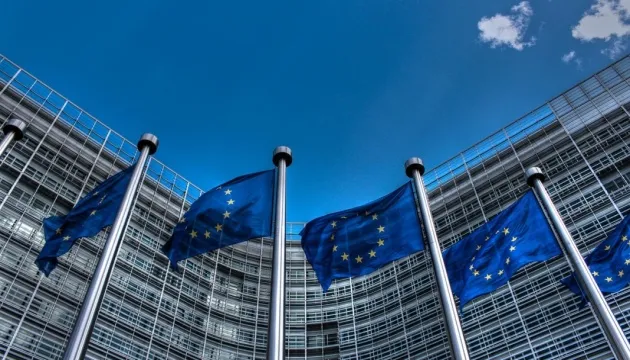 Photo: Ukrinform
Key points
The European Commission presented its 22nd sanctions package against Russia, targeting about 60 banks, more than 70 shadow fleet vessels, ex-combatant visas and Russian athletes.
The European Commission presented its 22nd sanctions package against Russia on 23 November, with Commission President Ursula von der Leyen announcing the measures in Brussels. The package extends a transaction ban to around 60 more Russian banks, all of which would be disconnected from the SWIFT system, the international messaging network banks use to instruct cross-border payments. Von der Leyen said the aim is to keep pressure on Russia to end its war of aggression in Ukraine.
The proposal is the 22nd sanctions package since February 2022, when Russia launched its full-scale invasion of Ukraine. Von der Leyen said the Commission would keep proposing new sanctions until Russia shows genuine intent for a lasting peace in Ukraine. The measures now go to EU member states for negotiation, and Brussels aims for a deal in December before the holiday break.
Banks and crypto platforms
Von der Leyen said the package strikes at Russia's ways to finance its war by targeting banks and crypto platforms. Beyond the bank transaction ban, the Commission is tightening oversight of cryptocurrency and payment networks used to circumvent sanctions. She said the package would focus on Russia but also include third countries that help Russia evade the measures, and that a Crypto Sanctions Task Force has been launched to support the work.
The Commission also wants to expand its ban on providing energy-related services so that no European company can help Russia build, operate or repair its energy infrastructure, notably its refineries. Von der Leyen said that for the first time the ban would also cover services in the electricity sector. European companies would also be barred from repairing Russian refineries damaged by Ukrainian drone attacks.
On shipping, more than 70 additional vessels are being added to the sanctions list targeting Russia's so-called shadow fleet, which Moscow uses to export oil and other commodities. More than 670 of these vessels have already been denied access to EU ports and services. The ships, which lack standard insurance and often sail under false flags, are considered a security and environmental threat, and the fleet is used to bypass the oil price cap.
Shadow fleet and energy services
Von der Leyen said the Commission is proposing to ban all tanker vessels insured in Russia. The package also proposes prohibiting Europeans from continuing to hold positions on the governing bodies of companies in Russia. She said there cannot be business as usual in economic relations with Russia. The proposals follow a difficult year for EU sanctions policy, in which a previous package was held up for weeks over restrictions on liquefied natural gas shipments.
A visa ban on former Russian combatants is also proposed. Von der Leyen cited a recent escalation in non-conventional kinetic activities by Russian operatives in Europe as part of the response. The EU agreed a legal framework for the restrictions in its previous sanctions package over the summer but has yet to put them into effect. A first attempt in July fell short after France and Italy raised concerns about the administrative burden and legal responsibility for consular services.
Ex-combatants and visa rules
Denmark has asked for tighter visa rules after foiling a Russian plot to assassinate a US-Ukrainian rapper on Danish soil, and a recent spike in hybrid attacks, many attributed to Russian services, has injected fresh energy into the issue. Von der Leyen said Russian ex-combatants pose a security risk to Europe and cannot be allowed to wander freely across EU countries, so entry into the European Union will be off limits.
The package introduces restrictions on sports and culture. The Commission wants to ban Russian teams and athletes competing under the Russian flag from all sports events inside the bloc, and to ban the display of official Russian symbols. It also wants to restrict financial flows from Russian sponsors to European-based sports and cultural associations, and to bar Russians from holding posts in the governing bodies of European-based sports federations.
Sports, culture and next steps
Von der Leyen said sports events cannot be a forum for propaganda activities. The move would prevent Russia from returning to next year's ice hockey world championship in Germany, after an arbitration court ruled that the International Ice Hockey Federation lacked sufficient grounds to exclude Russia from the tournament. In July, the International Olympic Committee lifted its suspension on Russian athletes ahead of the 2028 LA Olympics, triggering an outcry across Europe.
Finland has tightened entry restrictions on Russian athletes, including those with neutral status, and on 13 November Estonia confirmed it would not allow Russian and Belarusian athletes to compete on its territory. Norway also announced its intention to ban Russian and Belarusian professional athletes and their support staff from entering the country to take part in sporting events.
Absent from the Commission's proposal is alumina, a key raw material used in aluminium production. The issue came to prominence earlier this year after a media consortium exposed links between Aughinish Alumina, a refinery in western Ireland, and Russia's military-industrial complex. The investigation reached no definitive conclusion. Ukrainian President Volodymyr Zelenskyy is set to attend a special EU summit in Brussels.
Frequently asked questions
What does the EU's 22nd sanctions package target?
It targets about 60 more Russian banks, more than 70 shadow fleet vessels, crypto and payment networks, energy services including electricity, visas for former Russian combatants, and Russian teams and athletes competing under the Russian flag in the EU.
When will the EU agree the 22nd sanctions package?
The proposals now go to EU member states for negotiation. Brussels aims to reach an agreement by the end of the year, with a deal in December before the holiday break.
Why is the EU banning visas for former Russian combatants?
Von der Leyen said Russian ex-combatants pose a security risk to Europe and cited a recent escalation in non-conventional kinetic activities by Russian operatives in Europe. The EU agreed a legal framework for the restrictions in its previous package over the summer.