EU pledges €60 million for Black Sea security after attacks
European Commission President Ursula von der Leyen announced €60 million for Black Sea security on 9 November, as attacks on shipping escalate.
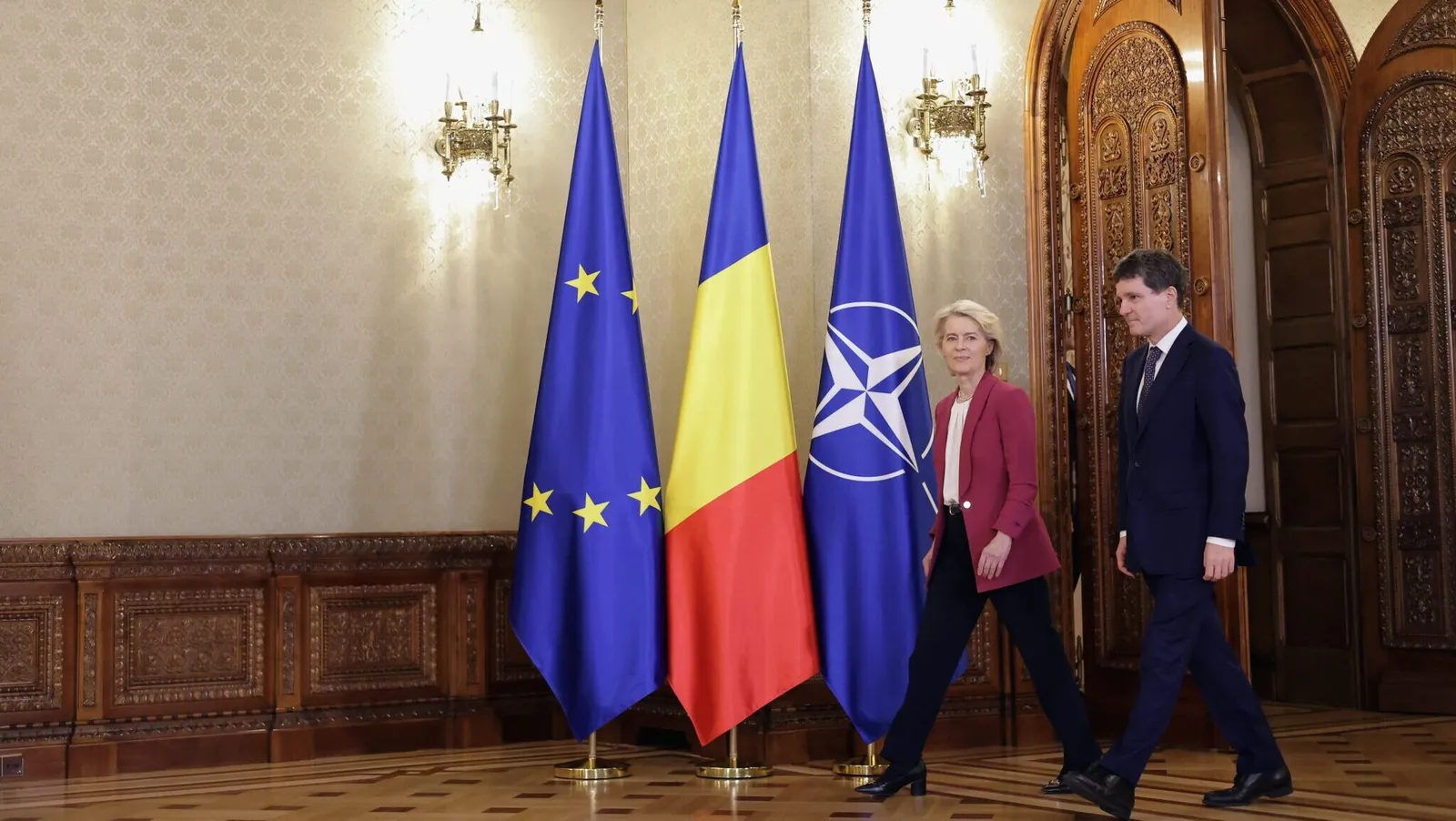 Photo: Balkan Insight
Key points
The EU pledged €60 million to bolster Black Sea security amid rising attacks on commercial shipping.
European Commission President Ursula von der Leyen announced on Monday that the EU will provide €60 million to support Black Sea security, as attacks on commercial shipping escalate. The package includes €50 million for a planned Black Sea Maritime Security Hub and €10 million for Romania's search-and-rescue operations. Von der Leyen made the announcement during a visit to Bucharest, where she met Romanian President Nicusor Dan.
The hub, announced last year, is a joint control center to be run by Romania and Bulgaria and is expected to be fully operational by the end of the year. It aims to monitor maritime activity in real time and safeguard vital infrastructure such as undersea power and communication cables. The hub will offer both countries a unified view of the sea and sky, helping them detect threats before they strike.
What the funding covers
Von der Leyen said the EU needed to step up its response to escalating threats and ensure the safety of shipping routes across the Black Sea, which have become increasingly vulnerable since Russia launched its full-scale invasion of Ukraine. She wrote on X before the visit that "security threats are escalating, attacks are increasing, and innocent lives have been lost" in the region.
The announcement follows weeks of mounting violence on the Black Sea. Since early October, at least nine ships have been struck in the exclusive economic zones of NATO and EU members Romania and Bulgaria; four were sunk, and 34 sailors are dead or missing. Other ships have been hit off Russia's shores. Drone attacks reportedly damaged at least seven commercial vessels last month, claiming the lives of two sailors and leaving at least 25 others unaccounted for.
Both Romania and Bulgaria raised the issue at last month's meeting of EU leaders and are pressing for more security support. However, while Romania has blamed Russia, Bulgaria has stopped short, saying only that the drones came from "an eastern direction". The incidents have heightened concerns over the spread of the conflict beyond Ukraine's borders and its growing proximity to NATO territory.
Mounting attacks on shipping
Von der Leyen reiterated the EU's support for a ceasefire in Ukraine covering attacks on energy and food infrastructure, stressing the importance of protecting civilian facilities and ensuring the continued flow of essential goods. She said she held a call with Ukraine's President Volodymyr Zelenskyy ahead of the visit. "Freedom of navigation in the Black Sea must be restored and preserved," she said.
Meanwhile, the U.S. is steering talks on a Black Sea ceasefire and an agreement on safe passage, with Secretary of State Marco Rubio saying Washington is reviewing proposals from Turkey forwarded in late October and is "open" to ideas from India. An agreement would not end the conflict, Rubio said, but it would "solve a unique aspect" of it by easing the spillover on food security for vulnerable nations.
Diplomatic efforts continue
Asked whether he foresaw a possible breakthrough this week, Ukraine's Agriculture Minister Taras Vysotskyi was pessimistic. He said that Kyiv is "preparing to keep our farmers operating without access to the deep-water Black Sea ports for the long term." The ports of Ukraine's Greater Odesa region are main channels for its exports, including steel, iron ore and grain, and they bring in billions of dollars.
On Tuesday, von der Leyen is due to travel to Bulgaria, where she will meet Prime Minister Rumen Radev in Varna and visit the Naval Academy, before attending the COP 31 climate summit in Turkey. The European Commission president is also due to meet Zelenskyy in Dublin later this week.
Frequently asked questions
What is the EU's new Black Sea security package?
The EU announced €60 million in support, including €50 million for a Black Sea Maritime Security Hub and €10 million for Romania's search-and-rescue operations.
How many ships have been attacked in the Black Sea recently?
Since early October, at least nine ships have been struck in Romanian and Bulgarian waters, with four sunk and 34 sailors dead or missing.
Who is blamed for the Black Sea attacks?
Romania has blamed Russia, while Bulgaria has not named a perpetrator, saying only that drones came from 'an eastern direction'.