France blames Iran for cyberattacks on 700 supermarket fridges
France on Monday blamed Iran's Revolutionary Guard for October cyberattacks that disrupted refrigeration at 700 food sites, sparking fires and food losses.
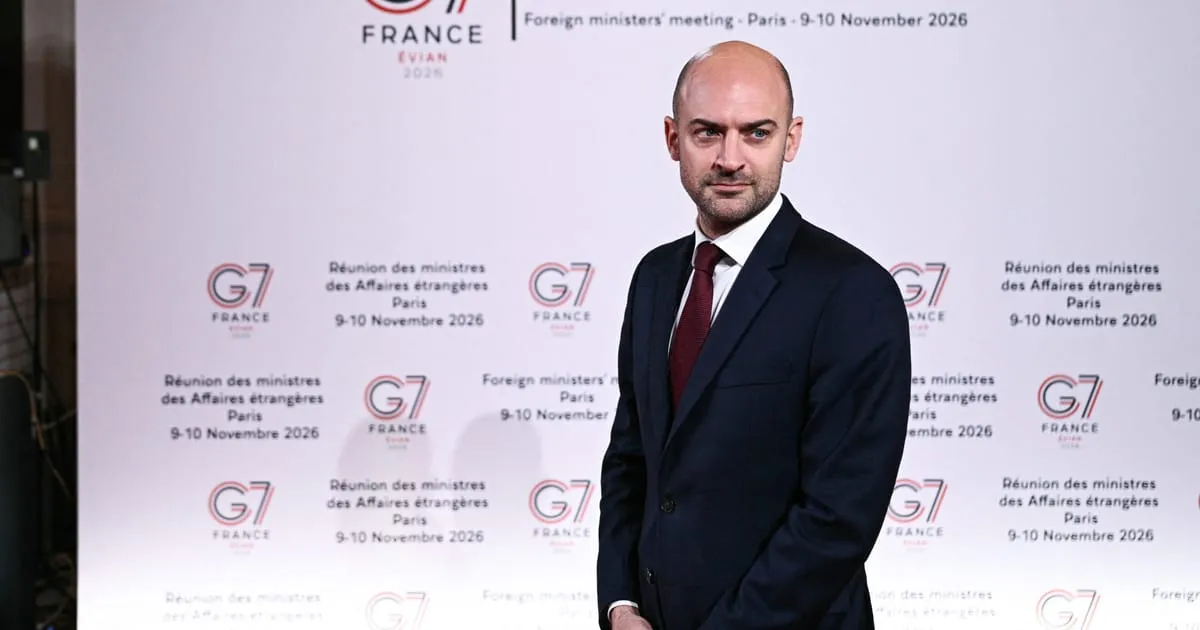 Photo: POLITICO
Key points
France attributed October cyberattacks on supermarket fridges to Iran's Shahid Kaveh unit, affecting 700 sites and sparking fires.
France on Monday formally blamed Iran for last month's cyberattacks that disrupted refrigeration systems at more than 700 supermarkets and other food distribution sites across the country. The attacks sparked at least 15 fires and caused tens of millions of euros in food losses. Foreign Minister Jean-Noël Barrot told reporters at a G7 meeting in Paris that the attacks were carried out by Iran's Islamic Revolutionary Guard Corps, calling them "unprecedented" and "the first large-scale act of sabotage on our national territory."
Attribution and sanctions
The French investigation, led by the national cybersecurity agency ANSSI, attributed the attacks to Shahid Kaveh, a cyber unit affiliated with the Islamic Revolutionary Guard Corps. Paris prosecutor Laure Beccuau said a formal judicial investigation was opened Monday into suspected organized cybercrime with the aggravating circumstance of "having been committed to serve the interests of a foreign power — in this case, Iran." The investigation targets the unit's head and his two deputies. The prosecutor's office is seeking international arrest warrants.
The attacks occurred overnight on October 11-12, when hackers compromised industrial refrigeration controllers and remotely changed defrost settings to high temperatures. According to the Paris prosecutor's office, "The attackers took remote control of the equipment via web interfaces to trigger abnormal defrost cycles of unlimited duration, while disabling the security alerts on the sensors that were supposed to activate once a certain temperature was exceeded." Temperatures reached 50 degrees Celsius (122 degrees Fahrenheit) for about six hours, forcing stores to discard fresh and frozen goods.
The attacks affected an estimated 250 to 350 French supermarkets, but French authorities later revealed more than 700 retail locations were targeted. The Intermarché supermarket chain reported losses of "tens of millions of euros" in a single day. A technical report by CERT-FR listed Casino, Leclerc, Coopérative U, Metro, Carrefour, and Intermarché, along with smaller butcher shops, a slaughterhouse, and cooperative food-processing facilities as affected.
Mechanism and impact
French investigators also detected attacks against Schneider Electric industrial equipment at small hydroelectric installations during the same period, which they linked to the same campaign. These incidents reportedly had moderate effects on the targeted equipment. The attacks were followed by a second wave of refrigeration system attacks reported in November, affecting more than 115 stores across six European countries, including Sweden, Belgium, Luxembourg, Ireland, and Estonia.
France's national blood service reported a similar incident that altered temperature and defrost settings at three facilities used to store blood products, but the attacks were stopped before any blood was spoiled. Last week, the FBI and CISA warned of ongoing cyberattacks targeting industrial refrigeration and cold-chain monitoring systems worldwide. The U.S. government is also reportedly looking into whether freezer units on military bases were hacked, but the intelligence community has not yet made a formal or public attribution.
French investigators linked the refrigeration attacks to Shahid Kaveh through several observations. The attacker's infrastructure was used to conduct reconnaissance against Schneider Electric systems. The attackers used the FOFA internet-connected device search platform. The propaganda outlet CyberbanNews publicized the attacks on October 13. Investigators also discovered traces of Farsi-language used in the attacker's infrastructure and IP addresses linked to devices located in Iran.
Wider campaign
CERT-FR says Shahid Kaveh operates through several online hacktivist identities, including CyberAveng3rs, Soldiers of Solomon, Mr. Soul, and Cyber Isnaad Front. The unit claimed responsibility for a large-scale sabotage campaign targeting Israeli and U.S. interests in March and April 2026, including attacks on Israeli refrigeration equipment. In April 2026, the unit was observed conducting large-scale reconnaissance of Schneider Electric industrial control systems, including systems in France.
Iran's foreign affairs ministry and its embassy in Paris did not immediately respond to a request for comment. The French government has attributed only the October attacks against French supermarkets to Iranian hackers, not the later attacks. The European Commission is also looking into the cyberattacks, which EU Agriculture and Food Commissioner Christophe Hansen described as a "deliberate attempt to disrupt our food supply chain." The matter will be discussed at next week's European foreign affairs council.
Frequently asked questions
What did France blame Iran for?
France blamed Iran for cyberattacks on supermarket fridges that affected more than 700 food distribution sites, causing fires and food losses.
Who is Shahid Kaveh?
Shahid Kaveh is a cyber unit affiliated with Iran's Islamic Revolutionary Guard Corps, which France says carried out the attacks.
What actions did France take?
France summoned Iran's ambassador, opened a judicial investigation, and plans to impose European sanctions against those responsible.