G7 ministers meet in Paris as Rubio faces allies after midterm defeat
G7 foreign ministers gather in Paris on Monday to assess how Trump's midterm setback affects Ukraine policy, Iran, and US alliances.
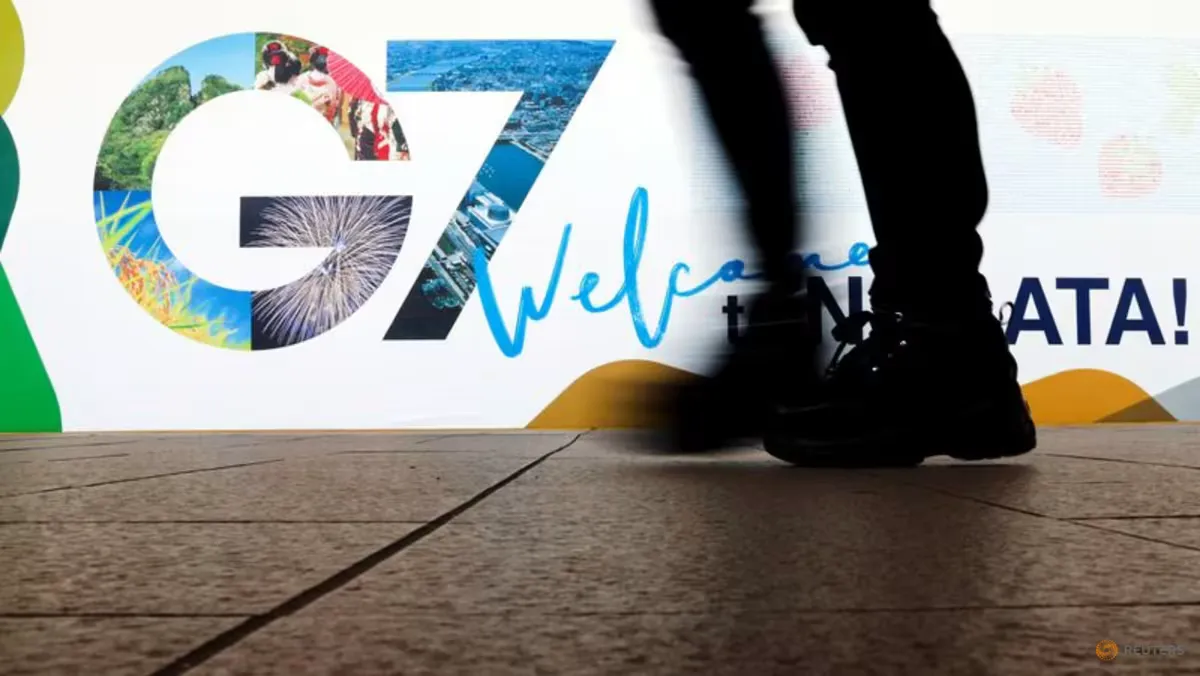 Photo: Channel NewsAsia
Key points
G7 ministers met in Paris to assess how Trump's midterm defeat affects US policy on Ukraine, Iran and alliances.
G7 foreign ministers gather in Paris on Monday for two days of talks expected to see European powers press the United States to seek a fair settlement for Ukraine and deter Washington from further military action against Iran, according to diplomats and officials. The meeting provides the first opportunity for Washington's allies to gauge whether a US midterm defeat for President Donald Trump alters the administration's approach to Ukraine, the Middle East and ties with its closest partners, four G7 diplomats said.
US Secretary of State Marco Rubio will make his first appearance before allies since the elections, attending both days unlike the March meeting where he came only for one. Rubio, viewed by US media as a potential 2028 presidential contender, declined to comment directly on Trump's and the Republicans' crushing loss in the midterms. "It is not uncommon to have a division of power in this country," Rubio told reporters, alluding to the fact that Trump will now see both houses of Congress controlled by the Democrats.
Rubio's first appearance
The diplomats signalled the Democrats' gains could narrow the White House's room for manoeuvre but warned against expecting a return to traditional US multilateralism while foreign policy remains very much under Trump's control. The meeting, moved at short notice from Marseille to Paris for security reasons after weeks of protests across France, includes ministers from Britain, Canada, France, Germany, Italy, Japan and the United States, as well as the European Union. Ministers from Ukraine, Saudi Arabia, Egypt, South Korea and Brazil are also attending.
With Ukraine top of the agenda, the G7 ministerial comes ahead of trilateral discussions on Tuesday in Abu Dhabi between Ukraine, Russia and the United States. Officials from France, Britain, Germany, NATO and the European Commission are also aiming to be in the Emirati capital, although they are not expected to take part in the trilateral format. The meeting coincides with US-mediated talks between Moscow and Kyiv in Abu Dhabi scheduled to begin on Tuesday and run through Wednesday.
European governments are concerned the US might be pushing Ukraine to a settlement favoring Russia. Trump, in the run-up to the Abu Dhabi talks, said a "very big" deal was in the making, suggesting Ukraine could emerge from a settlement with altered borders. "I think we're gonna have it done, and I think it's gonna happen and they're gonna end up with a little bit different shape Ukraine," Trump told broadcaster CBS. The US president also said the deal would involve all of Europe.
Ukraine winter blackout risk
French Foreign Minister Jean-Noel Barrot told RTL radio that "Europeans will be represented and France will participate in these talks." Barrot said he did not know the details of US plans but stressed that no deal affecting the European security architecture could be done without the Europeans. European leaders have long insisted that any deal to end the war should include the continent's participation and that any settlement should not come at the expense of Ukraine's sovereignty.
Diplomats painted a sombre picture of the situation in Ukraine. While the front had largely stabilised, making major breakthroughs unlikely, they warned that Russia had shifted tactics toward systematically targeting energy infrastructure in an effort to trigger a nationwide winter blackout. Shortages of Patriot interceptors and other air-defence systems were Kyiv's most urgent military vulnerability and one objective of the G7 meeting would be to sustain pressure on Russia while mobilising additional military, financial and energy support for Ukraine.
In a sign of friction among Europeans, Italian Prime Minister Giorgia Meloni warned on Nov 5 that Europe risks becoming irrelevant in efforts to end the war in Ukraine if member states continue pursuing separate diplomatic tracks rather than agreeing on a common representative and strategy, an issue likely to come up at the G7. The leaders of Finland and Norway were slammed for reaching out to Russia, exposing Europe's wider divisions over how to deal with Moscow at a pivotal moment in the push for peace.
Iran and Lebanon differences
Iran is also expected to feature prominently in discussions. Washington's G7 allies have repeatedly voiced scepticism over the war and fear further US military action could worsen rather than resolve the crisis. Trump has not ruled out new strikes, including at so-called Pickaxe Mountain, a suspected nuclear site which Tehran denies is such a facility. Europeans are eager to see a resolution and shipping traffic return to normal in the Strait of Hormuz energy transit hub. "We're dealing with them now," Trump said of the Iranians Friday. "They want to make a deal very badly."
The talks could also expose differences between Paris and Washington over Lebanon. France is pushing for discussions on a new UN-backed security framework to replace current arrangements in southern Lebanon and has floated options including a French-Italian international force. While French officials privately acknowledge US reluctance to embrace some of those ideas, diplomats said the G7 offers an opportunity for the allies to narrow differences as the expiry of existing arrangements at the end of the year draws nearer.
The sidelines of the meeting will see the French finance ministry hosting on Monday a donor conference to raise funds to repair the dome protecting the nuclear reactor that exploded in Ukraine's Chernobyl in 1986 after it was damaged in a Russian strike last year. Around 500 million euros is required but only just over half has been raised so far with a target date of spring 2027 to muster the rest of the funds, the French finance ministry said.
The Paris gathering is among the final major diplomatic events of France's G7 presidency. The United States is scheduled to assume the group's rotating presidency in 2027. EU leaders will grapple with questions about who should represent Europe in negotiations at an informal summit in Dublin this week, with few involved expecting them to agree.
Frequently asked questions
When do the G7 foreign ministers meet in Paris?
The G7 foreign ministers meet in Paris on Monday and Tuesday. The meeting was moved from Marseille to Paris for security reasons after weeks of protests across France.
What is on the agenda at the Paris G7 meeting?
Ukraine tops the agenda ahead of US-mediated talks in Abu Dhabi on Tuesday. Iran is also expected to feature prominently, along with differences between Paris and Washington over Lebanon. Ministers from Ukraine, Saudi Arabia, Egypt, South Korea and Brazil are also attending.
Why is Marco Rubio's attendance significant?
US Secretary of State Marco Rubio will make his first appearance before allies since the midterm elections, attending both days unlike the March meeting where he came only for one. He is viewed by US media as a potential 2028 presidential contender.