Trump says Iran strikes highly unlikely if talks progress
President Donald Trump said on 8 November that renewed strikes on Iran are highly unlikely if negotiations produce progress, citing Iran's 301 per cent inflation.
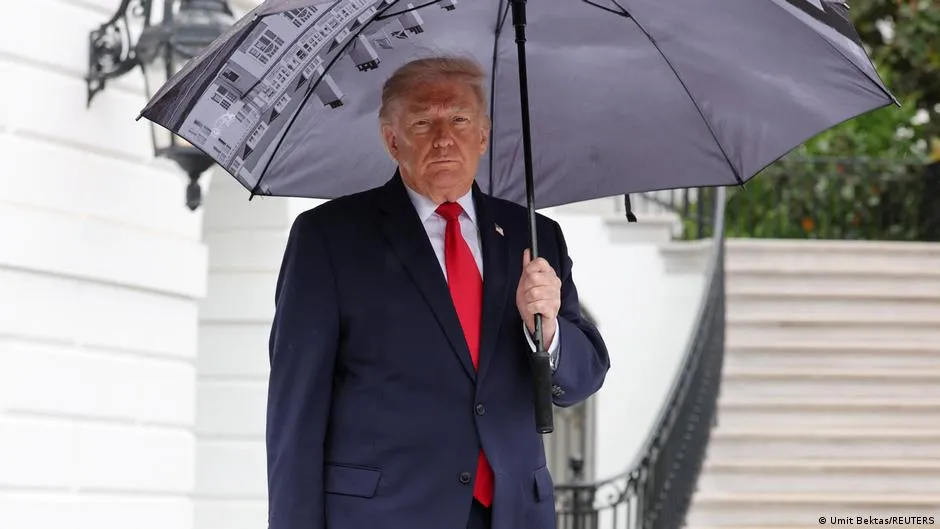 Photo: DW
Key points
Trump said on 8 November that renewed US strikes on Iran are highly unlikely if negotiations progress, citing Iran's economic collapse.
US President Donald Trump said on 8 November that renewed strikes on Iran are "highly unlikely" if ongoing indirect negotiations produce progress. "It depends on whether or not they sign a very strong agreement," he said. "The answer is highly unlikely it's going to be necessary." The interview came after weeks of threats to resume hostilities following the US midterm elections on 3 November, in which Trump's Republicans lost their majorities in Congress.
Trump restated that the US military was "ready" to launch a new round of strikes and could "finish [Iran] off." He said a third "fully locked and loaded" US aircraft carrier strike group recently arrived in the region. "I've got three aircraft carriers here," he said. "They're fully locked and loaded." He also detailed that Washington had identified possible targets inside Iran, including power plants and bridges.
Military readiness and targets
Trump said the US had 38 bridges in its sights "that we can knock down in literally one hour." He added that he would prefer not to strike infrastructure, predicting it could take Tehran up to 10 years to rebuild destroyed bridges. "I don't like ripping down bridges. And the hardest thing to build is a bridge. It takes years, and I'm a good builder," he said. The threat of infrastructure strikes is new compared with earlier US operations, which focused on military targets.
Trump asserted that a US attack would be "unstoppable" because Iranian air defenses were destroyed in previous American airstrikes. "All of their anti-aircraft is gone," he said. "The only thing they can do is about 10% level - make some missiles and make some drones." He added that drones are at about 15% capacity "because much of their factories are gone." These claims contrast with Iran's ability to stage repeated attacks on US allies and maintain a partial blockade of the Strait of Hormuz.
Iran's economic collapse
Iran has repeatedly rejected Trump's account of its collapse. Despite his claims, Tehran has been able to stage attacks on US allies in the region and maintains at least a partial blockade of the Strait of Hormuz, which has dented oil supplies out of the Gulf. That, in turn, has driven up gasoline prices in the United States, contributing to the unpopularity of the war. The conflict featured heavily in the midterm campaign that saw Trump's Republicans lose their majorities.
The most tangible diplomatic achievement since the war began was reported in June, when Iran and the US signed a memorandum of understanding in Islamabad. But the talks broke down and the memorandum expired in August, with the two sides still engaged in a military and diplomatic stalemate. Trump ordered an attack on Iran in late February, after US ally Israel launched what it called a "preemptive strike" on its biggest regional rival.
On 8 November, Iranian Foreign Minister Abbas Araghchi suggested peace talks had been paused while the political fallout of the Democratic Party's landslide victory was being assessed. "For the past few days, there has been no more travel (by mediators), and the reason for this is the shock that the election results in the United States have caused to everyone," he told state television. "We now have to see how long it will take for them to digest these results, in order to determine how we are going to move forward."
Talks paused after US election
Qatar, which acts as one of the mediators in the conflict, denied rumors that the US and Iran are failing to reach a peace deal. On 7 November, the Qatari prime minister said both sides were still working toward an agreement. Separately, the Reuters news agency cited a senior Iranian official as saying that Tehran has submitted a proposal on its nuclear program to Washington through Qatar. The official also noted that further talks would depend on the US meeting Tehran's demands, including lifting sanctions, unfreezing Iranian funds and war reparations.
The next step depends on whether the US and Iran can bridge their differences over the nuclear proposal and sanctions. Araghchi said the pause in mediator travel would last until the US political situation becomes clearer. Trump's statement that renewed strikes are "highly unlikely" if talks progress leaves the door open for diplomacy, but his repeated threats of military action keep the possibility of escalation alive.
Frequently asked questions
What did Trump say about Iran strikes on 8 November?
Trump told CNN that renewed strikes on Iran are 'highly unlikely' if negotiations produce progress, but said the US military is ready and has 38 bridges in its sights.
Why did Trump cite 301 per cent inflation?
Trump claimed Iran is a 'failing nation' with 301 per cent inflation, saying it is 'withering away financially' and wants a deal badly.
What is the status of US-Iran peace talks?
Iranian Foreign Minister Abbas Araghchi said mediator travel has paused due to the US election shock. Qatar says both sides are still working toward an agreement.