Eisenkot receives mandate to form Israeli government with 67 recommendations
President Isaac Herzog gave Gadi Eisenkot the mandate to form Israel's next government on 8 November, with 67 recommendations against Netanyahu's 46.
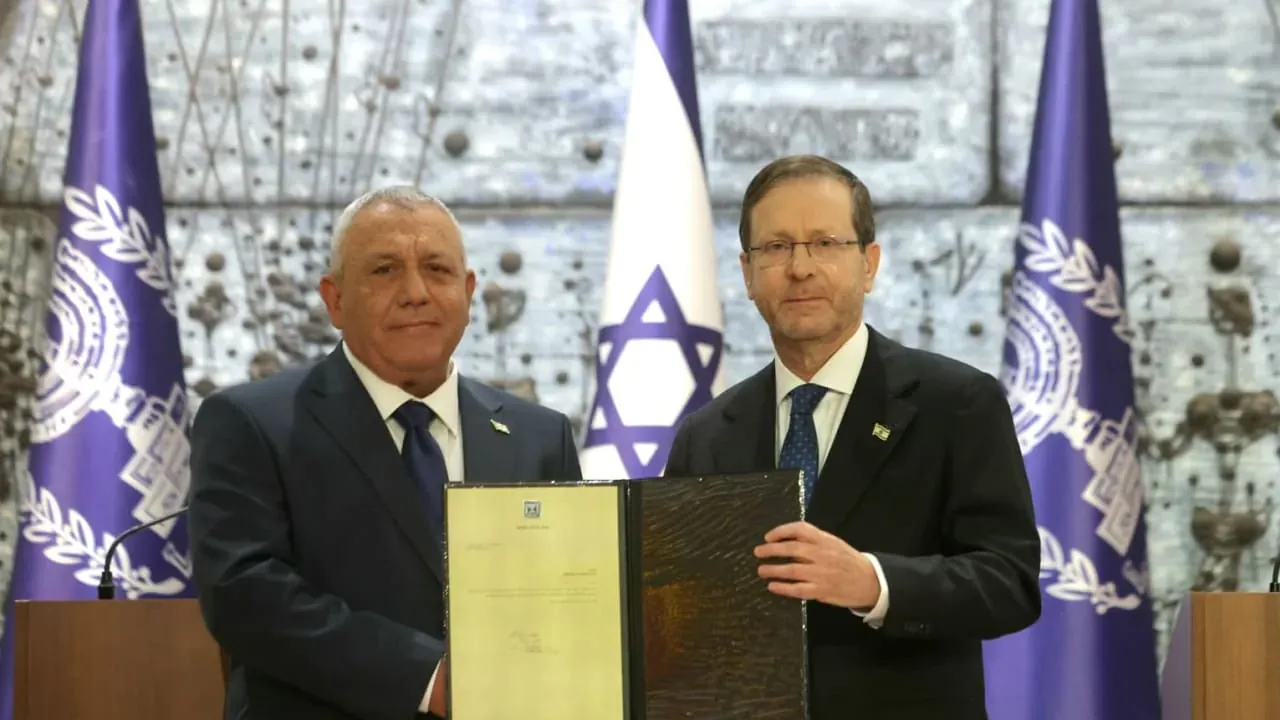 Photo: The Jerusalem Post
Key points
Gadi Eisenkot received the mandate to form Israel's next government on 8 November, backed by 67 recommendations, but faces a fragmented Knesset.
Israeli President Isaac Herzog gave opposition leader Gadi Eisenkot the mandate to form the next government on Sunday evening, during a ceremony at the President's Residence in Jerusalem. Eisenkot, leader of the Yashar party, received 67 recommendations from Knesset parties in consultations, against 46 for Prime Minister Benjamin Netanyahu. By law, Eisenkot now has 28 days to form a government, with a possible extension of up to 14 additional days.
The mandate and numbers
At the ceremony, Eisenkot said Israel is 'in a state of emergency, approaching a point of no return for the State of Israel.' He added: 'We must establish a national emergency government. Creative and unconventional political steps will be required.' He called on all Knesset parties to cooperate with him and accept the four principles he has laid out as a condition for joining his coalition, saying his 'door is open' and his 'hand is extended, with a full heart and a willing spirit.'
Eisenkot's four conditions for parties joining his coalition are support for Israel as a Jewish and democratic state, support for its declaration of independence, support for military or national service, and recognition of the Hamas militant group as a terrorist organization. These conditions reflect his campaign focus on ending the long-standing draft exemptions enjoyed by the ultra-Orthodox community, a central issue in the election.
The path to a coalition is fraught. Eisenkot has three options: a power-sharing agreement with Netanyahu, support from Arab-led parties, or an agreement with the ultra-Orthodox parties. However, several members of his bloc oppose allying with Arab parties, and the ultra-Orthodox parties demand military exemptions. Yisrael Beytenu, led by Avigdor Liberman, has already said it will not join a coalition with Arab-led parties.
Coalition hurdles
Liberman, whose party holds seven seats, has voiced openness to an alliance with ultra-Orthodox parties, despite his long-standing support for conscription. He said Sunday he still backed conscription for all Israelis but that he had to make 'difficult decisions' for the higher priority of ousting Netanyahu. He remained adamant against allying with Israeli Arabs, writing on X: 'I will not lend a hand to the establishment of such a government, which in my view will harm security and bring Netanyahu back to power.'
The ultra-Orthodox United Torah Judaism party, a longtime coalition partner of Netanyahu, declined to recommend a candidate for prime minister, amid reported tensions with Netanyahu. This abstention benefits the opposition bloc, as UTJ could potentially support Eisenkot. However, Eisenkot's demand for mandatory military service clashes with the ultra-Orthodox priority of preserving their military exemptions, which they say are needed to maintain their devout lifestyle.
Arab-led parties have indicated support for Eisenkot, but their backing is conditional and not guaranteed. Ra'am has said it will support Eisenkot, but the party does not have enough seats on its own to push him into a majority. The Joint List has said it will support Eisenkot from outside the coalition to end Netanyahu's grip on power, breaking with decades of precedent. However, this cooperation is fraught, as it would mean aligning with parties that reject Israel's identity as a Jewish state.
What happens next
Netanyahu has repeatedly claimed the election was 'stolen' by Arab parties, offering little evidence. He called for a 'national unity' government with Eisenkot on Saturday night, but Eisenkot has ruled out a unity government with Netanyahu. Israel's Shin Bet security agency has launched an investigation into possible foreign interference in the vote, but the Central Elections Commission and Herzog say the vote was valid and any wrongdoing did not have a significant impact on the result.
If Eisenkot fails to form a government within the allotted time, informs Herzog of failure, or presents a government that fails to win a confidence vote, the president must decide within three days whether to assign the task to another MK or inform the Knesset speaker that he sees no possibility of forming a government. A second candidate would then have 28 days to establish a coalition, without the possibility of an extension. If the second attempt also fails, a 21-day period begins during which at least 61 MKs can request a candidate.
Political expert Assaf Shapira of the Israel Democracy Institute said that Eisenkot would face an especially fragile government if it only has 48 lawmakers, even if others promise to keep it in power. 'To pass laws, you need strong support from other parties,' Shapira said, explaining that an Eisenkot minority government would be forced into extensive negotiations on every piece of legislation. The political deadlock could ultimately lead to another election if coalition negotiations fail.
Eisenkot, 66, a former army chief and political novice, would be the first Sephardic prime minister in a country long dominated by an Ashkenazi elite. He has vowed to repair Israel's international reputation and end violence against Palestinians by extremist West Bank settlers. In Tel Aviv, Neri Bar-On, who works in educational technology, said he expected Eisenkot to succeed in forming a government, but added: 'The country is facing a massive internal conflict; even if he manages to form a government, it won't solve the underlying issues.'
Frequently asked questions
What is the mandate to form a government in Israel?
The mandate is given by the president to a Knesset member who has the best chance of forming a coalition. The candidate has 28 days to form a government, with a possible 14-day extension.
How many recommendations did Eisenkot receive?
Eisenkot received 67 recommendations from Knesset parties, compared to 46 for Netanyahu, during consultations with President Herzog.
What are Eisenkot's conditions for coalition partners?
Eisenkot requires support for Israel as a Jewish and democratic state, support for its declaration of independence, support for military or national service, and recognition of Hamas as a terrorist organization.