ANC wins 31 percent in local elections, losing ground in major metros
With 99 percent of votes counted, the ANC won 31 percent nationally, down 14 points from 2021, and failed to win any major metro.
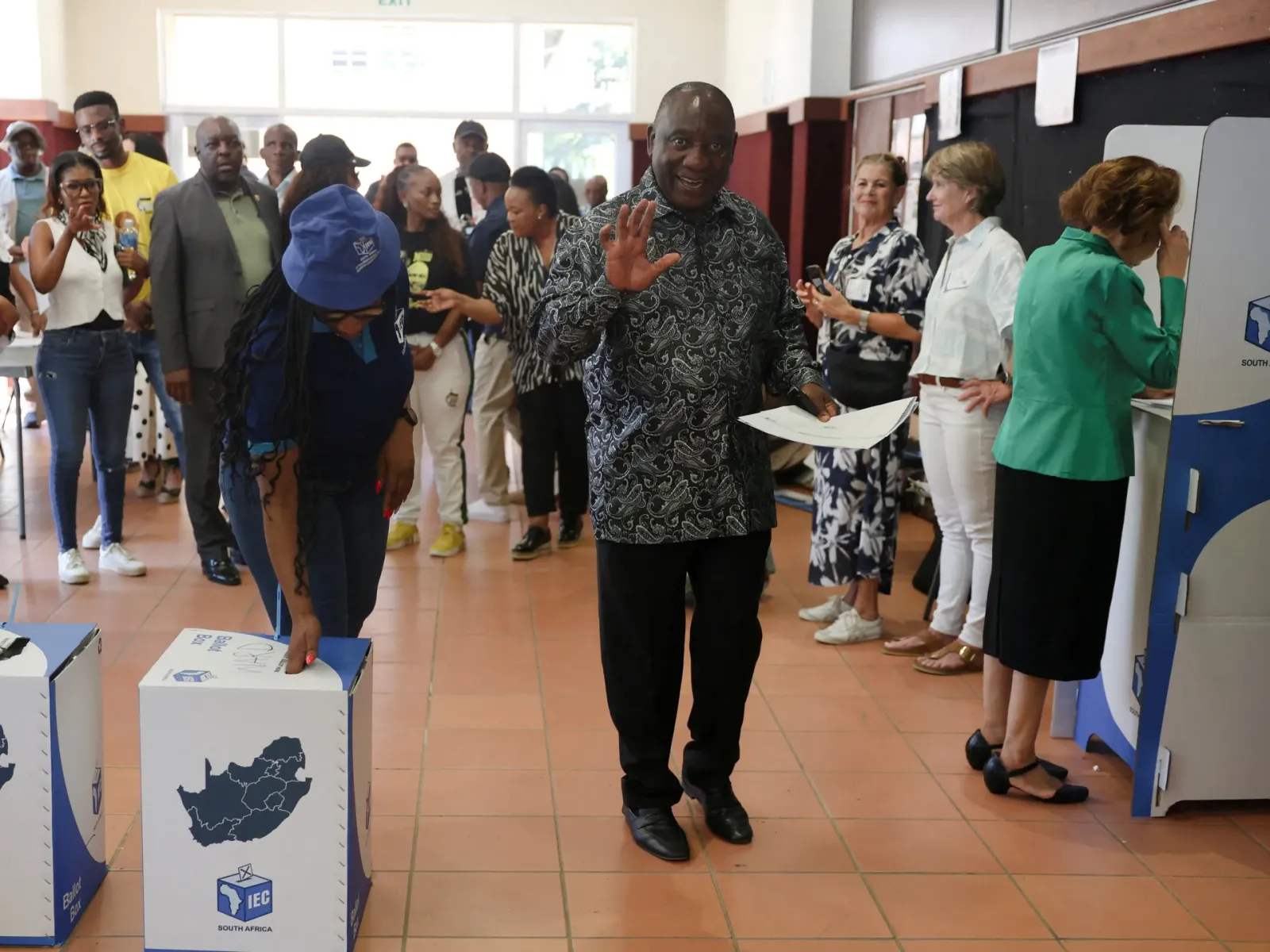 Photo: Al Jazeera
Key points
The ANC won 31% nationally in local elections, a 14-point drop, and lost outright control of all eight major metros.
South Africa's African National Congress (ANC) suffered a major setback in last week's municipal elections, winning 31 percent nationally with 99 percent of votes counted, according to results reported on Sunday. President Cyril Ramaphosa's party failed to win an outright majority in any of the eight major metropolitan areas, including Johannesburg and Pretoria.
The result represents a drop of roughly 14 percentage points from the ANC's 2021 local elections performance, when it won 45.6 percent. The Democratic Alliance (DA) finished second with 25 percent, while former President Jacob Zuma's uMkhonto weSizwe (MK) party won about 10 percent, placing third. The rest of the ballots were split among hundreds of smaller parties.
Coalition talks ahead
Since no party won more than 50 percent in many cities, including Johannesburg, the ANC and DA will have to negotiate with smaller parties to form municipal governments. Parties will have 14 days to negotiate before city councils are formed. Final results are expected to be announced at 6pm (16:00 GMT) on Sunday.
ANC Secretary-General Fikile Mbalula called the result "catastrophic" for the party but said it would not go begging for positions when coalition talks begin. "When the people tell us we have fallen short, … the honest answer is not to argue with them but to go home and put our house in order," Mbalula said on Saturday.
In Johannesburg, the DA led the count with about 35 percent of the votes, compared with 20 percent for the ANC. That could give DA veteran Helen Zille, who campaigned on fixing potholes and leaking water pipes, a good chance of becoming mayor, depending on coalition agreements. The DA said it would initiate coalition discussions with parties sharing a commitment to clean government and rooting out corruption.
Urban losses
The ANC's support has steadily eroded as voters grow increasingly frustrated with corruption and the party's failure to tackle unemployment, which tops 34 percent more than three decades after the end of apartheid. Failures in basic services, such as water and electricity, have also contributed to the ANC's vote share falling in local elections over the past 15 years.
Of the 191 councils with results fully counted in one Saturday morning snapshot, 122 were hung councils, meaning no party had secured more than half the seats. In eThekwini, which includes Durban, the MK party emerged as the leading force with approximately 40 percent of the vote, but also fell short of an outright majority.
The DA's performance represents an improvement on its 21.7 percent share in the 2021 local elections, although the party remains short of the support it attracted at its 2016 peak. DA leader Geordin Hill-Lewis said the party had gained one million Black voters, describing the result as evidence that the party had broadened its appeal.
Voter frustration
Political analyst Daniel Silke said that the gross mismanagement of some municipalities had superseded the emotional attachment that the liberation struggle afforded the ANC. Amanda Gouws, a political scientist at Stellenbosch University, said voters had grown increasingly sceptical of the party's promises. "People don't believe the promises the ANC make anymore. People are really fed up," she said.
The MK party, contesting its first municipal election since its formation in 2023, has been the biggest beneficiary of the fragmentation of the ANC vote, analysts said. The national government's existing coalition arrangements could further complicate negotiations, Silke said. Voters in Gauteng province would probably prefer to see the DA govern alongside centre-right ActionSA, but "the animosity between those two parties is extreme." An estimated 54.5 percent of the country's 29.2 million registered voters cast ballots, the electoral commission said, up from 46 percent in 2021. Final results are expected on Sunday, after which the 14-day negotiation period begins for forming city councils.
Frequently asked questions
What was the ANC's vote share in the 2026 local elections?
The ANC won 31 percent nationally with 99 percent of votes counted, down from 45.6 percent in the 2021 local elections.
Why did the ANC lose support?
Voters are frustrated with corruption, unemployment above 34 percent, and failures in basic services like water and electricity, according to reports.
What happens next in forming city governments?
Parties have 14 days to negotiate coalitions before city councils are formed. Final results are expected on Sunday at 6pm (16:00 GMT).