US launches Task Force Iron Gate to disrupt Iran land supply routes
CENTCOM's Task Force Iron Gate, about 20 personnel based in Tampa, will block advanced weapons and revenue across Iran's land borders and Caspian Sea.
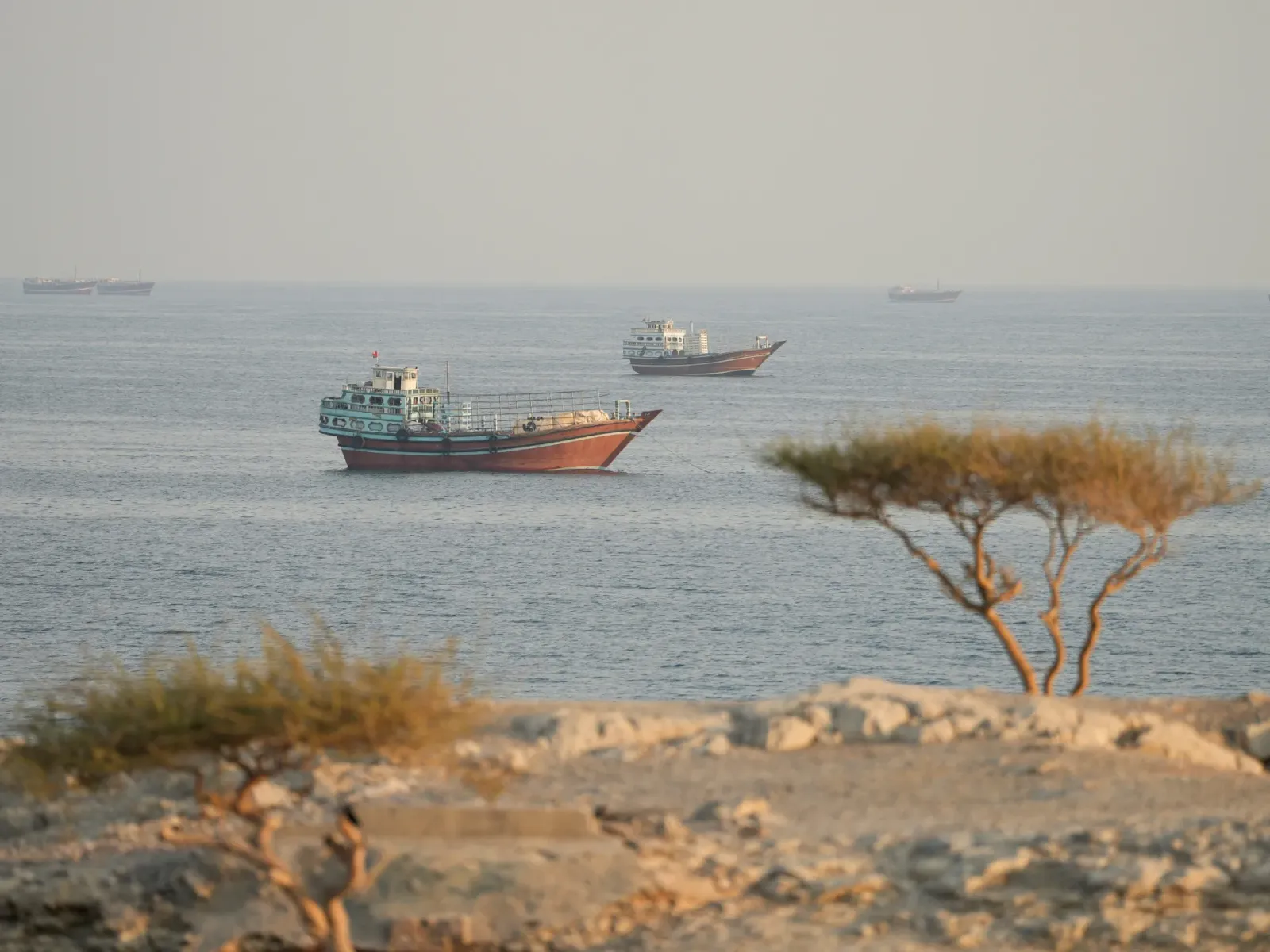 Photo: Al Jazeera
Key points
The US military created Task Force Iron Gate to disrupt Iran's land supply routes, expanding its naval blockade.
The United States military's Central Command (CENTCOM) announced on Saturday the creation of Task Force Iron Gate, a new unit to prevent Iran from using ground routes to transport advanced weapons and other materials. The task force, based in Tampa, Florida, will coordinate with other US government agencies on blocking the movement of advanced weapons systems, dual-use technologies, sanctioned materials, and illegal revenue streams across Iran's land borders and the Caspian Sea.
CENTCOM Commander Admiral Brad Cooper said the task force will reinforce "the success of our ironclad blockade against Iran at sea." The announcement expands Washington's months-long naval blockade of Iranian ports in the Strait of Hormuz to include land-based supply routes. The task force will consist of about 20 civilian and military personnel, according to CENTCOM.
Task force details
Michael Mulroy, a former US deputy assistant defence secretary for the Middle East, said the task force's role will be to find out where "weapons systems are coming in, how they could potentially be cut off" and how "Iran is transporting its energy." He added that if President Donald Trump orders an escalation, it will likely be attacks on this "series of targets."
Mulroy said these targets would focus on economic and infrastructure, unlike Operation Epic Fury, which primarily focuses on military targets. "I think these targets will be focused on economic and infrastructure targets, as part of this comprehensive plan to cut the regime off from its ability to fight and ability to fund itself," he said.
The announcement comes as the US continues to tighten pressure on Iran over its regional activities and weapons programmes. The US has long accused Iran of supplying weapons, drones and missile technology to proxy groups including Hezbollah, Hamas and Yemen's Houthi movement. Tehran has repeatedly denied allegations that it illegally transfers weapons in violation of international sanctions.
Blockade enforcement
CENTCOM separately said on Saturday that it had disabled a commercial cargo vessel in the Gulf of Oman as part of its blockade. A US military aircraft fired precision munitions at the stern of the St. Kitts-flagged M/V Huda, disabling the ship after CENTCOM forces directed the crew to abandon targeted spaces. The vessel had tried to depart regional waters after visiting an Iranian port.
CENTCOM said enforcement actions since July have resulted in US forces redirecting 147 commercial vessels that complied, and disabling five merchant ships that refused to comply. The US said the blockade has prevented more than $25 billion in Iranian crude oil from being sold, much of it in Asia. The military did not provide additional details supporting the estimate.
China, Iran's largest trade partner, has taken to conducting commerce over land, especially by train across central Asia due to the blockade on Iranian ports. Iran has also conducted large amounts of trade over land and via the Caspian Sea with Russia. Tehran is located just 80 miles south of the Caspian Sea, making it a direct route between southwest Russia and northern Iran.
On Saturday, Iran's official news agency IRNA reported the sound of two explosions on Qeshm Island, located in the Strait of Hormuz. IRNA also reported the sound of "several explosions" in the cities of Jask, Sirik and Bandar Abbas. Trump confirmed new strikes on Qeshm Island a day earlier, but downplayed them as "minor."
Iran's Islamic Revolutionary Guard Corps (IRGC) Navy reported that two oil tankers struck mines near the Strait of Hormuz on Saturday. Iranian state television, citing the navy, said the tankers had passed through an "unsafe" part of the strait with their navigation systems off. They "suffered severe damage and stopped after hitting sea mines."
Frequently asked questions
What is Task Force Iron Gate?
Task Force Iron Gate is a US Central Command unit of about 20 civilian and military personnel based in Tampa, Florida. It aims to prevent Iran from using ground routes to transport advanced weapons, dual-use technologies, and sanctioned materials across its land borders and the Caspian Sea.
How has the US naval blockade affected Iran's oil exports?
The US blockade has prevented more than $25 billion in Iranian crude oil from being sold, much of it in Asia. Since July, US forces have redirected 147 commercial vessels that complied and disabled five merchant ships that refused to comply.
Why is the Caspian Sea important for Iran's trade?
The Caspian Sea provides a direct route between southwest Russia and northern Iran, with Tehran located just 80 miles south of the coast. Iran has used this route for large amounts of trade with Russia, especially as the naval blockade has pushed commerce over land.