EU leaders clash over 1.62 trillion euro budget proposal
EU leaders clashed in Brussels on Thursday over Ireland's 1.62 trillion euro budget proposal for 2028-2034, with Sweden, Germany and the European Commission objecting to the plan.
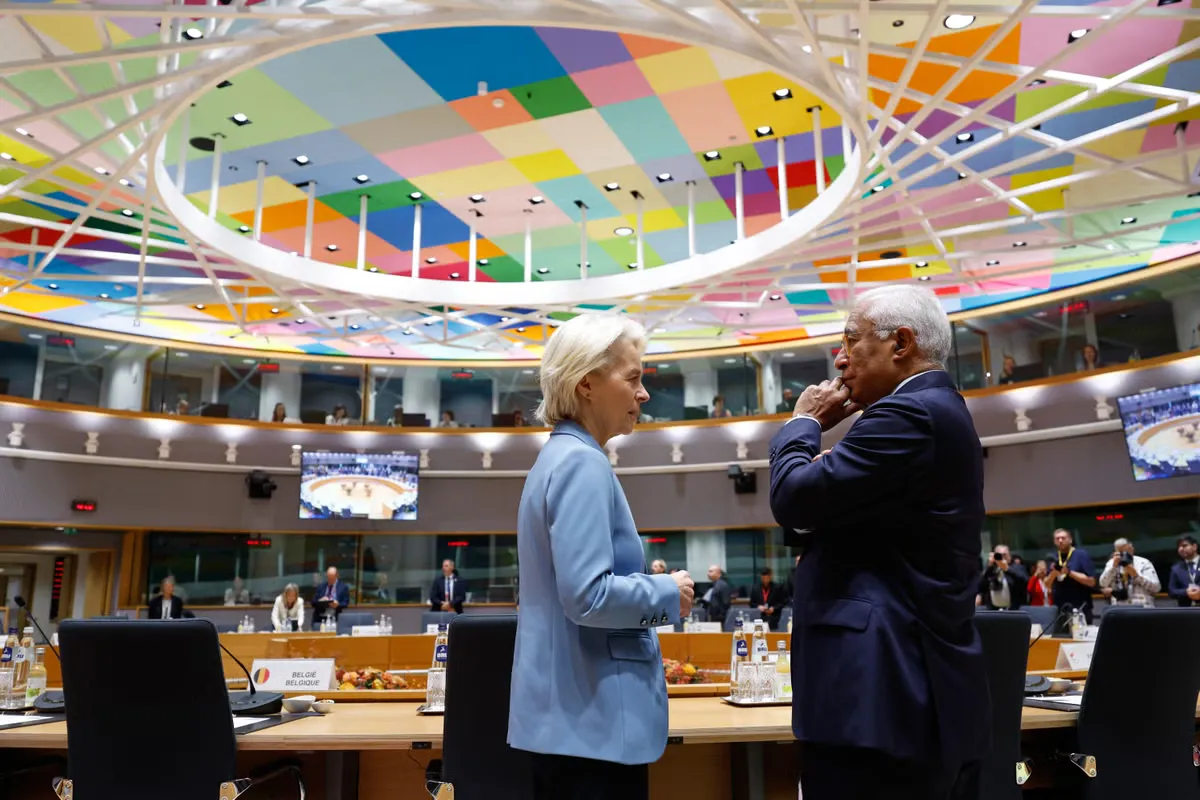 Photo: The Independent
Key points
EU leaders clashed on Thursday over Ireland's 1.62 trillion euro budget proposal for 2028-2034, with net contributors and the European Commission objecting to the plan.
European Union leaders voiced strong opposition on Thursday to a new proposal for the bloc's long-term budget, raising doubt about whether the key spending package will be agreed by the end of the year. The 2028-2034 budget, known as the multiannual financial framework, is being negotiated at a summit in Brussels as the 27-nation bloc faces outside challenges including supporting Ukraine and remaining competitive amid high energy prices and trade tensions.
The clash matters because the multiannual financial framework sets spending priorities for seven years and must be agreed by all 27 member countries and the European Parliament before money can flow by January 2028. What is new is the scale of opposition: net contributors and the European Commission are both objecting to the same proposal, from opposite directions, leaving European Council President António Costa to broker a deal after Ireland's rotating presidency ends.
Why the budget matters now
Ireland, which holds the EU's rotating presidency, proposed last weekend to set the budget at 1.62 trillion euros, cutting 141 billion euros from an opening offer made by the European Commission. The commission had originally proposed around 2 trillion euros. The Irish plan trims roughly 8% from that draft to appease a German-led camp demanding major cuts, with the reductions overwhelmingly affecting EU-wide priorities such as competitiveness, defence and foreign aid.
The budget is likely to amount to between 1% and 1.2% of the 27-nation bloc's gross national income, and is financed mostly by member countries based on the size of their economies, with net contributors paying almost half. Sweden is one of about 10 net contributing countries that pay more into the EU budget than they receive back in allocations. The current budget package runs at 1.2 trillion euros until the end of 2027.
Swedish Prime Minister Ulf Kristersson told reporters the proposal would increase Sweden's net contribution by almost 60%, calling that totally unacceptable. German Chancellor Friedrich Merz said no member state can afford to pay contributions at such a level, and doubted leaders could reach a conclusion during the summit. Merz called the Irish proposal a step in the right direction but said the cuts left the budget too large.
Where the numbers came from
The European Commission is unhappy with how the Irish changes reduced the budget's flexibility, leaving Brussels officials less room to respond to unexpected crises over the seven-year period. Budget Commissioner Piotr Serafin said the proposed cuts risk leaving the EU with less capacity to act together at a time when, because of developments around it, the bloc needs to act more together than ever before.
A coalition of frugal states — Germany, the Netherlands, Finland, Denmark, Sweden and Austria — wants the draft budget cut by several hundred billion euros, with many favouring slashing funding for Common Agriculture Policy payments and cohesion development schemes to free money for defence, migration control and economic competitiveness. A larger group including Italy, Spain, Poland and many eastern and southern states wants those traditional programmes protected, Irish Prime Minister Micheál Martin said.
Defence Commissioner Andrius Kubilius urged countries to protect defence spending in the next budget or face delays in the bloc's military ramp-up, speaking at POLITICO's European Resilience Summit. He said EU money is key to incentivising member states toward joint procurement and joint development, arguing that without it the bloc cannot change a defence industry that remains too fragmented and too national-oriented.
What happens next
Martin conceded the Irish plan was never going to please everybody, calling it a very difficult balancing exercise, and said there was still a lot to play for in the talks. He argued the EU needed a larger budget than the current 1.2 trillion euro package. Ireland has handed the job of piecing together a final deal to European Council President António Costa.
If countries are unwilling to pay more, either farm or cohesion spending must shrink — those policies make up about two thirds of the entire budget — or Europe's ambitions on defence, competitiveness and other priorities must be scaled back. National delegations earlier in the week watered down a commitment to secure a deal by the end of the year, and governments are separately fighting over ways to raise additional EU revenue.
A series of elections complicates the timeline: France, Italy and Poland vote in 2027 and Spain in November. The hard right is leading in surveys in France, and results in Poland and Spain are difficult to predict, with new governments potentially able to unpick the spending package. Missing the end-of-December target would not mean money runs out, since nations have another year to adopt the legislation.
EU leaders are scheduled to discuss the budget when they meet in late November and again at an end-of-year summit in mid-December. Costa said the bloc needs to deliver by the end of the year and reach agreement in time for the new budget to be operational, with no disruption in funding for farmers, workers, researchers, businesses, cities and regions across Europe.
Frequently asked questions
What budget proposal are EU leaders disputing?
Ireland, holding the EU's rotating presidency, proposed setting the 2028-2034 multiannual financial framework at 1.62 trillion euros, cutting 141 billion euros from the European Commission's opening offer of around 2 trillion euros.
Why do net contributors oppose the budget proposal?
Swedish Prime Minister Ulf Kristersson said the proposal would increase Sweden's net contribution by almost 60%. German Chancellor Friedrich Merz said no member state can afford to pay contributions at such a level.
When must an EU budget deal be reached?
Leaders aim to agree by the end of the year so the budget can be operational by January 2028. All 27 member countries and the European Parliament must endorse it. Leaders will meet again in late November and mid-December.