Students attack Tirana ministries as protests enter second day
Thousands of students attacked government buildings in Tirana on Wednesday, breaching the education, justice and finance ministries, with at least 40 arrested and dozens injured after clashes that began on Tuesday.
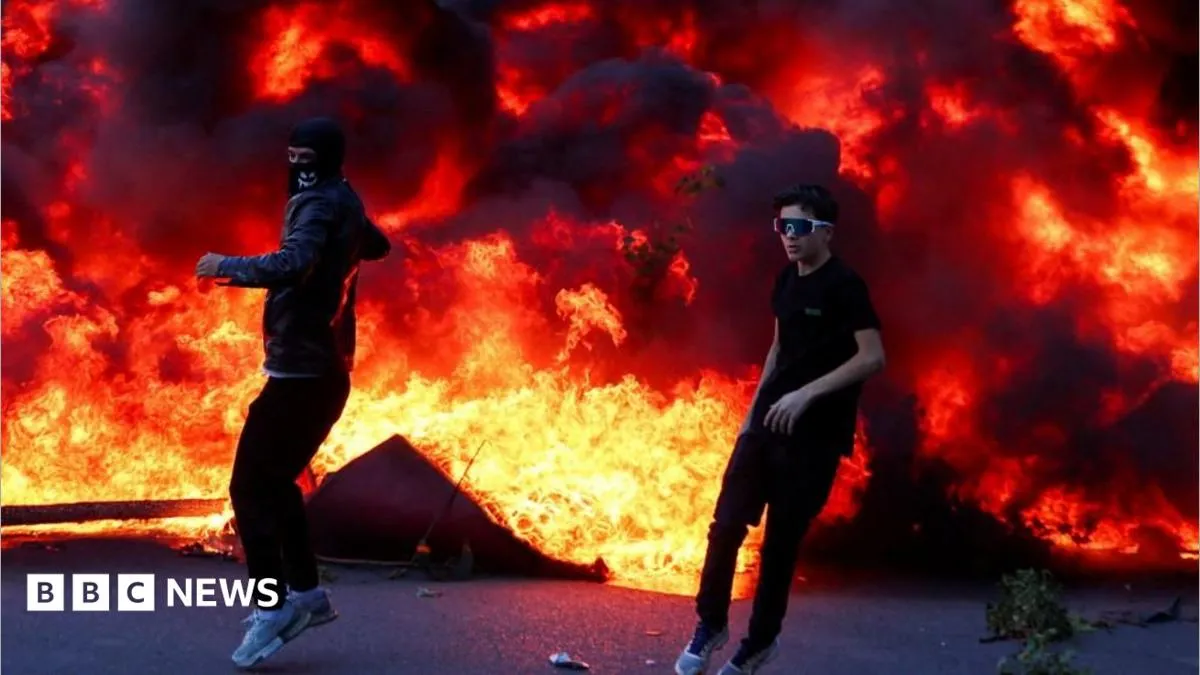 Photo: BBC News
Key points
Thousands of students attacked government ministries in Tirana on Wednesday, with at least 40 arrested and dozens injured in clashes with riot police over two days.
Thousands of students attacked several government buildings in Tirana on Wednesday, the second day of violent anti-government protests in Albania's capital. Protesters breached the ministries of education, justice and finance, set part of the education ministry's building on fire, and encircled the prime minister's office. At least 40 demonstrators had been arrested and dozens of injuries reported by Wednesday evening, according to police and protest organisers.
The unrest began outside the ministry of education on Tuesday, when students gathered to demand better university conditions, lower costs of studying, improved dormitories, and relief from the cost of living. They also called for the resignation of Prime Minister Edi Rama. The demonstration was initially announced by the so-called Flamingo Revolution protesters, who called on students to join them.
Why students took to the streets
On Wednesday morning, masked individuals threw stones, paving slabs, bottles and improvised pyrotechnics at the education ministry, ripping up metal railings to batter its iron gates. Protesters then breached the ministries of education, justice and finance, damaged private businesses and billboards, and moved to the main boulevard, where they encircled the prime minister's office before breaking into shopping centres and banks.
Police responded with batons, tear gas guns, water cannons and riot gear, forcibly clearing protesters from the vicinity. Clashes continued for over 10 hours, with protesters throwing rocks and Molotov cocktails while police fired tear gas and deployed water cannon. As of Wednesday evening, the situation remained tense on the main boulevard, home to several parliament buildings, the president's office and the prime minister's office.
What happened on Wednesday
The State Police said 16 protesters were arrested and 49 others were being investigated in connection with Tuesday's protest. By Wednesday evening, at least 40 demonstrators had been arrested overall. The Ministry of Health announced on Wednesday that six people were still receiving treatment at Tirana Hospital and 13 had been treated in total. On Tuesday evening, one young man had his legs broken and required emergency surgery after an altercation with police.
The head of the State Police ordered the suspension of four officers and the chief of public order of a police station after a video circulated showing a 19-year-old with a broken leg being roughly carried by police officers. Several journalists reported being prevented from working by police who physically blocked them or seized their equipment. The European Union delegation to Albania said it had noted allegations of excessive violence against protesters and journalists.
Arrests, injuries and police suspensions
Albania's Deputy Prime Minister Albana Koçiu called for calmness, self-restraint and maturity, saying Albania does not need to burn to change. Economy Minister Delina Ibrahimaj condemned the burning and destruction of institutional premises as unacceptable acts, and said setting fire to an institution endangers people's lives. President Bajram Begaj said violence cannot be a means of expressing dissatisfaction and called on the youth to engage in dialogue with him.
The student-led protest follows months of anti-government demonstrations known as the Flamingo Revolution, which is calling for Prime Minister Edi Rama to resign. The movement started in June as environmental protests but evolved into an anti-government campaign. It was sparked by a luxury tourism project linked to Trump's son-in-law Jared Kushner in May, which fuelled anger over alleged corruption and a lack of transparency from Rama's government.
Officials respond and the wider movement
The U.S. Embassy in Tirana warned its citizens to be vigilant and avoid areas impacted by the protest, noting it could spread. The European Union delegation called for de-escalation from both sides and expects police to prioritise full investigations into allegations of excessive force. Explosions and sirens continued to be heard throughout the city centre on Wednesday evening, with protests continuing into the night.
Frequently asked questions
Why are students protesting in Tirana?
Students gathered outside the ministry of education to demand better university conditions, lower costs of studying, improved dormitories, and relief from the cost of living. They also called for Prime Minister Edi Rama's resignation, a key demand of the wider Flamingo Revolution movement.
How many people have been arrested?
The State Police said 16 protesters were arrested and 49 others were being investigated after Tuesday's protest. By Wednesday evening, at least 40 demonstrators had been arrested overall, with dozens of injuries reported among protesters, civilians and police.
How did police respond to the protests?
Police used batons, tear gas guns, water cannons and riot gear to disperse protesters. The head of the State Police suspended four officers and a police station chief after a video showed a 19-year-old with a broken leg being roughly carried.