Hoax bomb threats disrupt 27 flights across Europe on Thursday
Hoax bomb threats disrupted at least 27 flights across Europe on Thursday, forcing emergency landings and fighter escorts, with no group claiming responsibility.
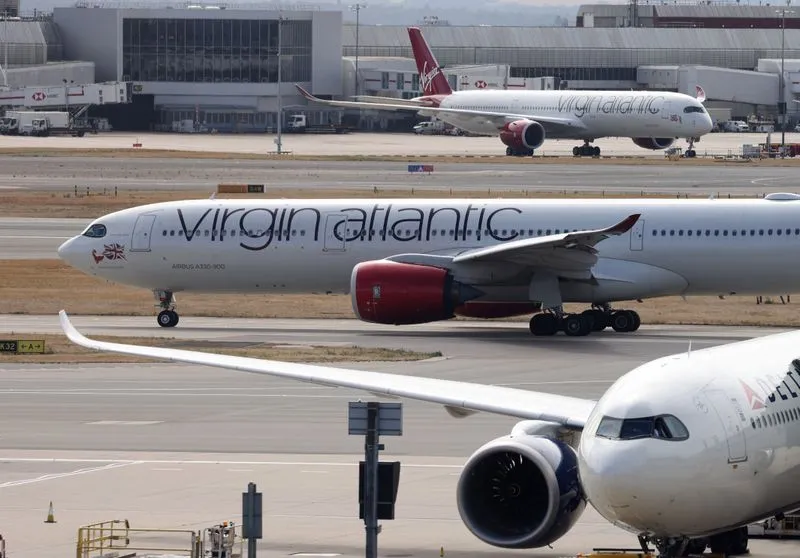 Photo: Daily Maverick
Key points
Hoax bomb threats disrupted at least 27 flights across Europe on Thursday, forcing emergency landings and fighter escorts.
Hoax bomb threats disrupted at least 27 flights across Europe on Thursday, forcing unplanned landings and prompting fighter jets to escort or intercept planes, in a dramatic escalation after an initial wave earlier this week. The threats affected flights from Austria, Belgium, Bulgaria, the Czech Republic, Denmark, Finland, France, Greece, Ireland, Italy, Poland, Portugal, Romania, Serbia, Spain, and the United Kingdom. No hazardous materials were found on any plane, and all flights landed safely.
The day of hoaxes followed similar threats on Tuesday, when seven planes across Europe were searched or diverted after malicious alerts. On Monday, a flight from the UK to Bulgaria was diverted after a threat that was apparently without substance. The global airlines body Iata condemned the disruption and urged authorities to identify the origin of the threats. "Safety is the number one priority for the industry and we take all threats seriously," said Nick Careen, Iata's senior vice-president for operations, safety and security, in a statement.
Threats and responses
In France, Prime Minister Sebastien Lecornu's office said he had sent fighter jets to intercept an Aer Lingus flight from Dublin to Rome and escort it to an air force base at Evreux after the pilot did not cooperate with authorities as expected. Lecornu's office gave no reason for the pilot's behaviour. The pilot was being questioned by French authorities for initially refusing to land at a military base.
Bulgaria's air force said its fighter jets had escorted three airliners to the ground. One Ryanair flight from London to Sofia was diverted to Plovdiv, Bulgaria's second city. Romania's intelligence agency said a KLM flight to Tel Aviv with a layover in Bucharest had received a bomb threat. Spanish police said three emailed threats came in within 20 minutes involving two Air Europa departures from Madrid to Paris and four inbound Iberia flights from Rome and Milan.
In Warsaw, a LOT flight to Paris was stopped as it taxied towards take-off and passengers were transferred to another plane, while Danish police said two planes were searched at Copenhagen airport. Other flights that received threats, including EasyJet, Finnair, LOT, Wizz Air, Ryanair and Air Serbia services to Prague, Sofia, Vienna, Brussels, Bucharest, Rome and Milan, landed as scheduled, some after military escorts.
Suspicion falls on Russia
An airport source in Italy said that an email with the subject line "Threat report" had been sent to several addresses for airlines, airport operators and airport service providers at Rome's Fiumicino and Milan's Malpensa airports. The email, which claimed it was from "fighters of the Male State", said devices had been placed on inbound flights from Helsinki and Dublin and they would explode in 60 minutes. "Today your sky will be red," it said.
Male State is a Russian far-right, ultranationalist and misogynistic movement founded in 2016 by Vladislav Pozdnyakov. On his Telegram channel, Pozdnyakov, a prominent supporter of the war in Ukraine, did not comment on or claim responsibility for the bomb threats. He said the group no longer existed and was not involved in any way. "Anyone currently orchestrating provocations within European Union countries under the banner of this 'brand' is acting in their own self-interest - essentially flying someone else's flag," he wrote.
No government has said who was behind the threats, and no claim of responsibility has been verified. Security experts said it could be individuals acting on personal grievances or copycats, but also that it had the hallmarks of a more coordinated "hybrid attack". "When it comes to a situation like this or even other sabotage attacks, it's really hard to prove there's a certain country behind it. But it does fit in the modus operandi," said Eric Schouten, head of aviation security group Dyami.
Passengers and next steps
Many European officials have accused Russia of masterminding sabotage and hybrid attacks since its 2022 invasion of Ukraine. These are often inexpensive to carry out, easily deniable and not expected to trigger an armed response. Denmark, Poland and Romania, all affected by Thursday's disruptions, have previously accused Moscow directly of being behind hybrid attacks, while Germany blamed Russia for an August attack on Leipzig airport. Both Russia and Iran have denied those accusations.
In Rome, Guido Crosetto, the Italian defence minister, said: "It seems to me that every day now, from refrigerators to blood supplies in France, to these fake alarms, there's someone who has an interest in stoking tensions." Asked if he knew who was behind the hoaxes, he said: "It's called 'under-threshold warfare' because it's below the attribution threshold. It's done that way on purpose, so no one can pin the blame."
Elena Pala, a passenger on a Wizz Air flight from Milan, described what happened when the plane landed in Bucharest, Romania. "First, they took us a long way from the terminal ... far away on the runway. The plane was surrounded by fire trucks, ambulances and anti-terrorist units," she told Digi TV. "I asked what was happening. They said it was an emergency issue. That is all they said," Pala added.
The affected flights had knock-on effects but were a tiny fraction of the 27,400 flights scheduled in Europe on Thursday, according to the European air traffic control agency, Eurocontrol. The EU transport commissioner, Apostolos Tzitzikostas, said it was too early to know if the incidents were linked but that any threats against civilians were unacceptable. National investigations remain ongoing, he added.
Frequently asked questions
What caused the flight disruptions across Europe on Thursday?
Hoax bomb threats were emailed to airports and airlines, affecting at least 27 flights. The threats forced emergency landings and fighter escorts, but no explosives were found.
Who is suspected behind the hoax bomb threats?
European officials and experts suspect possible Russian involvement, but no evidence has been confirmed. The threats were signed 'fighters of the Male State', a Russian far-right group, but its founder denied involvement.
How many flights were affected by the bomb threats?
At least 27 flights were affected on Thursday, plus seven on Tuesday and one on Monday, totaling at least 34 flights across Europe this week.