Hoax bomb threats disrupt dozens of European flights for third time this week
A wave of hoax bomb threats disrupted dozens of passenger flights across Europe on Thursday, forcing unplanned landings and fighter jet escorts, with no explosives found.
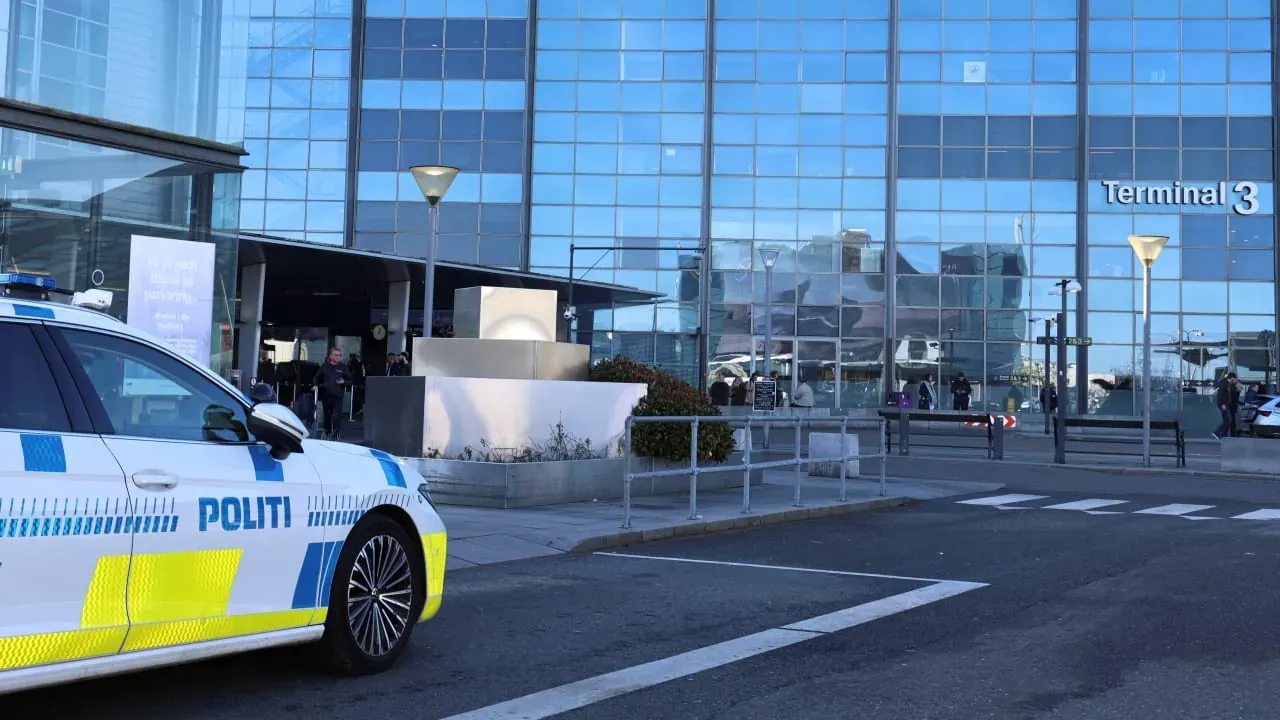 Photo: The Jerusalem Post
Key points
A wave of hoax bomb threats disrupted dozens of passenger flights across Europe on Thursday, forcing unplanned landings and fighter jet escorts, with no explosives found.
A wave of hoax bomb threats disrupted dozens of passenger flights across Europe on Thursday, forcing unplanned landings by some planes and prompting fighter jets to escort or intercept others, a dramatic escalation after an initial wave on Tuesday. No explosive devices have been found, and all planes have landed safely. The threats mark the third time this week that European flights have been targeted.
Spanish Foreign Minister José Manuel Albares told the national broadcaster TVE that, while it would take time to determine exactly what happened, "it cannot be mere coincidence that so many incidents with exactly the same modus operandi are happening across Europe." He added: "The most reasonable assumption is that we are facing an attempt at hybrid aggression and a form of psychological warfare."
What the threats involved
Danish police said on Friday they were investigating threats directed at air traffic at Copenhagen airport, but that their immediate assessment was that there had been no danger to passengers. The airport said it was "operating normally." Czech police said they had registered bomb threats to flights departing from and arriving in Prague, with an airport spokesperson saying they concerned four inbound and five outbound flights, but no explosive devices had been found and no flights had been canceled or diverted as a result.
Shortly afterwards, an Italian airport authority source said a Wizz Air flight from Prague to Rome had been diverted to Venice and landed there safely. A bomb alert on a Ryanair flight from Rome to Lisbon prompted a security operation when it landed, CNN Portugal reported. The French prime minister's office said four new bomb threats had been made to aircraft flying over French territory, and that all had landed safely.
Security experts said on Thursday that the threats had the hallmarks of a coordinated "hybrid attack," although it was always possible that individuals were issuing copycat threats or acting on personal grievances. While no country has attributed blame for the threats, they come after a wave of sabotage attacks and attempts on targets across Europe ranging from German electricity substations to defense-related facilities in the Baltic region, supermarket refrigerators in France and elsewhere, and Leipzig airport in Germany.
Who is blamed
Many officials have linked the campaign to Europe's support for Ukraine in its war against Russian invasion, accusing Moscow of a campaign of "hybrid" disruptions that are essentially cheap to execute, easily deniable, and not expected to trigger an armed response. On Thursday, an airport source in Italy said bomb threats had been sent to several airlines and airport operators in Rome and Milan claiming to be from "fighters of the Male State." Reuters could not independently confirm who had sent the email, and there was no immediate indication of who was behind the other threats across Europe.
Vladislav Pozdnyakov, a Russian blogger who set up an anti-feminist movement called the Male State in 2016 that was later banned in Russia, said the group no longer existed and was not involved in any way. Replying to the BBC Russian Service, an account on Telegram - one of several linked to the so-called "Male State" and its founder - mocked any suggestion the group was involved in emailing the threats. "What Male State? Where have you seen it? It hasn't existed for many years," the message on the channel reads.
The initial hoax email, seen, was sent on Thursday at 07:21 with the subject title: warning of a threat. It was addressed to several offices and individuals at Aeroporti di Roma (ADR), the airport managing company in Rome, as well as accounts at the city's Fiumicino airport itself. The originating email address seems to be linked to the state health services in Bogota, Colombia. Written in word perfect Italian, the text claimed that "fighters" of the "Male State" had planted explosives on two incoming flights in an attack on Italy's "feminist regime" that would be "remembered forever."
What happens next
One flight was diverted as a result - ordered to land in France – another was escorted into Rome by Italian air force jets, scrambled for the second time this week. No explosives were found on either plane, or any other that reported receiving bomb threats. Italy's defence minister Guido Crosetto warned of a "strategy to increase chaos," noting that he had been talking of the "hybrid threat" to Europe for some years. "It seems to me that, day after day, from incidents involving refrigerators to the blood supply in France and now these false alarms, there are those who have an interest in fuelling tensions," he said on Thursday.
More than two dozen flights were affected by threats this week, with further incidents reported on Friday. Police in Denmark and the Czech Republic responded to threats that ultimately proved to be false. A flight operated by the Romanian carrier Tarom going from Prague to Bucharest received a threat, but landed at its intended destination before officials deemed it false. Hungarian fighter jets were scrambled three times on Friday to escort civilian flights in Hungarian airspace after reported bomb threats, defence minister Romulusz Ruszin-Szendi said on Facebook.
Frequently asked questions
What happened with the bomb threats in Europe?
A wave of hoax bomb threats disrupted dozens of passenger flights across Europe on Thursday, forcing unplanned landings and fighter jet escorts. No explosives were found, and all planes landed safely.
Who is behind the bomb threats?
No country has attributed blame. The 'Male State' group denied involvement, with its founder saying it no longer exists. Officials suspect a coordinated hybrid attack, possibly linked to Russia.
How many flights were affected?
More than two dozen flights were affected this week, with at least 17 disrupted on Friday alone. Prague airport confirmed nine flights affected that day.