Najib Razak moves to house arrest after party pays RM50m fine
Malaysia's jailed ex-PM Najib Razak left prison for house arrest on 6 November after his party paid his RM50 million fine, a royal pardon condition.
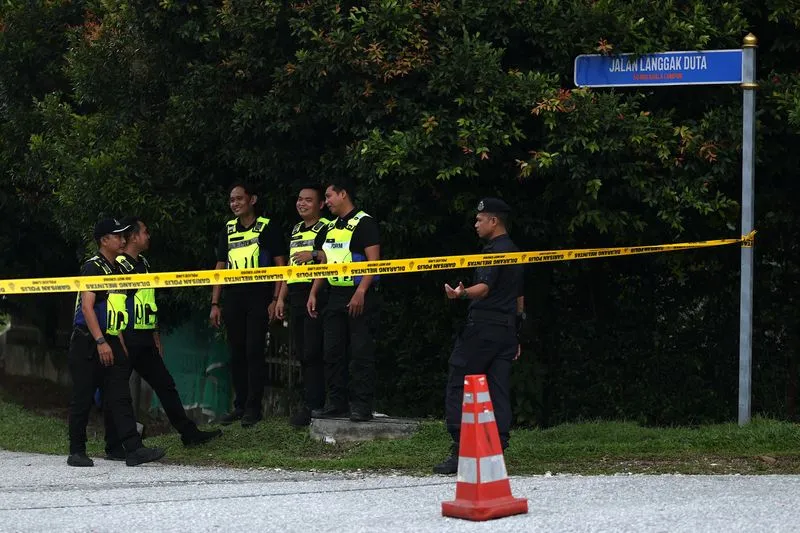 Photo: Daily Maverick
Key points
Najib Razak moved to house arrest after UMNO paid his RM50 million fine, fulfilling a royal pardon condition.
Malaysia's jailed former Prime Minister Najib Razak left prison for house arrest on 6 November after his party paid a 50 million ringgit fine, a condition of a royal pardon. His lawyer Farhan Shafee said a court order allowed the transfer, and he was delivering it to Kajang Prison. Najib, 73, could go home on Friday if the process went according to plan.
The United Malays National Organisation (UMNO) paid the fine on Najib's behalf, using funds from a crowdfunding drive. Party secretary-general Asyraf Wajid Dusuki said the party had completed all payment procedures with the Kuala Lumpur High Court that morning. Najib's lawyers said he could not pay himself because his bank accounts were frozen.
Malaysia's King Sultan Ibrahim granted Najib a rare royal clemency in September, subject to the payment of 50 million Malaysian ringgit, allowing him to serve the rest of his sentence under house arrest. The payment was among the conditions of the pardon, which was granted on 18 September. Najib has been serving his sentence at Kajang Prison since 23 August 2022.
Pardon conditions met
Najib, prime minister from 2009 to 2018, was found guilty of corruption in relation to the embezzlement of billions of dollars tied to 1Malaysia Development Berhad (1MDB), a state investment fund he co-founded. In 2020, he was originally sentenced to 12 years in prison for abuse of power, criminal breach of trust and money laundering involving $10.3 million funneled into his bank accounts. He began his sentence in 2022.
The house arrest applies only to his reduced six-year sentence in the first trial. It does not cover a separate 15-year prison sentence imposed in December 2025 for corruption and money laundering in a second trial tied to the 1MDB scandal. Najib is appealing that conviction, which saw him fined 11.4 billion ringgit. If he fails to win the appeal, he could go back to prison after 23 August 2028.
Najib's lawyers had requested that the jail term and the fines be suspended pending the appeal, citing his declining health and inability to pay the large fine. But a judge rejected the request last month, saying there were no special circumstances and "the gravity of the offense is a more important public interest consideration".
Separate sentence remains
Prime Minister Anwar Ibrahim expressed disagreement with UMNO's decision to pay the fine, stressing that corruption and abuse of power must not be taken lightly in the name of friendship. "Personally, I disagree. While we have a sense of friendship with Datuk Seri Najib, it must not give the public the impression that corruption involving billions of ringgit can simply be overlooked," he told reporters after Friday prayers.
Anwar acknowledged that the payment was UMNO's prerogative, adding that the government respected the legal process and the King's constitutional decision. His Pakatan Harapan alliance has strongly opposed leniency towards Najib, and his transfer to house arrest could create more tension in the coalition government. Though the next election is not due until early 2028, Anwar has said he could call a snap poll if rifts deepen.
Najib remains a divisive figure in Malaysian politics but is still influential in the once-dominant UMNO, which is part of Anwar's multi-party government. Tony Pua, a former DAP lawmaker who played a key role in drawing attention to the 1MDB scandal, called Najib "Malaysia's biggest crook" and chided UMNO for raising funds for him. "Instead of using such a large sum of money to help ordinary Malaysians, they chose to 'free' Malaysia's most corrupt," he said on Facebook.
Political fallout
In the 1MDB scandal, more than $1 billion allegedly made its way into accounts linked to Najib, who says he has been made the scapegoat for a complex, globe-spanning scheme. Najib has consistently denied wrongdoing. The scandal sparked national outrage and led to the 2018 election defeat of UMNO, which had governed since independence from Britain in 1957.
Najib's special officer, Ahmad Lutfi Azhar, arrived at the court at 11.30am to arrange the payment and complete the necessary administrative procedures. The fine was paid at the Kuala Lumpur High Court's criminal registry. UMNO announced the closure of its special Najib Razak Solidarity Fund account after public contributions reached the required amount.
The fund, launched on 18 September, was established to collect public donations through crowdfunding to assist the former prime minister and UMNO president. Police were stationed at Najib's house in Kuala Lumpur early Friday, and the road leading to his home was blocked. The transfer to house arrest is effective until 23 August 2028, when his reduced sentence ends.
Frequently asked questions
Why was Najib Razak transferred to house arrest?
A Malaysian court ordered his transfer after his party, UMNO, paid a 50 million ringgit fine, a condition of a royal pardon granted by King Sultan Ibrahim in September. The pardon allowed him to serve the rest of his six-year sentence under house arrest.
How did UMNO raise the money for Najib's fine?
UMNO launched a crowdfunding drive on 18 September, collecting public donations through the Najib Razak Solidarity Fund. The party secretary-general said the fund reached the required amount, and the fine was paid at the Kuala Lumpur High Court on 6 November.