Hoax bomb threats force evacuations at thousands of European schools
On 11 November, hoax bomb threats emailed to about 6,000 Italian schools and hundreds in Britain and Ireland forced evacuations across Europe.
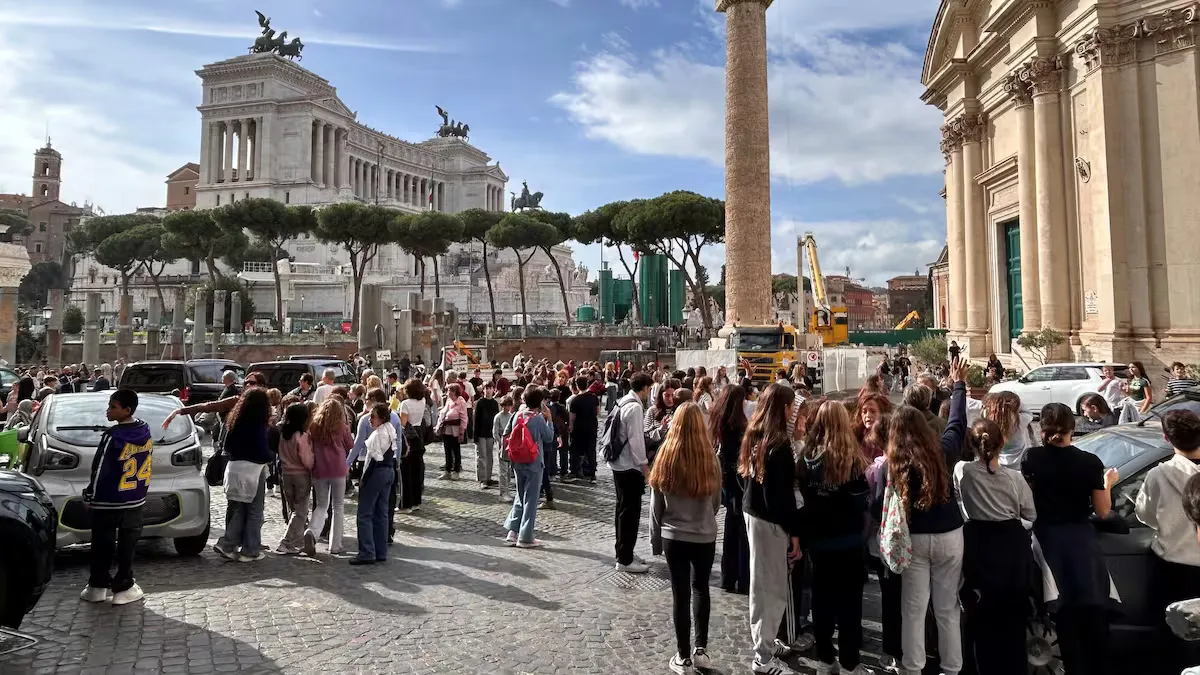 Photo: NZ Herald
Key points
Hoax bomb threats emailed to schools across Italy, Britain and Ireland on 11 November forced evacuations, but authorities said there was no concrete danger.
On 11 November, hoax bomb threats emailed to about 6,000 schools in Italy forced evacuations across the country, with more than 300 schools emptying students onto streets. Italian Prime Minister Giorgia Meloni said there was no 'concrete danger' and called a government meeting with security and intelligence chiefs for the same day. Similar threats hit schools in Northern Ireland and Scotland, prompting some evacuations in Scotland.
Italian news agency Ansa, citing the education ministry, said the threats were sent to about 6,000 schools, though it was unclear how many evacuated. Crowds of schoolchildren gathered outside schools in different parts of the country, with some saying they left belongings inside that they could not recover before police checks. The email, purportedly from 'Mikhail Andropov, leader of the Vilayat of Misoginistan', said: 'I have just left in your building, inside a plastic bag, a powerful explosive with remote detonation.'
Evacuations across Italy
Italian Education Minister Giuseppe Valditara told Ansa that 'the concrete risk is virtually nonexistent. It is most likely a cyberattack, not a real threat.' He added that it was difficult to identify who was behind the threats and that the judiciary would carry out investigations. Meloni wrote on Facebook that 'the reports instead appear to be linked to a strategy aimed at generating alarm and concern', which was the subject of 'all the necessary in-depth investigations'.
In Rome, students at the Virgilio high school described the moment of evacuation. Sofia De Ponte, 19, said: 'The principal came out into the courtyard and told us that an email had come in, a bomb threat, and right after that the building was evacuated.' She said police had still not arrived because 'there's a long waiting list with all the schools'. Fellow pupil Elena Sicignano, 19, said: 'We're still here waiting.'
At the Brera school in Milan, art teacher Violetta Uboldi said children appeared happy at being evacuated: 'I think there was a cry of joy because school was over. That was the reaction.' But 16-year-old Angelica said she was told by a teacher that it was not a drill 'so we panicked a bit'. At Rome's Mamiani high school, 18-year-old Anita Bartocci said an email from 'Russian hackers' said 'they would have killed everyone. It was pretty violent.'
Britain and Ireland response
In Britain and Ireland, police said they were investigating threatening emails sent to hundreds of schools but urged teachers not to evacuate as they dismissed the messages as hoaxes. In Northern Ireland, the Police Service of Northern Ireland declared a major incident after more than 300 schools received the same email, with hundreds titled 'death is near'. Police Scotland said at least 470 schools received emails containing bomb threats, and The Herald reported several Scottish schools had been evacuated, with pupils sent home.
Irish Education Minister Hildegarde Naughton said police assessed the emails as 'not credible' and that 'there is no need for schools to evacuate'. An Garda Síochána said it was 'aware of a generic communication that has been sent to a number of educational establishments' and assessed the threat as 'not credible'. The Police Service of Northern Ireland said the emails 'originated from outside the UK', and it remained unclear whether the incidents in the three countries were linked.
Antonello Giannelli, president of the ANP association of Italian school heads, said the threats were 'clearly fake' but added: 'This episode shows how much irresponsibility, when combined with the extraordinary communicative power of the tools we have today, can cause damage and disruption on a large scale.' He hoped 'that full light will quickly be shed on the origin of these threats and that those responsible will be identified.'
Investigation and context
The threats come after a series of hoax bomb alerts in recent weeks, including on flights across Europe and cyberattacks on supermarket refrigeration systems in several European countries, including Italy. Italian Foreign Minister Antonio Tajani said on Saturday he was being targeted by 'cyber criminals' sharing his personal data online because of Italy's support for Ukraine. The attacks have prompted growing concern in Europe about the possibility of an escalation in hybrid warfare.
Italian Defence Minister Guido Crosetto said the threats were aimed at 'sowing terror, or creating concern'. 'It's too easy. Any one of us can use the available means and instruments to send an email to a school, a daycare, an airline, saying that there's a bomb,' he told reporters. Police in Northern Ireland urged vigilance, with Assistant Chief Constable Anthony McNally saying: 'We take incidents of this nature very seriously and we understand the concern in the community.'
Frequently asked questions
What happened on 11 November?
Hoax bomb threats emailed to about 6,000 schools in Italy and hundreds in Britain and Ireland forced evacuations across Europe. Authorities called the threats not credible and said there was no concrete danger.
How many schools were affected in each country?
In Italy, about 6,000 schools received threats, with more than 300 evacuated. In Northern Ireland, over 300 schools received the same email; in Scotland, at least 470 schools received threats.
Who was behind the bomb threats?
The email was purportedly from 'Mikhail Andropov, leader of the Vilayat of Misoginistan'. Italian Education Minister Giuseppe Valditara said it was 'most likely a cyberattack'. Police in Northern Ireland said the emails 'originated from outside the UK'.