France and Germany agree car deal softening 2035 emissions target
France and Germany agreed on 16 October 2026 to cut the EU's 2035 car emissions target from 100% to 90% while backing Made in Europe content rules for vehicles.
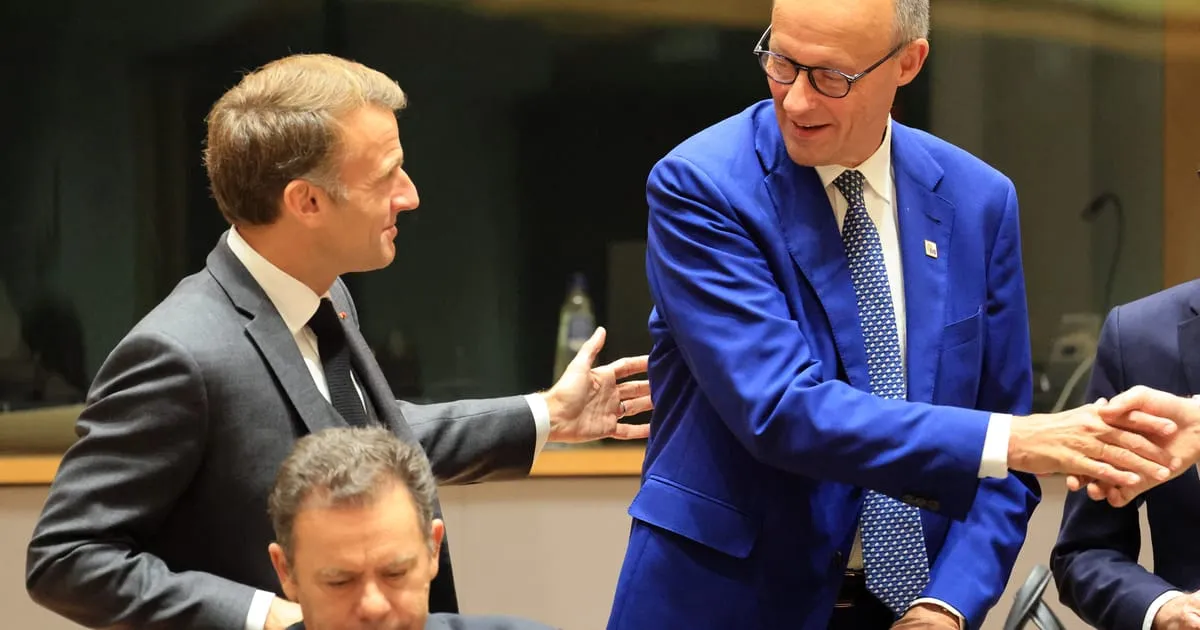 Photo: POLITICO
Key points
France and Germany struck a deal to soften the EU's 2035 car emissions target to 90% and back Made in Europe content rules for vehicles.
France and Germany said on 16 October 2026 they had struck a deal to favour European-made cars under a landmark European Union industry bill in exchange for weakening a 2035 vehicle emissions target, ending months of wrangling between the bloc's two biggest economies. The compromise was reached after the German Social Democrats, the junior coalition partner in Chancellor Friedrich Merz's government, dropped their opposition.
The agreement matters because it links two files that had been negotiated separately: stricter local content rules for cars, a longstanding French demand, and a relaxation of the European Union's plan to phase out new combustion-engine cars, which Germany wanted. Under the deal, Germany accepts tougher Made in Europe requirements in the proposed Industrial Accelerator Act, while France backs Berlin's push to relax the 2035 emissions target.
What the two countries agreed
The European Union's current target requires companies to cut emissions from new vehicles by 100% from 2021 levels by 2035, with the possibility to earn 10% of emissions leeway through offsets and investments. France and Germany now want to soften that target to 90%, but without offering investments in alternative fuels to compensate the remaining 10%, as the European Commission had proposed. The commission had suggested the remaining 10% be compensated through credits obtained among other things by using low-carbon steel.
The two countries said in a joint statement that the balanced approach would let the European Union pursue its climate objectives while strengthening the technological sovereignty, industrial base and international competitiveness of its automotive industry. The deal also opens the door for cars running on renewable fuels to count as zero-emission, and extends so-called super credits, which the commission had suggested for small affordable electric cars, to all vehicles irrespective of their size or length.
The agreement was first reported in July and had been due to be announced on Thursday during a meeting of European Union leaders in Brussels, but it was held up at the last minute by disagreements within Germany's governing coalition. It was reached after the German Social Democratic Party, the junior partner in Chancellor Friedrich Merz's coalition government, dropped its opposition. German Environment Minister Carsten Schneider, who is from the Social Democrats, called it a modern realignment of German industrial policy.
How the coalition deal was reached
Schneider said the realignment placed significantly greater emphasis on preserving jobs and production sites, and added that the clear expectation for German companies is that they will use the new opportunities to make investments and guarantee jobs in Germany. Chancellor Friedrich Merz welcomed the agreement as a good day for car drivers and for jobs in Germany, France and Europe, and called it an investment signal to industry. French President Emmanuel Macron said he hoped the Franco-German dynamic could swiftly lead to an agreement with partners.
European carmakers had asked for Britain to be included, citing deeply integrated supply chains. The commission had proposed tying companies' access to public money to minimum thresholds for European-made parts, and dozens of partner countries with deals allowing European companies to access public money on a par with local firms could have been brought in. Germany had wanted a broad interpretation of Made in Europe to include key non-EU trade partners, while France pushed to keep the scheme the purview of European Union nations.
What still stands in the way
The context is a European automotive industry under pressure. European car makers have struggled to compete with Chinese counterparts in the electric vehicle market, resulting in cost-cutting measures. Germany's auto industry faces a deep structural crisis driven by pressure from Chinese rivals, the transition to electric vehicles, higher production costs and other challenges. As Europe's biggest carmaker by volume, Volkswagen has the heaviest exposure to overcapacity in its German plants, high fixed costs and its reliance on China.
Lower Saxony Premier Olaf Lies, who is also on Volkswagen's supervisory board, hailed the agreement as a strong signal in support of Europe's car industry that protects jobs in the sector. Volkswagen's headquarters are in Wolfsburg, in Lower Saxony. Diplomatic sources confirmed to the news agency AFP that the deal on the automotive industry was struck on Thursday, and said the accord is provisional pending a final sign-off from Berlin.
Frequently asked questions
What did France and Germany agree on?
France and Germany agreed to soften the European Union's 2035 car emissions target from 100% to 90% of 2021 levels, without requiring carmakers to offset the remaining 10% through investments in alternative fuels, while Germany accepted stricter Made in Europe local content requirements for the automotive industry.
Why did the deal take so long?
The agreement was first reported in July and had been due to be announced on Thursday during a meeting of European Union leaders in Brussels, but it was held up by disagreements within Germany's governing coalition. It was reached after the German Social Democrats, junior partner in Chancellor Friedrich Merz's government, dropped their opposition.
Does the deal become law immediately?
No. The pact needs backing from other European Union states and the European Parliament to become law. Diplomatic sources said the accord is provisional pending a final sign-off from Berlin.