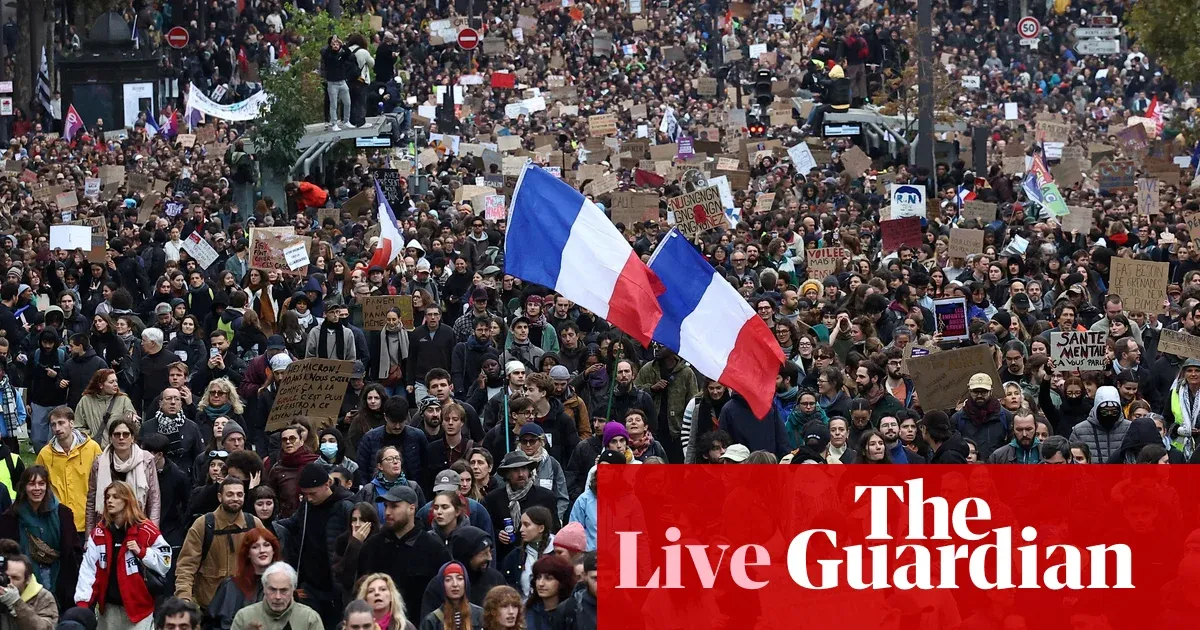
France arrests nearly 1,000 as 410,000 march nationwide
France's interior ministry counted 410,000 protesters including 110,000 in Paris on Saturday, with nearly 1,000 arrests and two people seriously injured in Toulouse and Clermont-Ferrand.
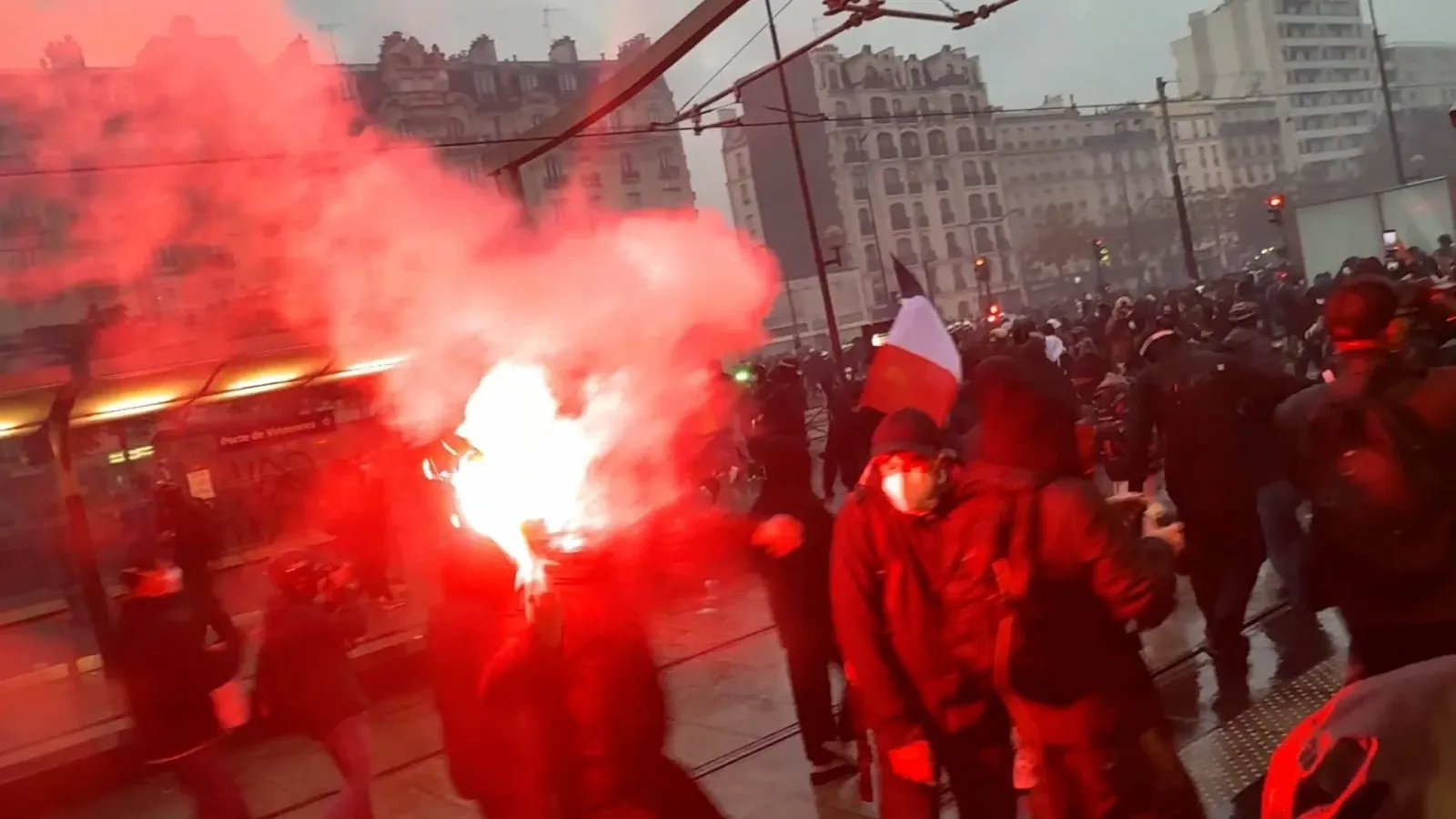 Photo: Albeu
Key points
France's interior ministry counted 410,000 protesters on Saturday and Interior Minister Laurent Nuñez said nearly 1,000 people were arrested nationwide.
France's interior ministry counted 410,000 people at protests across the country on Saturday, including 110,000 in Paris, while Interior Minister Laurent Nuñez said nearly 1,000 people were arrested nationwide. Police used tear gas and water cannon in Paris, Lyon, Lille, Montpellier, Nantes and Toulouse as marches ended. The protests combined demands for school funding with anger at the cost of living and at policing.
The scale matters because it tests President Emmanuel Macron's authority in the final months of his presidency, before voters choose his successor in May. The ministry's 410,000 figure was fewer than the 550,000 it counted the previous weekend, yet the CGT union, one of the organisers, put Saturday's turnout at 800,000 nationwide. Officials said the heavy police deployment prevented a repeat of the rioting and looting seen the week before.
Turnout estimates diverge sharply
The two sides' numbers differ sharply. The interior ministry counted 410,000 protesters, including 110,000 in Paris, while the CGT union said turnout reached 800,000 nationwide and 250,000 in the capital. In Marseille, police estimated around 17,000 people joined the march and unions claimed 100,000. The interior ministry counted 289 protests nationwide. The previous weekend's demonstrations drew about 550,000 people, the ministry said.
More than 70,000 police officers were deployed, backed by helicopters and armoured vehicles, Interior Minister Laurent Nuñez said, and he credited the deployment with preventing a repeat of the widespread looting and damage to shops that occurred the previous weekend. Paris police said more than 3,000 people were stopped and searched during the demonstration and 65 were arrested. Police seized metal balls, cartridges containing lead shot, fireworks, slingshots, improvised weapons, a katana and airsoft guns.
Clashes were reported in Paris, Lyon, Lille, Marseille, Montpellier, Nantes and Toulouse. In Paris, fighting broke out at the end of the march near Porte de Vincennes, on the city's eastern edge, where masked groups threw glass bottles and stones at police, who answered with tear gas, water cannon and stun grenades. In Marseille, barricades were set alight and metal sheets used to block streets. Tear gas was also used in Lyon, Lille, Montpellier, Nantes and Toulouse.
Where the clashes broke out
Nuñez said marches in most cities ended without major incidents, but that far-left groups threw objects and fireworks at officers. He said several thousand radical activists gathered at the rear of the Paris march, including around 500 individuals identified as rioters. The minister announced that two people were seriously injured, one in Toulouse and the other in Clermont-Ferrand; in Toulouse, a 20-year-old is believed to have lost several fingers in an explosion. In Nice, far-right extremists fought demonstrators downtown and 11 people were arrested.
The movement began in mid-September, when high school students aged between 15 and 18 protested staff shortages, leaking and crumbling buildings, and a lack of chairs in overcrowded classrooms at their schools. It grew into the biggest youth movement in years, drawing trade unions, teachers and parents, and spread to workers seeking help with soaring fuel and other costs. Macron met high school representatives on Friday, who said he promised to overhaul university admissions but called for protests to continue.
How the movement began
Before the protests began, Macron decreed that only demonstrations organised by recognised trade unions would be permitted, and hundreds of people have been jailed for vandalism, arson and looting after fast-track court hearings. Police ordered a last-minute change to the union march's route, which had been scheduled to start at Place de la Bastille, sending demonstrators to the Porte d'Italie area instead. Union representative Murielle Guilbert called the decision "scandalous" and accused Macron of preventing protesters from demonstrating at their chosen location.
Protesters voiced anger at the route change and at policing. Nadège, a 43-year-old communications worker, said she had been teargassed the previous weekend at a peaceful demonstration and had returned to defend the right to protest. Zelie, a 26-year-old in Paris, said people were in the streets because they had been suffering since Macron took office. Jean-Luc Mélenchon, the radical left presidential candidate, said Macron must address France's social malaise or face repeated protests.
In Orléans, thousands marched against the congress of the far-right National Rally party led by Marine Le Pen; about 13,000 people joined that rally, which proceeded peacefully. The Louvre Museum, the Musée d'Orsay, the Picasso Museum and the Grand Palais in Paris stayed closed on Saturday, after France's Culture Ministry asked the institutions to take measures to ensure the safety of visitors, staff and works of art.
The Yellow Vests movement, which organised major protests against Macron eight years ago, announced a new wave of rallies on October 31, including a sit-in outside parliament and town halls across the country. Organisers said they oppose what they describe as the Macron government's "authoritarian drift" and are demanding guarantees for civil liberties. Hundreds of thousands of people also marched in other European cities on Saturday, with clashes reported in Tirana and Brussels.
Frequently asked questions
How many people protested in France on Saturday?
The interior ministry counted 410,000 protesters nationwide, including 110,000 in Paris. The CGT union, one of the organisers, put the figure at 800,000 nationwide and 250,000 in Paris. In Marseille, police estimated 17,000 and unions claimed 100,000.
How many people were arrested?
Interior Minister Laurent Nuñez said nearly 1,000 people were arrested nationwide, a number he said would increase as more were counted. Paris police said 65 were arrested in the capital, where more than 3,000 people were stopped and searched.
Why are people protesting in France?
The protests began in mid-September with high school students aged 15 to 18 demanding more teachers and repairs to crumbling school buildings. The movement spread to workers angry about the cost of living and to demonstrators opposing the government's policing and its ban on non-union marches.