French police arrest 135 nationwide as tear gas clears protest cities
Interior Minister Laurent Nuñez said 135 people were arrested across France on 24 October 2026, as police fired tear gas in Lyon, Lille, Toulouse and Nantes under 70,000 deployed officers.
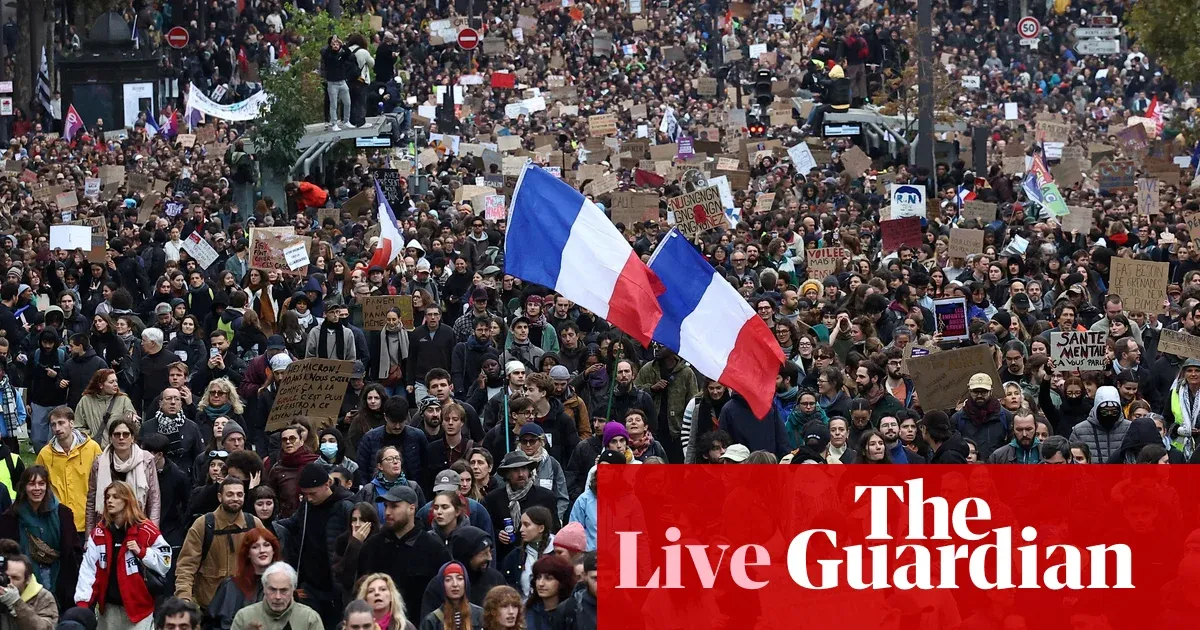 Photo: The Guardian
Key points
French police arrested 135 people nationwide on 24 October 2026 as tear gas was fired in several cities during nationwide cost-of-living protests.
French police arrested 135 people nationwide on 24 October 2026 during nationwide protests over the cost of living and rising fuel prices, Interior Minister Laurent Nuñez said by early afternoon. Police fired tear gas at demonstrators in Lyon, Lille, Toulouse and Nantes, hours after Nuñez warned that violence would not be tolerated. Some 70,000 officers were deployed.
The scale of the state response marks a step up from the previous weekend's unrest, when looting and clashes between police and protesters broke out on the sidelines of peaceful marches over living costs and school conditions. The government imposed localised curfews and banned public demonstrations in several cities, including Lyon and parts of Nice and Lille, to prevent a repeat of that violence.
What the arrests covered
Nuñez said many of the 135 arrests followed pre-emptive searches that uncovered fireworks, ball bearings and other items usable as weapons. Confiscated items included metal balls, lead pellets, fireworks, slingshots and steel balls. Nuñez said "there has been no major incident" so far, and Paris police described the situation in the capital as "calm" at midday.
Nuñez counted 35,000 people in public spaces at midday on 24 October, against 60,000 at the same hour on 17 October. The government deployed 70,000 police officers and gendarmes, 10,000 more than the previous weekend. Nuñez had told police at the National Police Academy in Vincennes to be "uncompromising" with potential rioters and "hyper, hyper, hyper-responsive".
Riot squads fired tear gas in Lyon, France's third-largest city, where gatherings were banned in parts of the city. In Nantes, protesters attempting to cross the Loire into the banned city centre met a water cannon and tear gas on the bridge, then retook a different bridge into the restricted zone, where stun grenades and a physical police charge pushed the march back. Clashes also reached Marseille, where masked people threw bins and set spot fires.
Where tear gas was fired
The Paris march route was settled only after a legal battle triggered by a last-minute police order on 23 October moving organisers from the city centre toward the southeastern fringes, to protect businesses looted the previous weekend. Leftist leaders said the change aimed to sow confusion. Jean-Luc Mélenchon, marching at the Porte d'Italie, said Emmanuel Macron "will realize that this is going to happen every week".
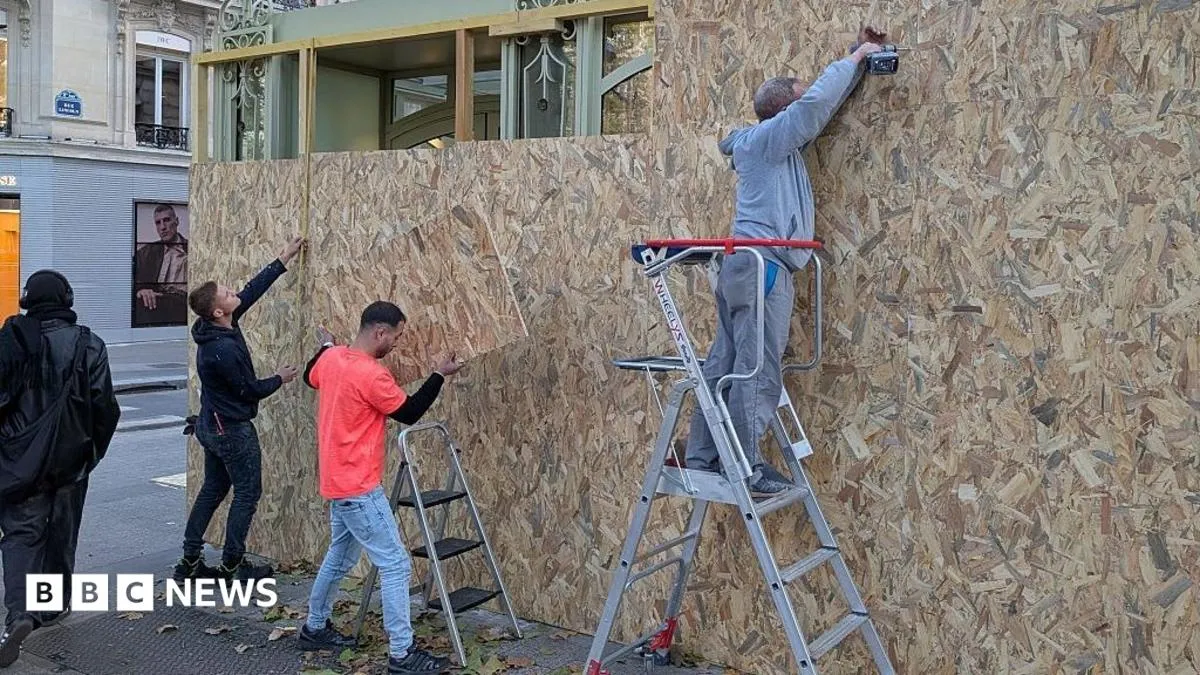
Closures spread across Paris's cultural sector as a precaution: the Louvre, Musée d'Orsay, Orangerie, Jeu de Paume and Picasso museums shut, the Tuileries Gardens were sealed, the Paris Opera closed both the Palais Garnier and Opéra Bastille, and Art Basel Paris cancelled its weekend programme. More than 20 metro stations closed, and shopkeepers boarded up storefronts after thousands of shops were damaged or looted the previous weekend.
How the route was changed
Amnesty International called city-wide bans a serious restriction of the right to protest and warned against a slide toward authoritarian practices. Ryad Rani, president of the Union Syndicale Lycéenne high school students' union, said the government was trampling on democracy and human rights. Andrew Smith, a historian of modern France at Queen Mary University of London, said the state may impose order while lacking the political capacity to address the grievances driving mobilisation.
More than 10,000 people joined an authorised anti-far-right march in Orléans, where the National Rally held its congress and Jordan Bardella was re-elected party president with 98.98% of the vote, running unopposed. In Bordeaux, demonstrators gathered at Place de la Bourse despite a city-wide ban. Macron met 20 student leaders for two and a half hours on 23 October, after pupils began protests over school buildings four weeks earlier. A banned protest is expected on 25 October in Orléans, when Marine Le Pen is set to formally launch her presidential bid, following her party's congress and a speech scheduled at the Zénith d'Orléans on the same day.
Frequently asked questions
How many people were arrested in the French protests?
Interior Minister Laurent Nuñez said 135 people had been arrested nationwide by early afternoon on 24 October 2026, many following pre-emptive searches that uncovered fireworks, ball bearings and other potential weapons.
Where was tear gas fired during the protests?
Police fired tear gas at protesters in Lyon, Lille, Toulouse and Nantes on 24 October 2026. In Lyon, where gatherings were banned in parts of the city, tear gas was used to disperse crowds.
How many police were deployed for the protests?
The government deployed 70,000 police officers and gendarmes on 24 October 2026, which Interior Minister Laurent Nuñez said was 10,000 more than were deployed on 17 October.