DR Congo threatens Francophonie exit as Rwanda's Mushikiwabo seeks third term
DR Congo threatens to quit the Francophonie if Rwanda's Louise Mushikiwabo is re-elected secretary-general on Monday at the Phnom Penh summit.
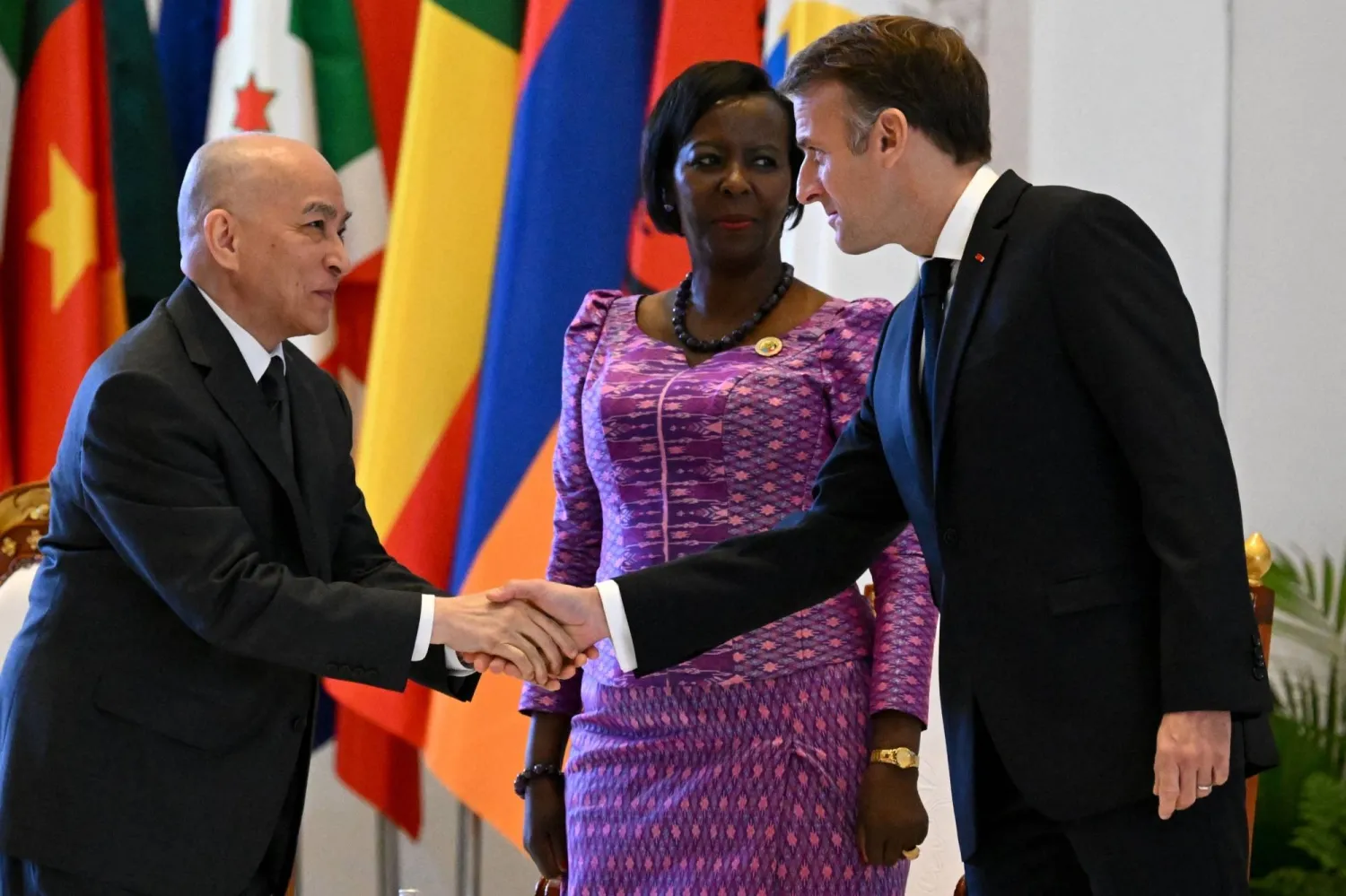 Photo: The Japan Times
Key points
DR Congo threatened to quit the Francophonie if Rwanda's Louise Mushikiwabo is re-elected secretary-general on Monday.
A summit of French-speaking nations opened Sunday in Phnom Penh, with leaders including France's President Emmanuel Macron seeking to avoid a walkout by the group's biggest African member. The Organisation Internationale de la Francophonie (OIF), a post-colonial entity resembling the Commonwealth, gathers around 90 states and nations including 53 full members, from the Democratic Republic of Congo to Canada.
The two-day talks are being overshadowed by tensions between DR Congo President Felix Tshisekedi and Rwanda's Paul Kagame, and a row over the organisation's new head. Rwanda's Louise Mushikiwabo has led the OIF for eight years and is running for a third term, but the DR Congo is strongly opposed and has threatened to quit the organisation if she is re-elected on Monday.
The leadership row
Kinshasa accuses Rwanda of supporting the M23 armed group's activities inside DR Congo, which Kigali denies. The departure of DR Congo, the second most Francophone country after France with 57.3 million speakers according to the OIF, would be a major blow. Last year Mali, Niger and Burkina Faso withdrew from the OIF after successive coups that saw Paris-friendly governments replaced by pro-Russian juntas.
In his opening speech to an audience that included Cambodia's King Norodom Sihamoni and Prime Minister Hun Manet, Macron called for unity. The enlargement of the OIF, which promotes economic and cultural cooperation, 'requires us to build consensus in order to preserve the union', the French president said. Warning against 'internal fractures' in the organisation, he said: 'We must ensure that we preserve what constitutes its strength — namely, its unity.'
On Saturday, DR Congo said it was withdrawing its candidate, Juliana Lumumba, the 71-year-old daughter of the country's martyred independence hero, Patrice Lumumba. Kinshasa said it would back former Romanian prime minister Dacian Ciolos to allow 'consensus around a unifying candidacy'. However, Rwanda's foreign minister said Mushikiwabo would stay in the race.
France's role questioned
The row has revived debate over the influence of France, the former colonial ruler of many member states and the Francophonie organisation's biggest donor. Rwanda has denounced Paris's involvement in the election of a new secretary general, saying Macron asked Kagame to withdraw his candidate, a request it said it rejected. 'With that intervention we're going backwards, to the idea that France decides,' one member of a non-African delegation said Saturday on condition of anonymity.
France had supported Rwanda's Mushikiwabo in 2018 as ties warmed between Paris and Kigali, but had publicly expressed neutrality in this year's contest. After news of Macron's efforts emerged, his office on Saturday said Paris had suggested both the Congolese and Rwandan candidates withdraw in the interests of unity. This would make former Romanian prime minister Dacian Ciolos the favourite, according to summit sources, although Mauritania's Coumba Ba, a former minister, is also running.
Canada, the second biggest donor providing 25 percent of the budget and represented in Cambodia by Prime Minister Mark Carney, has stressed the need for consensus. Macron is the first French president since 1993 to visit Cambodia, once part of France's Indochina colonies where just 0.16 percent of the population currently speaks French, according to the OIF. His trip comes against a backdrop of mass demonstrations at home, five months ahead of presidential elections.
Cambodia's hosting challenges
Phnom Penh is hosting the 20th Francophonie summit, which opens on 15 November, and it comes at a challenging time for Cambodia. The long-running border dispute with Thailand remains critical, one year on from a sharp escalation that displaced hundreds of thousands of people and claimed dozens of lives. The theme of this year's summit is 'Reinvest in peace for shared prosperity and lasting stability', and its website states that 'the border disputes that have marked the region's history' continue to be an obstacle.
The summit also serves as an opportunity for Cambodia to boost its tourism sector, which has struggled since the start of the year. Global tensions and soaring airfares, and more locally the border crisis with Thailand and the issue of online scam centres, have put a damper on foreign visitor numbers over the first nine months of 2026. Phnom Penh also intends to use the summit to strengthen its economic ties with the Francophone world, which according to the OIF accounts for 16 percent of global GDP and 20 percent of international trade in goods.
UN Special Rapporteur Tom Andrews urged delegates to press Cambodia, which has been referred to as a de facto one-party state, to free detained activists. 'No one should be detained for defending human rights, reporting on matters of public concern, or voicing critical opinions,' he said. The OIF is set to choose its next secretary-general on Monday, with Rwanda's foreign minister confirming Mushikiwabo would stay in the race despite DR Congo's threat to quit.
Frequently asked questions
Why is DR Congo threatening to quit the Francophonie?
DR Congo accuses Rwanda of supporting the M23 armed group's activities inside its territory, which Kigali denies. It has threatened to quit the OIF if Rwanda's Louise Mushikiwabo is re-elected secretary-general on Monday.
Who is running to lead the Francophonie?
Rwanda's Louise Mushikiwabo is seeking a third term. DR Congo withdrew its candidate Juliana Lumumba and said it would back former Romanian prime minister Dacian Ciolos, with Mauritania's Coumba Ba also running.
What did Macron say at the summit opening?
Macron called for unity, saying the OIF's enlargement 'requires us to build consensus in order to preserve the union'. He warned against 'internal fractures' and said the organisation must preserve its unity.