GMO offers $1 million bounty after ransomware breach
Japan's GMO Internet Group offered up to $1 million for information leading to the hackers' arrest after a ransomware breach potentially affecting more than 26,000 servers, announced on Wednesday.
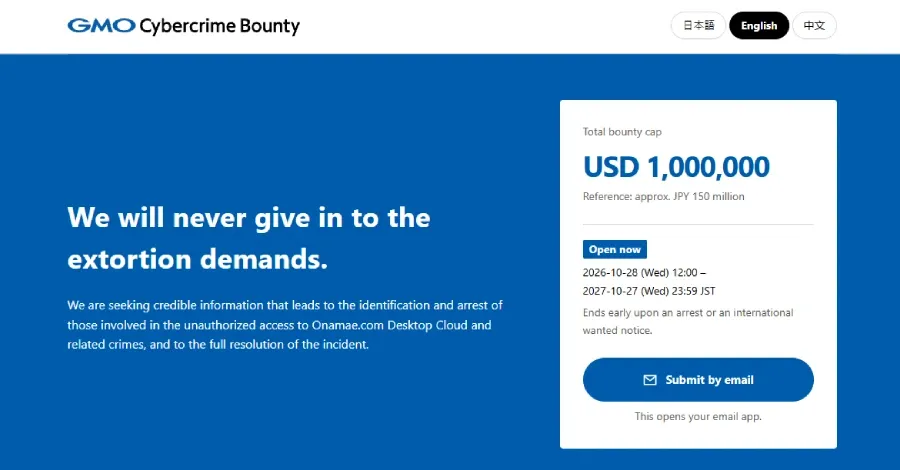 Photo: The Hacker News
Key points
GMO Internet Group offered up to $1 million for information leading to the hackers' arrest after a ransomware breach potentially affecting more than 26,000 servers.
Japan's GMO Internet Group announced on Wednesday that it had confirmed the shutdown of a website used by cyberattackers to leak data stolen in a breach potentially affecting more than 26,000 of the company's servers via its Onamae.com domain registration service. The company offered a bounty of up to $1 million for information leading to the group's arrest and launched a website to collect leads.
The bounty matters because the standoff between GMO and an anonymous hacker group escalated after the attackers published personal information belonging to a GMO client. The profile included the individual's photograph, name and address, along with their shopping habits and the financial institutions and services they use. The attackers threatened to publish another user's private information each day until the ransom is paid.
Bounty for hackers' arrest
The attackers demanded a $1 million ransom in exchange for not publishing the leaked information. After GMO refused to pay, the hacker group published the purported GMO client's information on its website. The bounty announcement came as GMO confirmed the leak website had been shut down, shifting the response from payment to identification of the attackers.
The breach centres on Onamae Desktop Cloud, a popular virtual private server provider in Japan operated by GMO Internet, a member of GMO Internet Group and one of Japan's largest domain registrars. The company announced it detected an intrusion on October 20 that could have installed malware on up to 26,739 customers' servers.
To minimise the risk, GMO shut down the servers and reduced service availability before launching an investigation. Subsequent updates confirmed data had been stolen, with the attacker demanding a ransom of ¥8 billion ($50 million), which GMO said it would not pay. Instead, the company announced it would compensate each customer ¥5,000 ($30) for the inconvenience caused.
How the breach unfolded
GMO assured customers their payment information had not been exposed but warned that MetaTrader 4 and MetaTrader 5 credentials and trading-account details may have been compromised. It urged customers to reset their passwords and terminate active sessions. On October 26, GMO warned that threat actors planned to leak customer information online and trigger a ransomware payload planted earlier in the attack.
The next day, GMO asked customers to disconnect their PCs from the internet, shut them down, and unplug all cables before noon, while it worked with Trend Micro to recover from the cyberattack. "Once you have a backup, disconnect the network, power it down, and unplug the cord that connects to your PC," GMO advised customers.
GMO said it was scanning customer systems to determine whether malware was still present, and offered equivalent PC replacements to those who suffered damages from a ransomware attack. For customers whose information was exposed, GMO said it will consider additional financial compensation. It appears the attacker never acted on their threat, as no ransomware was activated on customer machines.
What customers were told to do
GMO warned people and the media not to disseminate the exposed information, announcing it will take legal action against those who do, while reaffirming its refusal to pay the attackers. The company confirmed the threat actor had published company and customer data, prompting efforts to verify the authenticity of the leaked information.
The shutdown of the leak website and the $1 million bounty mark GMO's shift toward identifying the attackers rather than paying the ransom. The company launched a dedicated website to collect leads, offering up to $1 million for information leading to the group's arrest, while continuing to scan customer systems and verify the leaked data.
Frequently asked questions
How much is GMO offering as a bounty?
GMO Internet Group announced a bounty of up to $1 million for information leading to the hacker group's arrest, and launched a website to collect leads.
How many servers were affected by the breach?
The breach potentially affected more than 26,000 of GMO's servers via its Onamae.com domain registration service, with an intrusion detected on October 20 that could have installed malware on up to 26,739 customers' servers.
What did GMO tell customers to do?
GMO asked customers to disconnect their PCs from the internet, shut them down, and unplug all cables before noon, while the company worked with Trend Micro to recover from the cyberattack.