Google launches Gemini 4 Carbon at 88.2% on SEC-bench Pro
Google released Gemini 4 Carbon on 28 October 2026, its strongest model yet, scoring 88.2% on SEC-bench Pro for finding vulnerabilities and launching at $2 per million input tokens.
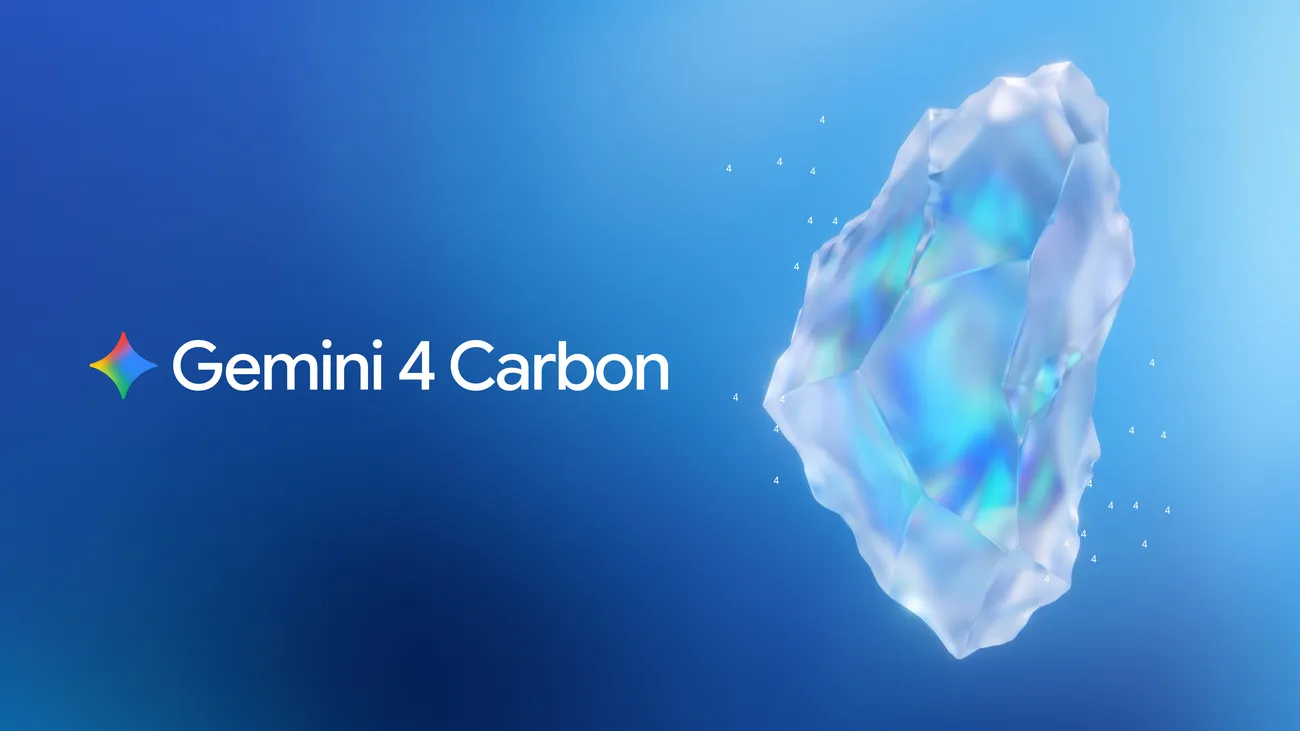 Photo: Google
Key points
Google launched Gemini 4 Carbon, its strongest frontier model, scoring 88.2% on SEC-bench Pro, initially limited to cyber defenders through the Fairwind Program.
Google released Gemini 4 Carbon on 28 October 2026, describing it as its strongest model with state-of-the-art cybersecurity and long-horizon capabilities. The model ranks #1 on the recently updated v5.0 of the Artificial Analysis Intelligence Index at 59, ahead of Claude Opus 5.5 and GPT-6 Astra. Carbon builds on Gemini 4 Argon, launched two weeks earlier, and is designed for sustained agentic workflows that run for days across complex engineering tasks.
Carbon matters because it marks a deliberate, staged rollout tied to the U.S. government's voluntary pre-release model testing process. Rather than a general release, Google is starting with a subset of cyber defenders and gradually phasing access to additional trusted partners through its Fairwind Program. The company says it will continue gathering feedback and iterating on guardrails before making Carbon available to developers, businesses, and consumers. This approach reflects the model's dual-use cybersecurity capabilities, which cover finding, validating, and patching vulnerabilities.
What the launch changes
Carbon posts state-of-the-art results across the cybersecurity defence lifecycle. It achieves 88.2% on SEC-bench Pro for autonomously finding complex vulnerabilities in real-world software, 54.8% on ExploitGym for validating risk through exploitation, and 71.0% on Collinear's CWE-bench for patching at the root cause. On internal benchmarks, Carbon shows more than 2x uplift in success rate for generating secure code over Argon. The Chrome team reported Carbon performed more than 10X better than another lab's large frontier model when generating high-quality patches.
The mechanism behind these gains spans training and inference safeguards. Carbon builds on Argon's multi-layered safety and security stack, combining model training, real-time misuse defences, prompt-injection resilience, and chain-of-thought monitoring. Google says it further mitigated shortcut attempts during training while preserving coding performance. On Terminal-Bench 4.0, successful cheating dropped to 0.0% and attempts to cheat dropped to 0.4%, all while overall accuracy improved. In live coding environments with internal teams, high-severity misalignment alerts dropped by almost 80%.
The benchmark numbers come from both external and internal evaluations. Externally, Carbon achieves 88.2% on SEC-bench Pro, 54.8% on ExploitGym, and 71.0% on CWE-bench, all evaluated without guardrails. Heise reports Argon previously scored 42% on ExploitGym, putting Carbon's 54.8% well ahead of its predecessor. On WebDev Arena, Carbon jumps +89 elo points to land at #4 with a score of 1768. On the Artificial Analysis Intelligence Index v5.0, Carbon scores 59, ahead of Claude Opus 5.5 and GPT-6 Astra.
Where the benchmark numbers came from
Google also reports gains in honesty and collaboration under ambiguity. In internal testing, Carbon cuts unsupported claims by approximately 2x over Argon. Rather than fabricating or hedging around missing evidence, Carbon puts methodological caveats directly into the deliverable or withholds blocked actions with a clear list of what remains required. When facing ambiguity, Carbon retrieves relevant sources rather than guessing or forcing a path forward. Heise reports Google claims no prompt injection attempt against Carbon has succeeded so far, and that the model hallucinates less and asks more often instead of guessing the user's direction.
Access begins this week for a subset of cyber defenders, with gradual expansion to additional trusted partners through the Fairwind Program. Google says it is actively engaged in the U.S. government's voluntary process for pre-release model testing. Heise characterises this as Google subjecting itself to a White House directive that new AI models first be made available, voluntarily, only to U.S. intelligence services and users at their discretion. Carbon will not be generally available at launch; Google says it will reach developers, businesses, and consumers via product surfaces as soon as possible.
Carbon launches at the same introductory price as Argon: $2 per million input tokens and $10 per million output tokens, with cached input tokens priced at 95% off the input token price. Heise reports a different figure, stating the cost is four US dollars per million input tokens and 20 US dollars per million output tokens, with a 50% introductory discount at the start — which nets to the same effective price. Google has not said when Carbon will be publicly available, saying only that it will be soon; Argon took two weeks to reach that stage.
Frequently asked questions
What is Gemini 4 Carbon?
Gemini 4 Carbon is Google's strongest frontier model, launched on 28 October 2026, with state-of-the-art cybersecurity and long-horizon capabilities. It ranks #1 on the Artificial Analysis Intelligence Index v5.0 at 59, ahead of Claude Opus 5.5 and GPT-6 Astra.
How much does Gemini 4 Carbon cost?
Carbon launches at $2 per million input tokens and $10 per million output tokens, the same introductory price as Argon, with cached input tokens priced at 95% off the input token price.
When will Gemini 4 Carbon be publicly available?
Google has not said when Carbon will be generally available, saying only that it will be soon. Access begins with a subset of cyber defenders and expands gradually to trusted partners through the Fairwind Program.