Google launches Pixel Tag tracker for $29.99 with UWB precision
Google's Pixel Tag, a $29.99 AirTag rival, launched on 11 November with UWB precision finding and a billion-device network.
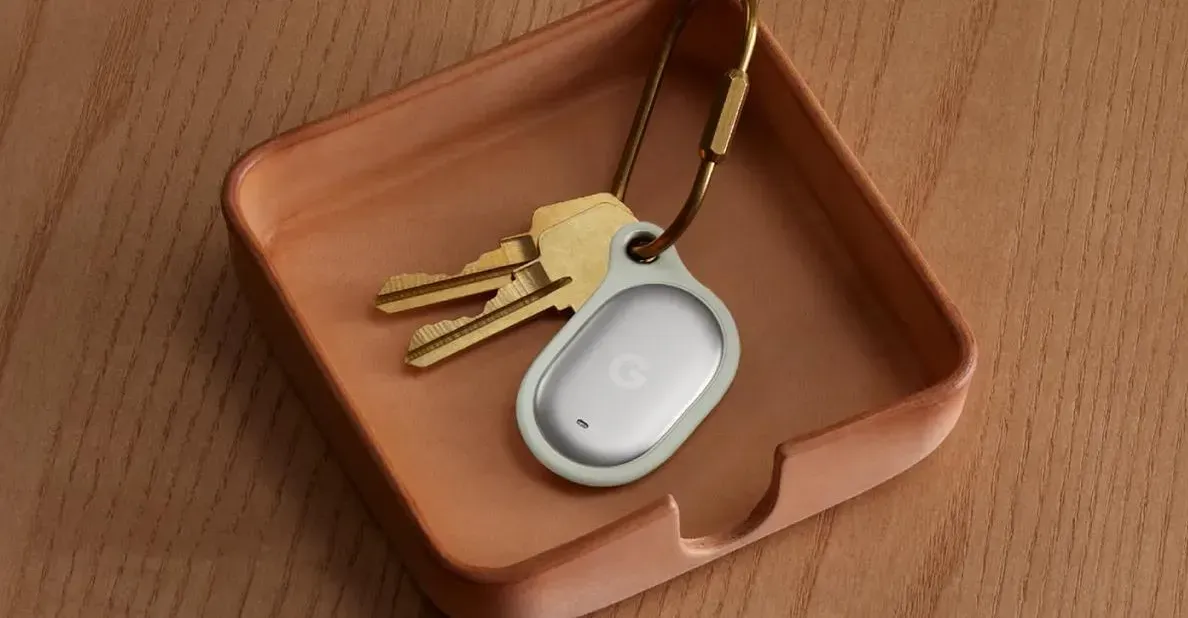 Photo: The Verge
Key points
Google launched the Pixel Tag, a $29.99 item tracker with UWB precision and a billion-device network, on 11 November.
Google began selling the Pixel Tag, its $29.99 answer to Apple's AirTag, on 11 November, with a four-pack priced at $99.99. The tracker works with Android's Find Hub app and network, which Google says includes more than a billion Android devices globally. First announced in August, the Pixel Tag is now available for purchase on the Google Store.
The Pixel Tag is designed to help Android users track items like keys, wallets, and bags. It uses Bluetooth and ultra-wideband (UWB) for precision finding, letting phones with a UWB chip display the exact distance and direction to the tag in the Find Hub app. Bluetooth 6.0 Channel Sounding provides distance-only accuracy. The device weighs 0.4 ounces and is slimmer than the AirTag, measuring 1.8 inches high, 1.1 inches wide, and 0.2 inches thick.
What the Pixel Tag offers
Unlike Apple's round AirTag, the Pixel Tag is pill-shaped and has a physical button. Pressing the button twice rings your phone if you've misplaced it, and a built-in speaker plays a chime to help you find the tag itself. The chime has three loudness levels, with a maximum around 80 decibels. The tag is made from stainless steel and has an IP67 rating, meaning it's dustproof and can survive submersion in up to 1 meter of water for 30 minutes.
The Pixel Tag runs on a user-replaceable CR2032 coin cell battery that Google says lasts over a year. It pairs with devices running Android 9 or newer via Fast Pair, but to use the full suite of features, you'll need a device that supports Bluetooth 6.0 and runs Android 16. The tag comes in silver and pale green, and Bellroy is debuting keychain cases for it on the Google Store.
For lost items that are not nearby, the Pixel Tag relies on Google's crowdsourced network of over a billion Android devices. Other Android devices can identify and share the location of a lost tag back to its owner, and this location is displayed on a map inside the Find Hub app. The tag's location can be shared with up to 10 people, which is useful for shared items like family car keys.
How the network works
The Pixel Tag includes NFC, a surprise addition not mentioned at launch. Unlike Apple's AirTag, which uses NFC to let finders tap and see the owner's contact information, Google uses the tap gesture to connect the user to the device's settings. When a Pixel Tag is put into Lost mode, it can share the owner's email, phone number, and a short message so the finder can contact them. When the tag comes back into range of the owner's phone, it is automatically marked as found.
The Pixel Tag launch is part of Google's November Pixel Drop, which also brings Gemini Intelligence to Pixel 10 devices. This includes Rambler, a dictation feature that removes filler words like 'um' and formats thoughts into clear text. Gemini can also handle multi-step tasks like ordering groceries or booking a taxi, now available in Japan, the UK, and India. Personalized suggestions and conversation summaries are also rolling out.
Other Pixel Drop updates include Create My Widget, which lets users build custom widgets with natural language prompts, and new AI-powered icon styles. The HiLight camera module notification system, previously only for calls, now supports Google Messages, so the module glows when a message arrives from a favorite contact. Step-by-step workout routines are rolling out to Pixel Watch 3 and newer models, with live metrics and rep logging.
The Pixel Tag is available starting 11 November for $29.99 for one or $99.99 for a four-pack. Updates from the November Pixel Drop start rolling out today and will continue over the next several weeks. The Pixel Tag is Google's first-party entry into the item tracker market, competing with Apple's AirTag and third-party Android trackers from Samsung, Motorola, and Pebblebee.
Frequently asked questions
What is the Google Pixel Tag?
The Pixel Tag is Google's item tracker, similar to Apple's AirTag, that helps you find lost items like keys or bags using your Android phone. It costs $29.99 for one or $99.99 for a four-pack.
How does the Pixel Tag work?
It uses Bluetooth and ultra-wideband (UWB) for precise location when nearby, and a crowdsourced network of over a billion Android devices to find items that are far away. It also has a speaker and a button to ring your phone.
When is the Pixel Tag available?
The Pixel Tag is available starting 11 November 2026. It can be bought individually or in a four-pack from the Google Store.