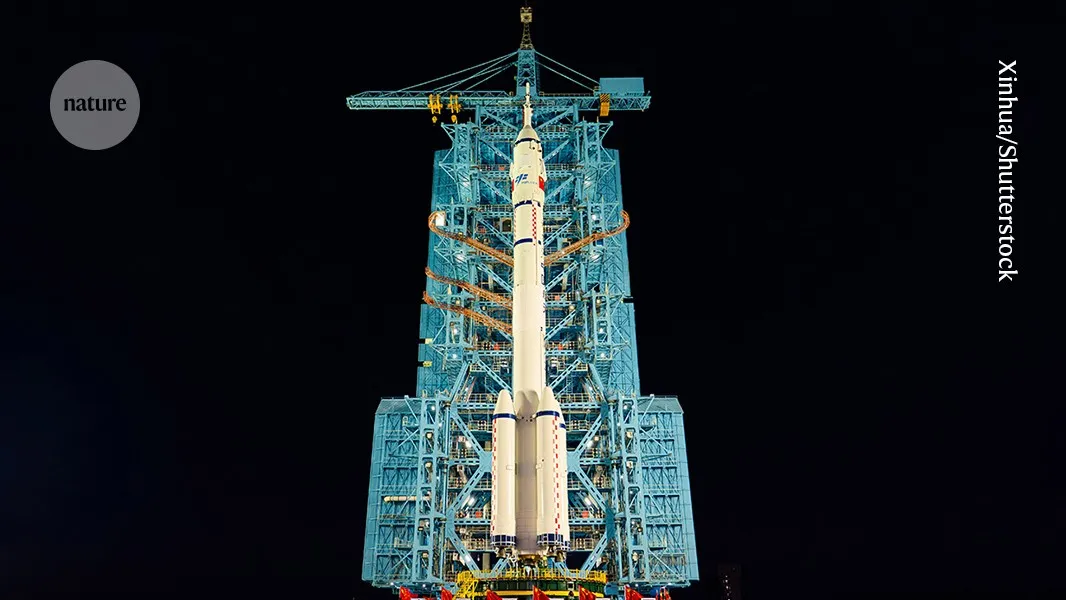
Hera finds DART left stadium-sized crater on asteroid Dimorphos
The European Space Agency's Hera probe has imaged a stadium-sized crater on Dimorphos, the asteroid NASA's DART struck in 2022, the agency said in Berlin.
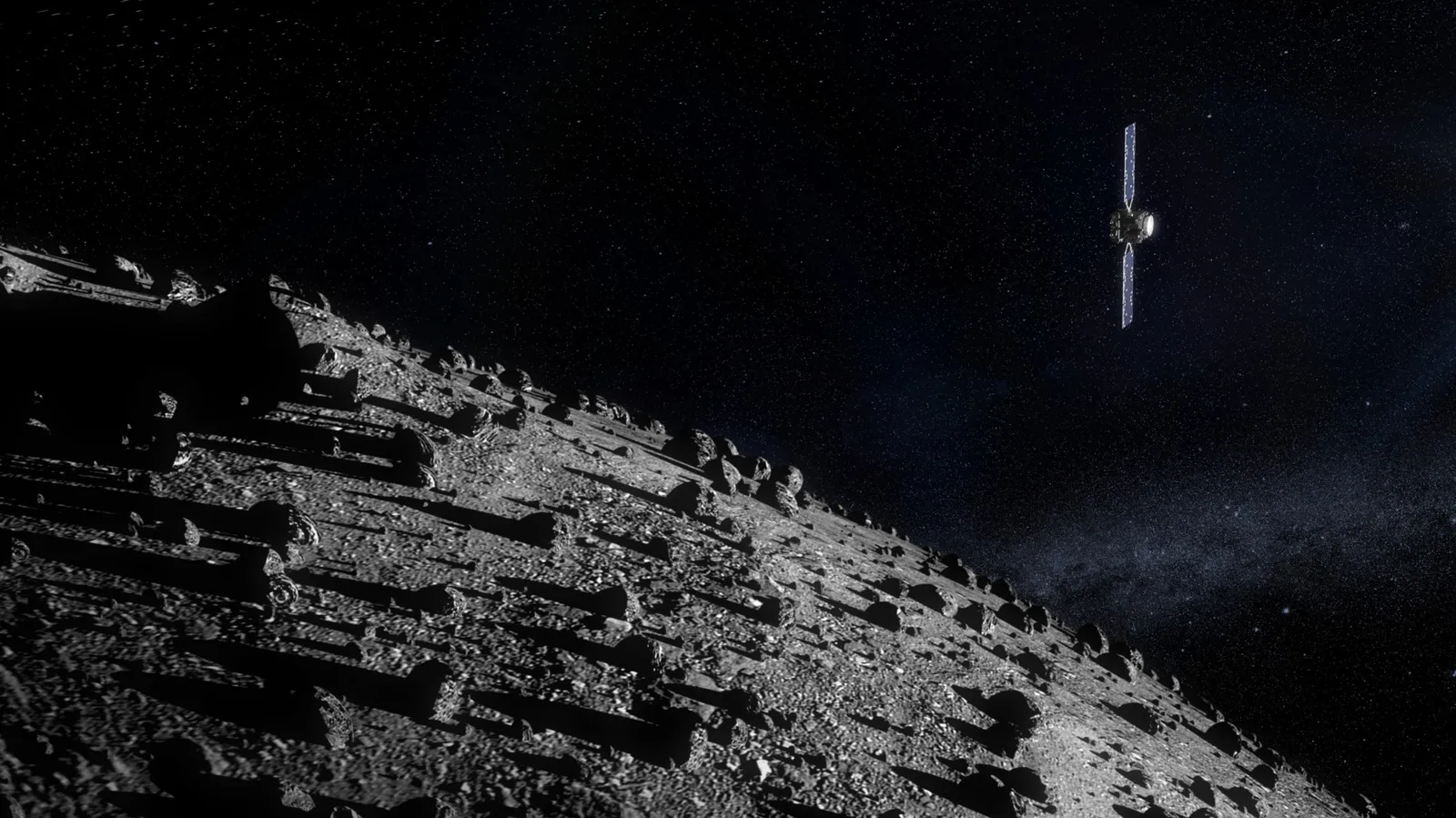 Photo: Engadget
Key points
The European Space Agency's Hera probe has confirmed that NASA's DART impact flattened one side of the asteroid Dimorphos into a crater the size of a sports stadium.
The European Space Agency's Hera probe has captured images showing that NASA's Double Asteroid Redirection Test left a crater the size of a sports stadium on the asteroid Dimorphos, the agency said at a press conference in Berlin on Wednesday. Hera principal investigator Patrick Michel, director of research at France's National Centre for Scientific Research, described the result.
The finding answers a question scientists had debated since the 2022 impact: whether DART had carved a crater, reshaped Dimorphos or left it largely as it was. Michel said all three happened at once. The face struck by DART has been flattened into an impact crater that extends across the asteroid's entire width, while the rest of the body changed surprisingly little.
What the images show
Hera's monochrome Asteroid Framing Camera, its multi-spectral Hyperscout H instrument and a Thermal Infrared Imager developed by the Japan Aerospace Exploration Agency took the images from about 25 to 30km away. The struck side of Dimorphos is now almost entirely crater, and inside it the probe spotted a cigar-shaped object and what Michel called strange structures.
The boulder fields on the untouched parts of Dimorphos look as they did before the collision, Michel said. The impact also set the smaller asteroid tumbling in its orbit around its parent body, Didymos. Hera's observations let researchers correct the estimate of Didymos's size: it is about 730 metres across, while Dimorphos is 151 metres wide.
The bigger surprise, researchers said in Berlin, came from a long-exposure image of the space around the pair, taken with the two asteroids masked out. It showed hundreds of small asteroids, from a few metres to a few dozen metres across, orbiting Didymos and Dimorphos. Nothing comparable had been observed before, and the team now wants to establish whether the DART collision created them or whether they have circled there for a long time.
The boulders around the pair
There are so many of these boulders that they could affect the mission, because the probe cannot steer around them on its own. Michael Kueppers, the European Space Agency's Hera mission scientist, said the team will have to take account of these objects in the coming weeks as the mission moves in closer. Hera is currently surveying the pair from about 25 to 30km away, travelling around them at roughly 12 cm/s and using thruster firings to trace rectangular paths rather than conventional circular orbits.
Closer passes and CubeSats
Scientists also want to measure the mass of Dimorphos. Combined with the observed change in its orbit, that will help them judge how effectively DART transferred momentum to the asteroid and improve predictions for future deflection attempts. Carnelli said combining the two missions is taking humanity "a decisive step towards making asteroid deflection a reliable tool for protecting our planet."
Hera carries two shoebox-sized CubeSats, which it will release in early 2027. The Luxembourg-led Juventas will use radar to probe the asteroid's interior and eventually attempt a landing on Dimorphos, while the Italian-led Milani will prospect asteroid dust and other surrounding material. Hera itself is meant to land on the asteroid moon at the end of the mission.
Carnelli placed the work in a longer frame, saying that 66 million years ago an asteroid impact changed the course of life on Earth, and that humanity is now testing for the first time in history how such an event could be prevented in future. The European Space Agency has published further images showing the two asteroids moving around each other.
Frequently asked questions
What did the Hera probe find on Dimorphos?
Hera imaged a crater the size of a sports stadium covering the entire width of Dimorphos, left by NASA's DART impact in 2022. The struck face was flattened, the rest of the asteroid changed little, and Dimorphos is now tumbling in its orbit.
What will Hera do next at Didymos and Dimorphos?
Hera is surveying the pair from about 25 to 30km away. In early 2027 it will release the Juventas and Milani CubeSats, one of which will attempt to land on Dimorphos.