Herzog taps Eisenkot to form Israeli government after deadlocked election
President Isaac Herzog on Saturday chose opposition leader Gadi Eisenkot to form a coalition, giving him 28 days to secure a majority.
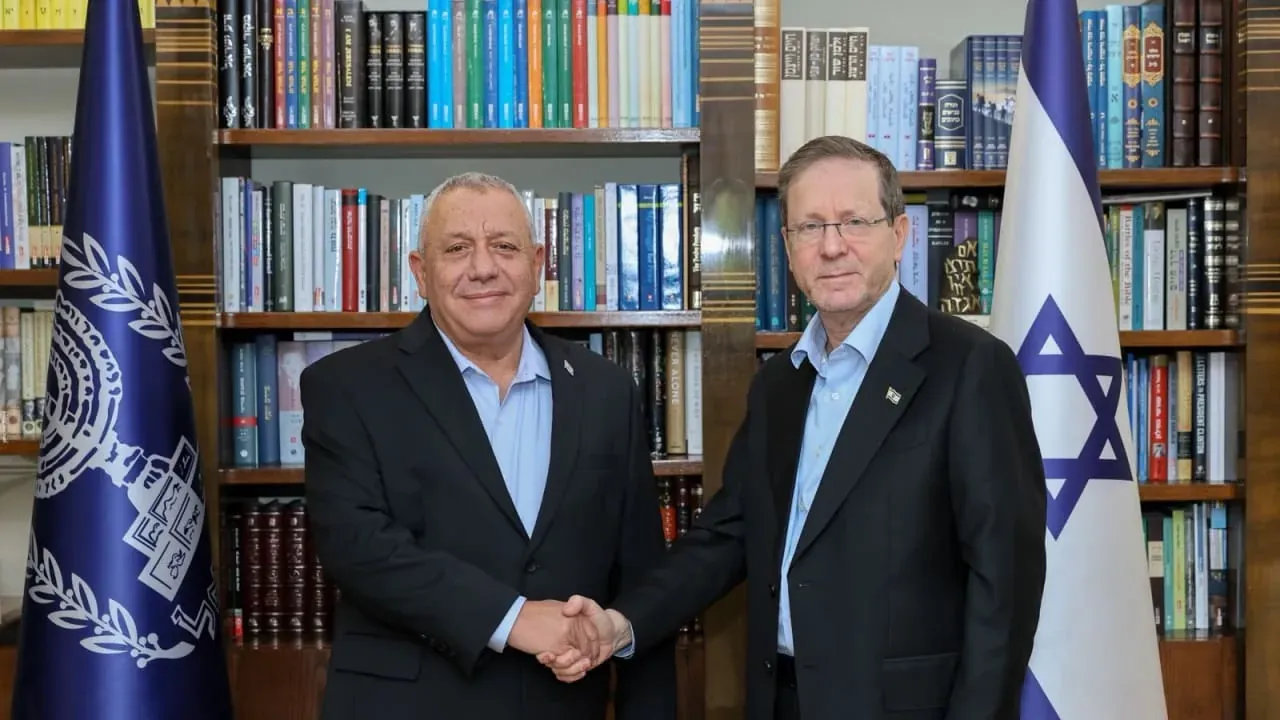 Photo: The Jerusalem Post
Key points
President Herzog chose opposition leader Gadi Eisenkot to try to form a government after the October 27 election left no clear majority.
Israeli President Isaac Herzog announced on Saturday that he will grant the mandate to form a new government to Gadi Eisenkot, chairman of the Yashar party, following the October 27 election. The formal appointment will take place on Sunday at the President's Residence in Jerusalem, Herzog's office said. Eisenkot, a former military chief and political newcomer, has 28 days to form a coalition, with a possible 14-day extension. The clock starts at 5 p.m. Sunday local time, according to the Washington Examiner. If he fails, another candidate can be tasked, and if all attempts fail, the Knesset is dissolved and new elections held.
The mandate and the clock
The decision follows the October 27 election, in which neither side secured a majority. Netanyahu's religious-nationalist coalition lost its majority but emerged as the largest bloc in parliament, with Likud winning 27 seats. Eisenkot's Yashar party won 21 seats, making it the second-largest party. Eisenkot was recommended by parties representing 67 lawmakers, compared to 46 for Netanyahu's bloc, according to the Jamaica Observer. The recommendations included members of Israel's Arab minority, whose seat haul soared in the election. Two Arab-majority parties won an unprecedented 19 seats.
Coalition arithmetic
Eisenkot has declined to join forces with Arab parties, with whose support he would have a majority. But Arab leaders, incensed by what they view as racist policies of Netanyahu and his far-right allies, still nominated Eisenkot to try to form a government first, giving him the most endorsements. His potential pathways to power include forming a minority government with Arab support from the outside; forming a coalition with ultra-Orthodox parties that he and his allies have shunned; or forging a unity government with Netanyahu. Analysts say all three options are unlikely to take shape.
Netanyahu, who has led Israel on and off for nearly two decades, faces corruption charges and an arrest warrant over the Gaza war from the International Criminal Court, whose authority he rejects. He has called for a unity government, but the opposition has stood firm on removing him first. On Saturday, Netanyahu warned that a coalition between opposition parties and Arab lists, which he called Islamists, would 'dismantle the State of Israel from within' and urged a unity government comprising 'all the Zionist parties that want to safeguard our state.' Eisenkot's Yashar party urged Netanyahu's allies to form a unity government led by Eisenkot.
Pathways and obstacles
Opposition bloc member Avigdor Liberman has made clear he will not sit with Eisenkot if he relies on Israeli-Arab votes. But on Friday, Liberman said he was open to discussions on a law that would enshrine an exemption for ultra-Orthodox Jews from mandatory military service, a shift from his previous stance.
Eisenkot has proposed requiring national service for all Israelis but allowing citizens to choose a civilian option, opening the door to integrating the ultra-Orthodox. In a message delivered on Friday, he called Netanyahu a threat to the 'very existence of Israeli democracy' and urged the swift formation of a government.
If Eisenkot fails, another candidate can try to form a government, and if that candidate fails, parliament can nominate another. There is a deadline for the process of around 100 days. If no one succeeds, another election is held, as happened five times between 2019 and 2022. Eisenkot, 66, a son of Moroccan immigrants, would be the country's first prime minister from Israel's Mizrahi community. He entered politics in 2022 and briefly served in Netanyahu's wartime cabinet following the October 7, 2023, attack before returning to the opposition.
Frequently asked questions
Who did President Herzog choose to form the new Israeli government?
President Isaac Herzog chose Gadi Eisenkot, chairman of the Yashar party, to form the new government. The formal appointment will take place on Sunday at the President's Residence in Jerusalem.
How long does Eisenkot have to form a government?
Eisenkot has 28 days to form a coalition, with a possible 14-day extension. The clock starts at 5 p.m. Sunday local time.
What happens if Eisenkot fails to form a government?
If Eisenkot fails, another candidate can be tasked to form a government. If that fails, the Knesset can nominate a candidate. If all attempts fail, the Knesset is dissolved and new elections are held.