Iran says supertanker with 2 million barrels hits mine in Hormuz
Iran's Revolutionary Guards said on 17 October 2026 a supertanker carrying more than 2 million barrels of crude struck a naval mine and exploded in the Strait of Hormuz.
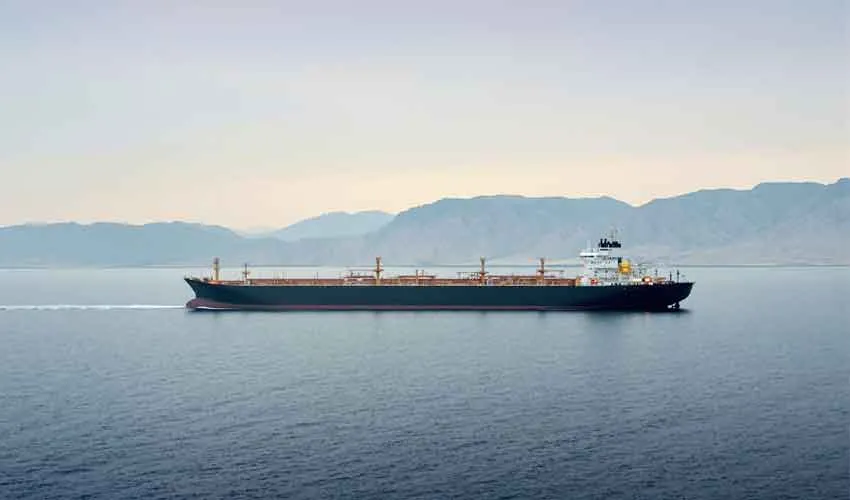 Photo: SAMAA TV
Key points
Iran's Revolutionary Guards said a supertanker carrying more than 2 million barrels of crude struck a naval mine and exploded in the Strait of Hormuz.
Iran's Revolutionary Guards said on 17 October 2026 that a supertanker carrying more than 2 million barrels of crude oil struck a naval mine and exploded while passing through the Strait of Hormuz. The Guards said the vessel was attempting to cross the strategic waterway on a route not authorised by Tehran, and that the explosion triggered a fire aboard the ship.
The claim matters because the Strait of Hormuz is one of the world's most important routes for oil and gas shipments, and the Guards simultaneously declared the waterway closed. Before the war, the strait handled about a fifth of global oil and liquefied natural gas trade, so any restriction on vessel movements affects energy markets and international shipping costs.
What the Guards statement says
The Guards said the tanker had switched off its positioning, navigation and radar systems in an attempt to deceive Iranian maritime authorities, and described the vessel as a rogue tanker. The statement was carried by Iran's semi-official Tasnim News Agency and reported by state-owned Press TV, according to the accounts of the announcement.
Iran's Revolutionary Guards also said the tanker tried to leave the strait with the support and protection of the US military rather than coordinating with Iranian authorities, and blamed that decision for the explosion. The force warned all vessels against using the waterway, saying the strait remained closed under Iran's sovereign decisions and maritime regulations.
Maritime traffic through the Strait of Hormuz has been severely disrupted since the United States and Israel launched attacks against Iran on 28 February. Tehran has restricted maritime traffic in an attempt to gain leverage over Washington, and attacks around the waterway have increased in recent weeks as Iran intensified its strikes in response to the US blockade of its ports and stricter sanctions imposed last month.
Where the strait traffic stands
The Guards' statement did not identify the tanker, its owner or its flag, and provided no information about possible casualties or the extent of the damage caused by the explosion and fire. The extent of the fire, the vessel's flag and the fate of its crew therefore remain unconfirmed in the available accounts of the incident.
Separately, the United Kingdom Maritime Trade Operations reported that an unidentified projectile struck an oil tanker approximately 68 nautical miles northeast of Jubail, Saudi Arabia. That report did not establish whether the incident was connected to the explosion reported by Iran in the Strait of Hormuz, and no further details about the projectile strike were immediately available.
What remains unconfirmed
Efforts to reopen the Strait of Hormuz have stalled, with Iran setting conditions and Washington insisting that discussions on Iran's nuclear programme begin from the outset, even as the two countries have exchanged proposals through intermediaries since a temporary ceasefire agreed in June collapsed. Beyond Hormuz, cargo vessels have been attacked in the Black Sea region and Iran-backed Houthi militants have mounted an offensive along a key Red Sea shipping route.
Frequently asked questions
What happened in the Strait of Hormuz?
Iran's Revolutionary Guards said a supertanker carrying more than 2 million barrels of crude oil struck a naval mine and exploded while passing through the Strait of Hormuz, and that the vessel was on a route not authorised by Tehran.
How much oil was the tanker carrying?
The Revolutionary Guards said the supertanker was carrying more than 2 million barrels of crude oil when it struck the mine and caught fire.
Is the Strait of Hormuz open to shipping?
The Revolutionary Guards declared the Strait of Hormuz closed and warned vessels against violating Iranian maritime regulations, saying the strait remained closed under Iran's sovereign decisions.