Iran's chief of staff bars US military ships from Gulf
Iran's armed forces chief of staff said on Saturday US military ships would never enter the Persian Gulf, as two supertankers carrying more than 4.5 million barrels of crude were abandoned after hitting mines.
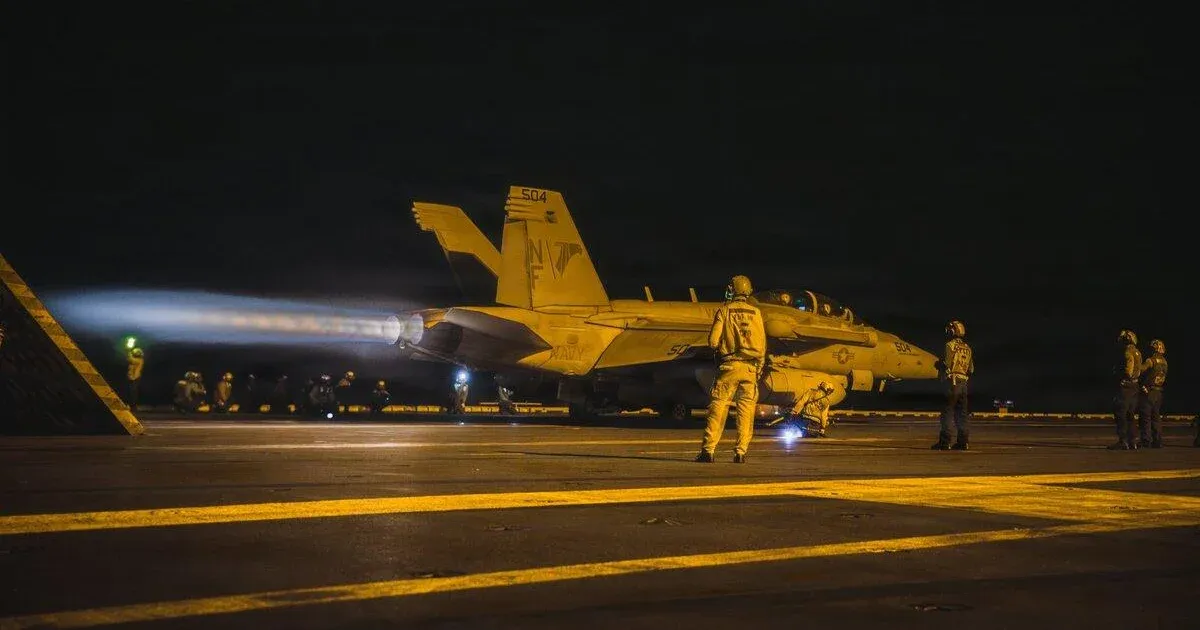 Photo: CBS News
Key points
Iran's armed forces chief of staff said US military ships would never be allowed into the Persian Gulf under any circumstances, as mine strikes abandoned two supertankers in the Strait of Hormuz.
Iran's armed forces chief of staff Ali Abdollahi said on Saturday that US military ships would never be allowed into the Persian Gulf. "We will not allow US military ships in the Persian Gulf under any circumstances and at any time," Abdollahi said, according to Iranian state television. He added that President Donald Trump could only dream of seeing US forces enter the Gulf, and would take that dream to his grave.
What the chief of staff said
The statement matters because the Persian Gulf and the Strait of Hormuz, the narrow waterway that links it to the open sea, carry a large share of the world's traded oil. In peacetime, around a fifth of the world's oil and gas passed through Hormuz, according to figures cited alongside Abdollahi's remarks. A permanent bar on US naval entry would keep American ships outside the waterway where most Gulf exports flow.
Iran has restricted traffic through the Strait of Hormuz since the war with the United States began on February 28. Tehran has required vessels to seek permission to transit and has repeatedly targeted ships attempting to pass via a southern route close to the Omani coast. In retaliation, the United States has imposed a counterblockade on Iranian ports and ships, turning the strait into contested water.
The restrictions have produced casualties among commercial shipping. According to the Islamic Revolutionary Guard Corps, several tankers attempting to transit Hormuz through the route Tehran considers "illegal" were hit by mines in recent days. On Friday, the Guards said two supertankers carrying more than 4.5 million barrels of crude had been abandoned at sea after hitting mines in the strategic waterway.
How the strait became contested
The Guards described the damage in a statement carried by their Sepah News website: "Their engine rooms were disabled by an explosion and a fierce fire." The loss of two supertankers and their cargo removes a large shipment of crude from immediate circulation and adds to the pressure on shipping insurance and routing through a waterway that normally handles about a fifth of the world's oil and gas.
Alongside the naval warning, Iran's leadership is signalling that it expects further attacks. The Islamic Revolutionary Guard Corps warned that even limited strikes would trigger a response "several times greater", according to comments reported by the semi-official Fars News Agency. Iranian government spokesperson Fatemeh Mohajerani said on Saturday that Tehran would not "wait for permission to defend itself" and would respond to any aggression with severe consequences.
Where the tankers were hit
The warnings follow explicit threats of renewed US action. On Friday, US Ambassador to Turkey Tom Barrack said US strikes on Iran could resume as soon as this weekend, telling podcast host Mario Nawfal, "Could there be a strike this weekend? Absolutely." Barrack, who also serves as Washington's envoy on Syria, does not have a direct role on Iran. US President Donald Trump said on Friday he "may do another little Epic Fury", the codename of the US-Israeli war against Iran that started on February 28.
Iranian President Masoud Pezeshkian has blamed Washington for the unravelling of an interim deal aimed at ending the war with the United States and Israel, while also saying both sides should return to the deal and "conclude it", in comments broadcast by Iranian Press TV on Saturday. Pezeshkian said many Iranians were struggling to put food on the table because of wartime conditions, and called for an end to a "state of neither war nor peace".
What happens next
A Pakistan-brokered interim deal reached in June sought to restore shipping through the strait, lift the US naval blockade and begin negotiations toward a broader deal addressing Iran's nuclear programme, with Pakistan and Qatar helping broker it. Iran's ambassador to Islamabad, Reza Amiri Moghadam, said on Saturday that Tehran was prepared to reopen the Strait of Hormuz if Washington lifted its naval blockade, but accused President Trump of rejecting the proposal.
The two sides remain far apart on compensation. A readout of a meeting between Supreme Leader Mojtaba Khamenei and judiciary chief Mohseni Ejei said Iran was committed to "resolutely pursuing compensation for material and moral damages arising from the crimes committed by" the United States and Israel. One of Iran's past demands in a peace agreement was that the United States pay to rebuild much of the damage; the demand was dismissed by the US.
Israeli Prime Minister Benjamin Netanyahu has said he remains committed to overthrowing Iran's government, while Trump has suggested he could take further military action. Both leaders face elections: Israelis vote for their next government on Tuesday, and Trump's Republican Party faces midterm elections on November 3, with Democrats potentially winning control of both the House of Representatives and the Senate.
Frequently asked questions
Why did Iran say US military ships cannot enter the Gulf?
Iran's armed forces chief of staff Ali Abdollahi said on Saturday that US military ships would never be allowed into the Persian Gulf under any circumstances and at any time, adding that President Trump could only dream of seeing US forces enter and would take that dream to his grave.
What happened to the supertankers in the Strait of Hormuz?
The Islamic Revolutionary Guard Corps said two supertankers carrying more than 4.5 million barrels of crude were abandoned at sea after hitting mines, with their engine rooms disabled by an explosion and a fierce fire, according to a statement carried by Sepah News.
How much oil normally passes through the Strait of Hormuz?
In peacetime, around a fifth of the world's oil and gas passed through the Strait of Hormuz, a vital energy conduit and gateway to the Gulf, according to figures published alongside coverage of Iran's warning.