Trump's UN envoy says Iran war could last another year
Mike Waltz, the U.S. ambassador to the United Nations, said the war with Iran could drag on for another year, while declining to frame it as a prediction, as oil prices kept rising.
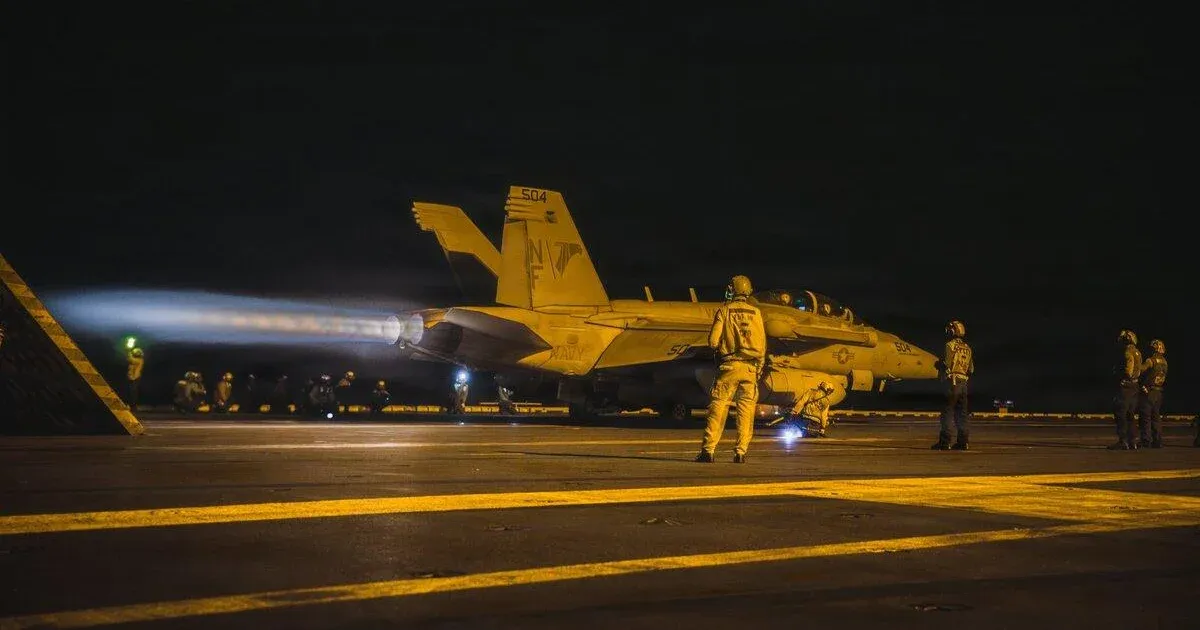 Photo: CBS News
Key points
Trump's UN envoy Mike Waltz said the war with Iran could last another year, while declining to frame it as a prediction.
Mike Waltz, the U.S. ambassador to the United Nations, said the war with Iran could last another year, according to an interview with the Financial Times published as oil prices kept rising. Waltz was asked whether the United States could still be in a deadlock with Iran a year from now, without an agreement on its nuclear program or a return to prewar shipping conditions in the Strait of Hormuz. He replied, "I'm not going to put out hypotheticals," while expressing hope that Iran would return to serious negotiations well before then.
Waltz's remarks matter because they mark the first time a senior U.S. official has publicly entertained a timeline stretching a full year into the conflict, even as he stopped short of predicting it. He emphasized that "the president and the US Navy can maintain this blockade for the foreseeable future," referring to restrictions on Iranian ports, and said the administration was tightening its economic pressure campaign. The interview was read as a sign Washington was preparing for a prolonged confrontation.
What Waltz actually said
Waltz subsequently challenged the Financial Times' characterization of his remarks as a warning that the United States was prepared for a prolonged confrontation. He said the newspaper had misrepresented his statements and emphasized that decisions on how long to maintain the blockade and pursue diplomacy rested with President Trump. The dispute over how to interpret his words underscores the gap between the administration's public posture and the private planning now under way for renewed military operations.
The war, which Trump initially said would last four to five weeks, is now approaching its ninth month. It has driven gasoline prices to record highs as Iran has disrupted shipping through the Strait of Hormuz, one of the world's most important maritime trade routes. Trump's approval rating has fallen to approximately 31%, less than two weeks before the midterm elections, and the Republican Party faces the possibility of losing control of both chambers of Congress amid public frustration over high prices.
Where the numbers came from
Tom Barrack, the U.S. ambassador to Turkey and point man on Syria, who does not have a direct role on Iran policy, told Israeli army radio that a strike on Iran was possible as early as the weekend. "Could there be a strike this weekend? Absolutely," Barrack said, adding that Trump was "open and available and accessible to a deal." His remarks contrasted with the White House's statement that the United States would not resume attacks on Iran before the November 3 midterm elections. White House spokesperson Anna Kelly explicitly ruled out American strikes before the vote.
The U.S. and Israeli militaries have both developed plans for renewed strikes to begin after the midterms, citing U.S. officials and individuals briefed on the matter. According to the report, the strikes would be short but intense, and likely focused on Iranian energy infrastructure, nuclear facilities, and weapons. Officials told the newspaper that earlier in the month, Washington and Jerusalem came close to ordering new strikes before Trump decided against the move at the last minute. On October 16, Trump confirmed that Washington is weighing strikes on Iran's Pickaxe Mountain nuclear site if military operations are renewed.
Strikes planned after midterms
Iran has drawn up detailed plans to target undersea communications cables in the Gulf if the United States and Israel attack again, two senior Iranian security officials said. Yadollah Javani, the deputy head of political affairs for Iran's Revolutionary Guards, said on Wednesday that Iran could target seven major internet cables beneath the Strait of Hormuz if Iranian infrastructure came under attack. Undersea cables carry around 99 per cent of global internet traffic, according to the International Telecommunication Union, but less than 1 per cent of international bandwidth passes through the Strait of Hormuz, said Alan Mauldin of TeleGeography.
Foreign ministers from eight European and Middle Eastern countries met in Istanbul on Friday in an unprecedented format, urging diplomacy and the reopening of the Strait of Hormuz. Ministers from Britain, France, Germany and Italy met counterparts from Turkey, Saudi Arabia, Pakistan and Egypt. French Foreign Minister Jean-Noel Barrot said a new escalation between Iran and the United States "would create nothing but losers and would undoubtedly have very serious consequences for hydrocarbon prices." Italy's Antonio Tajani said the regional problem cannot be solved "from a purely military standpoint."
The State Department said it will reduce staffing at four U.S. embassies in the Middle East — in Jordan, Lebanon, Qatar and the United Arab Emirates — driven by concerns that Yemen's Iran-backed Houthi militants may escalate attacks. The embassies will remain open. In Yemen, Houthi fighters have encircled Taiz since early October, and the United Nations said time is running out to get aid into the city. OCHA spokesman Jens Laerke said water production in the city has fallen by about half.
Israeli Prime Minister Benjamin Netanyahu, who faces elections Tuesday, has repeatedly vowed to topple the clerical state in Iran, following two major bombing campaigns against Iran since last year. Trump has repeatedly threatened to launch renewed strikes after the November 3 midterm elections, just one week after Israel's own elections. The next dated event is the U.S. midterm elections on November 3, after which U.S. and Israeli officials say renewed strikes could begin.
Frequently asked questions
Who said the Iran war could last another year?
Mike Waltz, the U.S. ambassador to the United Nations, said in an interview with the Financial Times that the war with Iran could last another year, while declining to frame it as a prediction and saying he would not put out hypotheticals.
How long has the Iran war lasted so far?
The war, which Trump initially said would last four to five weeks, is now approaching its ninth month. It has driven gasoline prices to record highs as Iran has disrupted shipping through the Strait of Hormuz.
When could renewed U.S. strikes on Iran begin?
The New York Times reported that the U.S. and Israeli militaries have developed plans for renewed strikes to begin after the November 3 midterm elections, likely focused on Iranian energy infrastructure, nuclear facilities, and weapons.